Cyprus, a sunny Mediterranean island with a subtropical climate and mild winters, has long appealed to people from around the world. The country also offers a welcoming lifestyle, strong economic opportunities, and the benefits of living in an EU member state with a modern, well-developed economy.
One popular pathway for foreigners seeking long-term status in the country is the Cyprus permanent residence programme. By investing at least €300,000 in real estate or other assets, applicants can gain the right to live in Cyprus and use the country as a base for business.
Here is a closer look at what the permanent residence by investment route involves and how it works.




Cyprus permanent residence by investment is a programme that allows third-country nationals to live indefinitely in Cyprus by contributing at least €300,000 to the country’s economy. The route operates under Regulation 6(2) of the Aliens and Immigration Regulations and is administered by the Cyprus Migration Department[1].
The programme is sometimes called the Cyprus Golden Visa, although the comparison is not fully precise. Unlike many European Golden Visa routes, which issue temporary residence permits that must be renewed every 2 to 10 years, Cyprus grants permanent residence for life from the outset. To maintain the status, investors must keep the investment and meet the ongoing conditions.
Cyprus permanent residence by investment is not the same as Cyprus citizenship. The country’s separate citizenship by investment route was abolished on November 1st, 2020[2]. The investor's permanent residence is a different legal pathway: it grants residence, not nationality. Citizenship may only be pursued later through naturalisation, after meeting the residence and integration requirements set by law.
Cyprus permanent residence by investment brings together several advantages rarely found in one European residence route: favourable tax treatment, lifetime permit status, family security, Mediterranean quality of life, and strong regional connectivity.
The Cyprus investor permit grants permanent residence for life, giving applicants a stable legal status without repeated renewal cycles. The residence itself does not require re-approval; only the physical residence card is updated every 10 years.
The programme is also family-friendly. The investor can include a spouse and dependent children in the same application, without increasing the minimum investment amount.
Cyprus PR does not tie investors to a strict residence schedule. There is no mandatory minimum number of days to spend in Cyprus each year, which makes the permit convenient for applicants who travel often or keep their main home elsewhere.
To maintain the status, residents only need to visit Cyprus at least once every 2 years. This keeps the residence permit active without requiring full relocation.
The real estate option can make Cyprus permanent residence more attractive from an investment perspective. Investors not only secure long-term residence in an EU member state; they also acquire an asset that may generate income and grow in value over time.
If the applicant chooses residential property, it can be rented out. Gross rental yields in Cyprus average 4.88%, while apartments can perform higher, with average yields of about 5.45%[3].
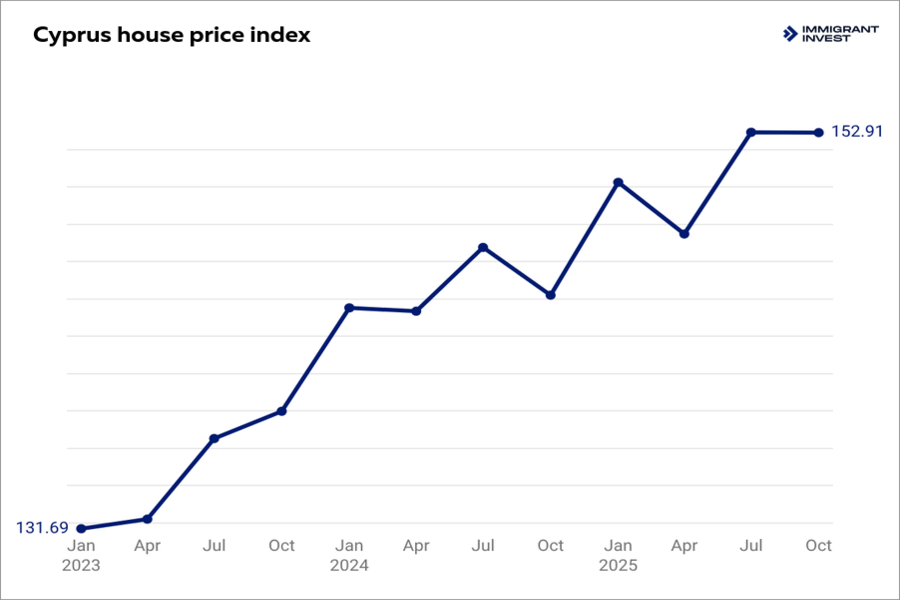
Investors can later sell the property if they obtain Cyprus citizenship or no longer need the residence permit. This gives the route an added capital-planning advantage: residential prices in Cyprus increased by 7.06% year-on-year in the fourth quarter of 2025, so investors may benefit from capital appreciation at resale[4].
Cyprus offers one of the more competitive tax systems in the EU. Personal income earned in Cyprus is taxed progressively at rates from 0 to 35%.
The country can be attractive for retirees. Individuals who receive foreign pension income and become Cyprus tax residents may choose a flat 5% tax on pension amounts above the applicable threshold, instead of the standard progressive scale. As of the 2026 tax year, this threshold is €5,000.
The non-domicile regime adds another advantage. Special Defence Contribution, SDC, is a tax charged in Cyprus on certain types of passive income, including dividends, interest, and rental income. Qualifying non-domiciled tax residents are exempt from SDC.
Permanent residents can use Cyprus as a base for business. They may invest in existing Cyprus-registered businesses, buy shares in Cypriot companies, or set up new enterprises on the island.
Companies pay corporate income tax at a flat rate of 15%.
The permit also allows a limited but useful form of employment. If the holder invests in a Cypriot company, they may act as its director. This is the main employment option available to both the main applicant and the accompanying spouse.
Situated at the crossroads of Europe, the Middle East, and North Africa, Cyprus is a convenient base for international business, regional operations, and frequent travel. Its time zone also supports cross-border work: Cyprus is usually 1 hour ahead of Central Europe and only 1 to 2 hours behind major Gulf business centres.
The island is served by two international airports. Larnaca is the main hub, with the broader direct route network across Europe, the Gulf, and beyond. Paphos serves fewer routes and is a popular gateway to western Cyprus. Together, the airports connect Cyprus with over 40 countries and more than 120 destinations, including London, Dubai, Frankfurt, and Tel Aviv.
Cyprus permanent residence gives children access to the country’s public education system. Public schools are free to attend, though teaching is mainly in Greek.
Families who prefer education in English can choose private international schools and universities. Many are well regarded and follow British, IB, American, and other international curricula. Popular examples include The English School in Nicosia, the American International School in Cyprus, Pascal English School, and The Heritage Private School.
Higher education options also include English-taught programmes at institutions such as the University of Nicosia, European University Cyprus, and UCLan Cyprus.
Cyprus permanent residence can become a long-term route towards citizenship. Permanent residents may later apply for naturalisation after 8 years of continuous living, provided they meet the language, integration, and other legal requirements.
Cyprus citizenship gives a much broader level of mobility. As EU citizens, Cypriot passport holders can travel visa-free across the Schengen Area and enjoy freedom of movement within the EU.
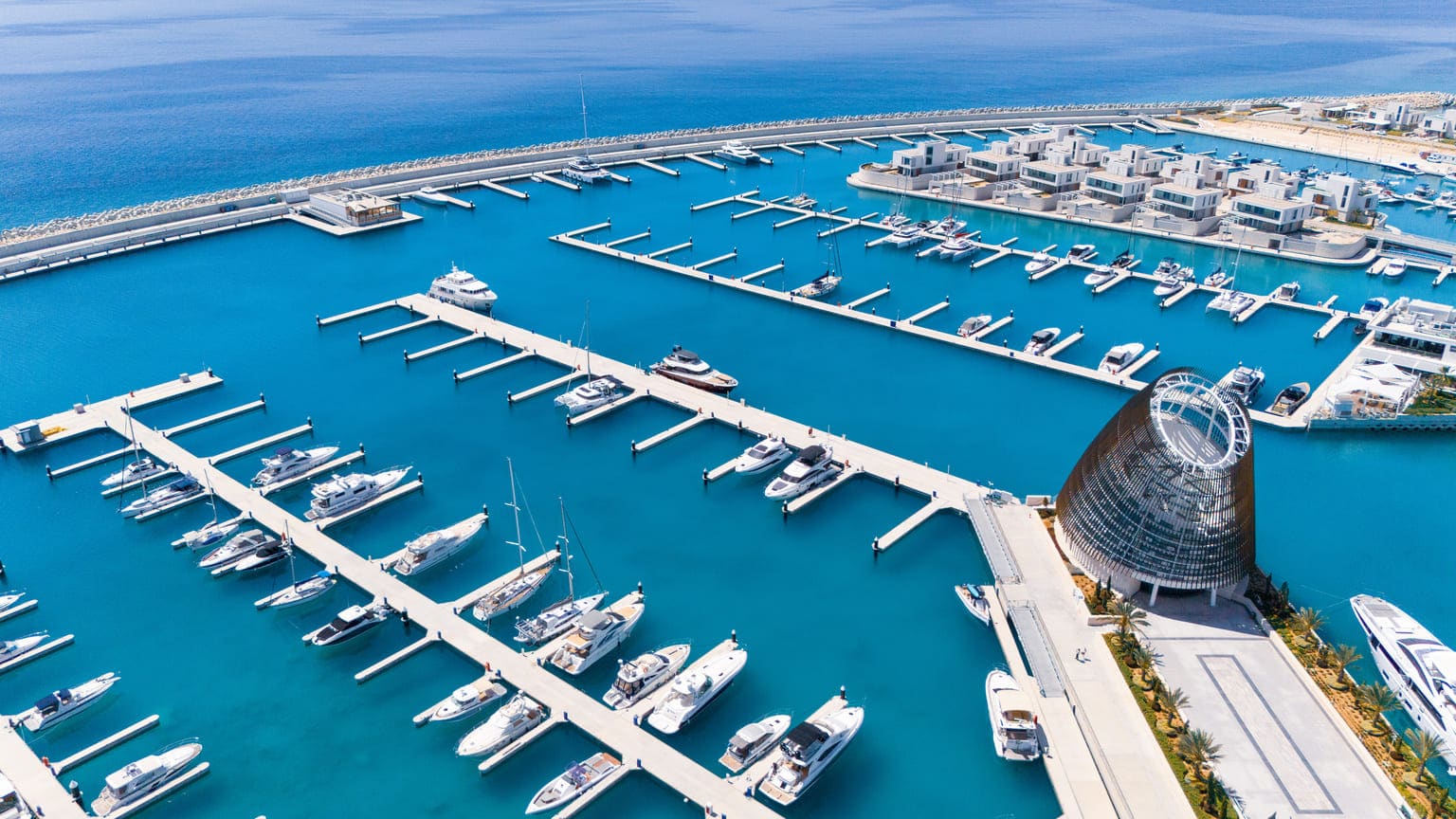
Cyprus offers a warm Mediterranean lifestyle with mild winters, long sunny seasons, and over 300 days of sunshine a year. The island also has 56 Blue Flag–certified beaches and 2 marinas, adding to its appeal for coastal living[5].
The climate naturally brings daily life outdoors. Residents can take sea-view walks, spend mornings in open-air cafes, hike in the Troodos Mountains, or enjoy coastal towns after the peak tourist season has passed. Spring and autumn are especially pleasant, with soft weather, fewer crowds, and the relaxed pace that defines Mediterranean island life.
Cyprus also offers a strong sense of everyday security. In the 2026 Numbeo Safety Index, the country scored 66.7 out of 100, placing it close to Norway, Luxembourg, Lithuania, and Portugal, and ahead of Germany, Spain, Italy, France, and the UK[6].

The Cyprus permanent residence by investment is open only to non-EU nationals who make an investment, prove secure income from outside Cyprus, and pass personal and financial checks. Eligibility rules cover the main applicant, family income thresholds, and dependants.
The main applicant must satisfy all of the following conditions:
The investor can include close family members in the Cyprus permanent residence application. Eligible dependants are:
The income requirement increases for each family member included in the application: by €15,000 for a spouse and by €10,000 for each dependant.
The Cyprus permanent residence permit may also be granted to financially independent children over 18, provided the main applicant increases the investment.
The investment amount rises by €300,000 for each financially independent adult child. For example, the minimum investment becomes €600,000 with one child and €900,000 with two.

Cyprus permanent residence applicants must choose one of four options and commit at least €300,000. The required contribution must be completed before the application is submitted and maintained for as long as the permit is held. This is the core structure of the Cyprus investment residence route.
The most popular route to Cyprus permanent residence by investment is the purchase of a new residential property. New-build supply is strong across Cyprus’s major cities and coastal areas, giving investors a broad choice of apartments, villas, and family homes.
Investors may buy one or two new homes with a total value of at least €300,000, excluding VAT. The property must be newly built and purchased directly from a developer. Resale residential property does not qualify under this route.
VAT is an important cost to factor in. The standard VAT rate on property transactions in Cyprus is 19%. A reduced rate of 5% may apply if the property will be used as the buyer’s main and permanent residence, subject to the eligibility rules, area limits, and value thresholds set by the Tax Department. The reduced rate is not automatic and must be formally applied for[7].
For a €300,000 new residential purchase, VAT is usually included in the purchase price. The VAT component may range from about €15,000 at the reduced 5% rate to €57,000 at the standard 19% rate.
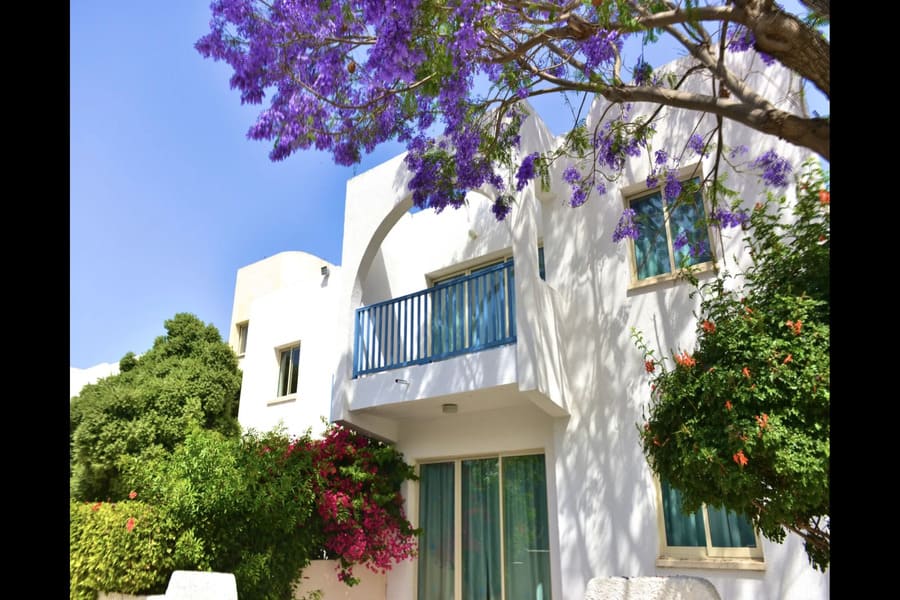


Investors may also purchase commercial property, such as offices, retail premises, or hotel units. This option offers more flexibility than residential real estate, as both new-build and resale commercial properties qualify.
The minimum investment amount is €300,000. The standard 19% VAT rate applies to commercial property transactions.
The owner may treat the property as a business asset, for example, by leasing it out and receiving rental income. Day-to-day operations, tenant search, maintenance, and administration can be delegated to a licensed property management company, so the investor does not need to manage the asset personally.
Applicants who invest in commercial property must still provide separate proof of housing in Cyprus.
Foreigners may invest €300,000 in units of a licensed collective investment fund registered and regulated in Cyprus. Eligible fund types include:
The funds are regulated by the Cyprus Securities and Exchange Commission, CySEC, the official authority responsible for investment services and collective investment vehicles in Cyprus. Depending on the fund’s strategy, assets may include shares in Cyprus-based businesses, real estate, or other instruments.
The fourth option is the purchase of shares in a Cyprus-registered company for at least €300,000. The company must be operationally active, have a genuine physical presence in Cyprus, and employ at least 5 people.
Buying shares suits investors who want to participate in a Cypriot business, either by acquiring a stake in an existing company or investing in a new venture that meets the activity and employment requirements.
The full cost of Cyprus residence by investment goes beyond the investment itself. Applicants should also account for official government fees and supporting professional and documentary expenses.
The immigration submission fee is €500 for the investor or a married couple. An additional €500 fee applies for each child over 18 included in the application.
Investors also pay a registration fee of €70 per family member. The permanent residence card fee is another €70 per applicant.
Beyond the main investment and government fees, applicants should plan for supporting expenses, such as:
The table below summarises the main confirmed costs depending on family composition.
| Cost item | Single | Married couple | Family of four, including spouse and two children aged 10 and 20 |
|---|---|---|---|
| Investment | €300,000+ | €300,000+ | €300,000+ |
| Confirmed income | €50,000+ per year | €65,000+ per year | €85,000+ per year |
| Immigration submission fee | €500 | €500 | €1,000 |
| Registration fee | €70 | €140 | €280 |
| Permanent residence card fee | €70 | €140 | €280 |
| Medical insurance | €200+ per year | €400+ per year | €800+ per year |
| Translation of documents | €2,000+ | €2,000+ | €2,000+ |
| Total | €352,840+ | €368,180+ | €389,360+ |
The Civil Registry and Migration Department requires a comprehensive set of documents to verify the applicant’s identity, financial standing, investment, accommodation, and compliance with the programme rules.
Preparing the file correctly before submission is important, as missing or incorrectly certified documents are among the most common causes of delay.
The following documents are usually required for the main applicant and family members included in the application:
The financial part of the file confirms that the applicant meets the income requirement and has completed the investment. It usually includes:
Applicants must also show that both the investment funds and declared income originate from outside Cyprus. Supporting documents may include:
Documents not issued in Greek or English must be accompanied by a certified translation. Civil and legal documents, such as birth certificates, marriage certificates, and criminal record certificates, usually also need to be apostilled or otherwise certified according to the rules of the issuing country.
The process of obtaining Cyprus permanent residence by investment takes at least 9 months, based on Immigrant Invest’s legal team experience.
Most steps can be completed remotely. The applicant usually needs to travel to Cyprus only once, at the final stage, to submit biometric data and collect the residence cards.
Before the application process begins, the investor undergoes a confidential background check known as preliminary Due Diligence. Immigrant Invest’s Compliance Department reviews the applicant’s information against public records and international databases.
This early screening helps confirm eligibility and reduces the risk of rejection to as low as 1%.
Immigrant Invest lawyers help collect and prepare the required documents. This includes translating and apostilling official records, such as passports, birth certificates, and criminal background checks, as well as preparing investment documents, such as a real estate purchase agreement.
The applicant fulfils the investment requirement by acquiring a qualifying asset.
For residential property, they may apply to the Cyprus Department of Lands and Surveys for the reduced 5% VAT rate. Once approval is granted, the payment is completed. Commercial property follows a similar purchase process, but the standard 19% VAT rate applies.
If the applicant invests in company shares or fund units, the transaction is completed through licensed investment institutions.
Immigrant Invest’s representative in Cyprus submits the application and supporting documents to the Civil Registry and Migration Department on behalf of the investor. The Department reviews the file and notifies Immigrant Invest of the decision.
After approval, the investor and all family members included in the application travel to Cyprus to submit their biometric data.
Immigrant Invest lawyers schedule the appointments in advance and assist with obtaining a visa for travel to Cyprus, if needed.
After biometrics are submitted, it takes about 40 days to print and issue the Cyprus permanent residence cards. Once the cards are ready, the investor and their family members receive permanent residence status.
Cyprus permanent residence is granted for life, but permit holders must continue to meet several ongoing conditions. If these requirements are not met, the permit can be cancelled for the main applicant and all family members included in the application.
To maintain Cyprus permanent residence, investors must:
In practice, most compliance issues arise not from the initial application but from failing to maintain the permit conditions after approval. The most common mistakes include:
These obligations should be tracked carefully. Cyprus permanent residence is a lifetime status only as long as the investor continues to meet the conditions.
Cyprus permanent residence can offer attractive tax opportunities, but the permit itself does not automatically change the holder’s tax position. Tax obligations depend on where the person actually lives, how many days they spend in Cyprus, where their income comes from, and whether they qualify as a Cyprus tax resident.
Holding a Cyprus permanent residence permit does not automatically make an investor a Cyprus tax resident. Immigration status and tax residence are separate: tax residence depends on how much time a person spends in Cyprus and whether they meet one of the statutory tests.
An individual can become a Cyprus tax resident under either of the following rules:
Meeting either test creates Cyprus tax residence and related filing obligations. Simply holding a permanent residence permit does not satisfy either rule.
Tax residents of Cyprus are further classified as either domiciled or non-domiciled. A person is considered domiciled if they were born in Cyprus or have lived there for at least 17 of the past 20 years. Most newcomers — including foreign investors and retirees — usually fall into the non-domiciled category[9].
Non-domiciled tax residents enjoy a major benefit: they’re exempt from the Special Defence Contribution. As a result, they pay no tax on income from dividends, interest, or rental properties. This makes Cyprus especially attractive for those earning passive income.
For personal income tax, Cyprus applies progressive rates[10]. Annual income is taxed as follows:
Foreign pension income may be taxed under a special elective regime. Cyprus tax residents who receive pensions from abroad may choose to pay a flat 5% tax only on the part of their annual foreign pension income that exceeds €5,000, instead of applying the standard progressive income tax rates[11].
Capital gains tax is charged at 20% on gains from the disposal of immovable property located in Cyprus, as well as on shares in companies that directly or indirectly hold Cyprus immovable property[11].
The standard corporate income tax rate in Cyprus is 15%[12].
For resale property, transfer fees are payable when the title deed is transferred. These fees are calculated on a progressive scale:
A 50% reduction may apply to transfers where VAT was not paid, which is often relevant for resale property.
Rupert and Lucy, a retired couple from the UK with a pension income of €78,000, wanted a warmer climate and lower taxes in retirement. With a budget of €400,000, they explored several EU residency options and found Cyprus the best fit, thanks to its €300,000 property investment requirement and 5% flat tax on foreign pensions, compared to 20% in the UK.
With help from Immigrant Invest, the spouses purchased a €320,000 apartment in Paphos, a coastal town popular among British expats. As the home was for personal use, they qualified for reduced VAT of 5%.
The entire process took just 7.5 months, and today Rupert and Lucy enjoy a lower cost of living, tax savings, and a relaxed Mediterranean lifestyle.
Life in Cyprus combines a relaxed Mediterranean rhythm with the practical comforts of an EU country. Permanent residents can settle by the sea or in one of the main cities, rent or buy property, use public and private healthcare, and choose between local and international education options for their children.
Property prices in Cyprus vary strongly by location. In central areas of Nicosia and Limassol, buyers can expect prices of around €2,000 to 3,000 per m2. Smaller towns and coastal areas, such as Larnaca and Paphos, are usually more affordable, with prices ranging from €1,200 to 1,800 per m2.
For those not ready to buy, renting can be a practical and more flexible alternative:
Rural and less central locations are generally cheaper.
Both furnished and unfurnished rentals are available. Most leases are signed for 12 months, and landlords typically ask for a security deposit equal to 1 to 2 months’ rent.
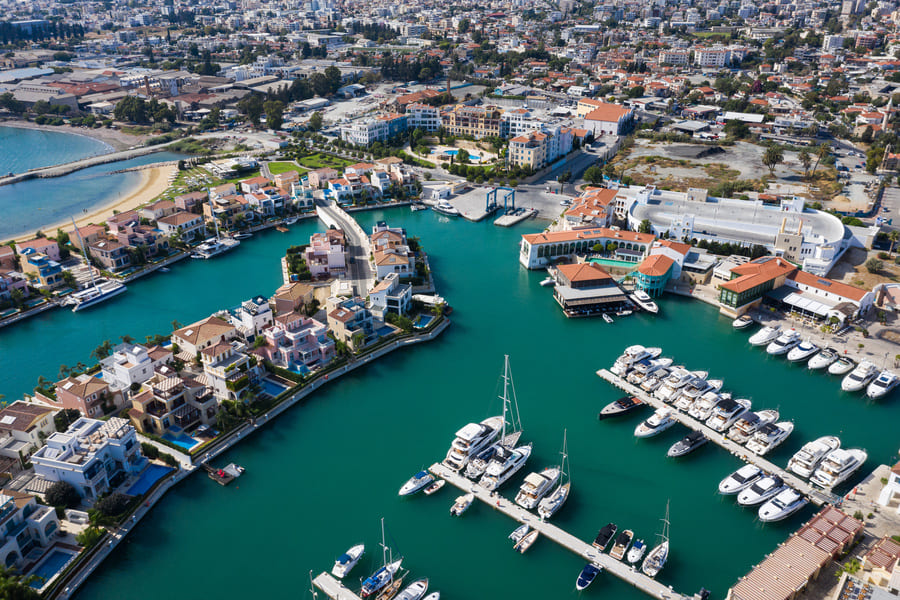
Cyprus offers a moderate cost of living by European standards. It is cheaper than Germany, Ireland, France, and Austria, but more expensive than Portugal, Spain, or Malta. A couple can live comfortably on around €2,000 to 2,500 per month, including rent[14].
Everyday expenses remain reasonable in many areas. A meal at a mid-range restaurant can start from about €15, while monthly utilities, including electricity, water, and internet, usually range from €150 to 200. Imported goods may cost more than in larger EU markets, but local produce and everyday services are still relatively affordable.
Cyprus combines public healthcare with a strong private medical sector. Permanent residents may access healthcare through the General Healthcare System, while private insurance remains mandatory for investors. Many foreign residents use private clinics for faster appointments, English-speaking doctors, and specialist care.
Leading private medical centres include:
For families, Cyprus offers access to free public education, although teaching is mainly in Greek. English-language education is available through private international schools, with fees ranging from about €4,000 to 15,000 per year.
English-taught university programmes are available at institutions such as the University of Cyprus, University of Nicosia, European University Cyprus, Cyprus University of Technology, and UCLan Cyprus. Undergraduate tuition ranges from about €8,000 to 10,000 per year.
For permanent residents, the only route to a Cypriot passport is naturalisation. To apply, investors must usually meet the following conditions:
Cyprus citizenship gives access to EU citizenship rights, including the right to live and work freely in other EU member states.
The investment must be maintained for the entire period of permanent residence, up to the point of naturalisation. After Cyprus citizenship is granted, the investor may sell or transfer the asset without affecting their citizenship status.
If the investment is sold before citizenship is obtained and is not replaced with another eligible investment, the investor breaches the programme conditions. This may lead to the cancellation of the permanent residence permit.
Cyprus permanent residence by investment is a strong residence option, but it is not a simple property purchase with an automatic residence card attached. Applicants need to understand the limits of the permit, the exact investment rules, and the ongoing compliance obligations before committing funds.
Cyprus is not currently a Schengen member state, so a Cyprus residence permit does not give non-EU nationals the right to enter Schengen countries without a visa.
Cyprus may join the Schengen Area in the future, but this is not a current benefit of the permanent status. Applicants whose main goal is Schengen mobility should compare Cyprus with alternatives such as Greece or Portugal before making an investment decision.
A common mistake of investors applying for the permanent residence is assuming that any residential property worth at least €300,000 meets the requirements. For the residential route, the property must be new and purchased directly from a licensed developer. Resale residential property does not qualify.
Property eligibility should be checked before signing a reservation agreement or paying a deposit. Buying a non-qualifying property can create financial and timeline complications.
The €300,000 investment is not the only key requirement. Applicants must also prove a stable, legally declared income from outside Cyprus.
The minimum annual income is €50,000 for the main applicant and increases with each family member included in the application. This income must be supported by documents such as tax returns, employment contracts, pension statements, rental income records, or dividend certificates.
Investors may lease the residential property, but rental plans should be considered before purchase. If the property is intended for rental use, the standard VAT rate of 19% applies.
The reduced 5% VAT rate is available only if the home is used as the buyer’s main and permanent residence. It cannot be applied to a property that is rented out. This means investors who plan to generate rental income should calculate the purchase budget using the standard VAT rate, not the reduced one.
Cyprus can be tax-efficient, especially for entrepreneurs, retirees, and non-domiciled tax residents. However, Cyprus permanent residence does not automatically make the holder a Cyprus tax resident, and tax benefits are not universal.
The applicant’s home-country tax rules, income structure, citizenship, and residence pattern all matter. US citizens, for example, remain subject to US worldwide taxation. Tax advice should be obtained before the investment is made, not after relocation.
The application requires a detailed set of documents, many of which must be translated, apostilled, or otherwise certified. For applicants from countries with slower public authorities or limited apostille infrastructure, document preparation can become one of the longest stages.
A country-specific document checklist should be prepared early. This helps avoid delays with criminal record certificates, civil status documents, bank letters, tax records, and proof of income.
Immigrant Invest is a licensed investment migration company with over 20 years of experience. We help investors and their families obtain citizenship and residence by investment: more than 10,000 clients have already received passports or residence permits with our support.
For Cyprus permanent residence by investment, Immigrant Invest assists clients at every stage of the process:
After approval, Immigrant Invest continues to support clients with post-residence obligations, including maintaining the investment, visiting Cyprus at least once every 2 years, updating residence cards, and avoiding breaches of the employment rules.
The minimum investment required for Cyprus permanent residence is €300,000. Applicants should also budget for additional costs, including applicable VAT on property purchases, government administrative fees, legal support, and document preparation.
No, Cyprus permanent residence does not grant the right to travel visa-free across the Schengen Area. Cyprus is an EU member state, but it is not part of the Schengen Area, so border-free travel rules do not apply to Cypriot residence permit holders.
Regulation 6(2) of the Aliens and Immigration Regulations is the legal basis for granting permanent immigration permits to qualifying investors in Cyprus. It sets out the programme’s investment categories, income thresholds, family inclusion rules, and ongoing compliance conditions. All applications are assessed under this regulation.
No, simply holding Cyprus permanent residence does not make investors Cyprus tax residents. Immigration status and tax residency are governed by separate legal tests.
Cyprus tax residency is established either by spending at least 183 days in the country during a calendar year or by meeting the 60-day rule. The 60-day rule requires physical presence in Cyprus, no tax residency in another country, Cyprus-based business or employment activity, and a permanent home in Cyprus.
A permit holder who spends only a few days in Cyprus each year may not meet either test and therefore may remain tax resident elsewhere.
The main applicant for Cyprus permanent residence by investment may include:
To maintain Cyprus permanent residence permit, investors must visit Cyprus at least once every 2 years, retain the investment for as long as they hold the permit, renew the residence card at the required interval, maintain comprehensive health insurance, and avoid general employment in Cyprus outside the permitted director exception.
For the residential property route, Cyprus permanent residence investors cannot buy resale property. Qualifying residential properties must be newly built and purchased directly from a developer; resale homes are excluded from this route. Resale commercial property, however, may qualify under the commercial property route.
The full Cyprus permanent residence by investment process — from preliminary Due Diligence and document preparation to biometrics and card collection — takes 9 months or more.
After approval, applicants must travel to Cyprus and submit biometrics. Residence cards are then issued in approximately 40 days.
The income requirement for Cyprus permanent residence by investment is €50,000 per year for the main applicant. It rises to €65,000 for a couple and increases by €10,000 for each dependent child included in the application. The income must originate from outside Cyprus and be proven with reliable financial documents.
Cyprus permanent residence permit holders and their spouses are required to confirm that they will not seek employment in Cyprus. Owning shares in the invested company and acting as its director is therefore permitted; taking up separate salaried employment in Cyprus is not.
Selling or otherwise disposing of the investment before obtaining Cyprus citizenship, without replacing it with an equivalent qualifying asset, means the investor no longer meets the Cyprus permanent residence conditions.
Non-domiciled Cyprus tax residents are exempt from the Special Defence Contribution on dividends, interest, and certain rental income. This means that passive income, such as dividends from a share portfolio, interest on savings, or income from foreign rental property, is not subject to the additional SDC charge that applies to domiciled residents.
Most foreign investors who relocate to Cyprus qualify as non-domiciled during the first years of residence.
Yes, after at least 8 years of lawful residence in Cyprus, including 12 months of continuous residence immediately before applying, a permanent resident may apply for naturalisation.
Applicants must also meet additional requirements, including knowledge of Greek at B1 level and evidence of integration into Cypriot life. Cyprus citizenship grants full EU citizenship rights.
No, Cyprus does not offer citizenship by investment. The former citizenship-by-investment programme was formally closed on November 1st, 2020 by decision of the Council of Ministers.
As of 2026, there is no direct investment route to Cypriot citizenship. The only available pathway is naturalisation after at least 8 years of lawful residence.
Cyprus permanent residence by investment remains the main alternative. It provides a stable legal basis for living in Cyprus by investing at least €300,000 and may later support a naturalisation application if all residence, language, and integration requirements are met.
Common reasons for difficulties at the Cyprus PR application stage include:
Thorough preliminary Due Diligence and early document preparation significantly reduce these risks.
Cyprus permanent residence offers many advantages:
Cyprus permanent residence is granted for life, so there’s no limit on how long you can stay. You’re free to enter and leave the country whenever you like, but you must visit Cyprus at least once every 2 years to keep your residency valid.