The Cyprus Golden Visa offers non-EU citizens a streamlined path to permanent residency in Cyprus by a €300,000 investment in real estate, business, or securities. Applicants must also demonstrate an annual income of at least €50,000.
Permanent residence holders can live in Cyprus indefinitely, optimise their tax position if they become tax residents, and apply for citizenship after 8 years of continuous living in the country.
Learn everything you need to know, from eligibility requirements to the benefits and costs of obtaining Cypriot permanent residency, with expert guidance.




Foreigners have more than 15 ways to become temporary residents of Cyprus, including moving for work, study, or family reunification[1]. However, permanent residence is only granted after living in Cyprus for 5 years with temporary residency[2].
Investors have the right to skip the temporary residency stage and obtain permanent residence, or PR, directly[3]. Residency by investment is informally called the Cyprus Golden Visa program.
Investments can be made in real estate, shares of local companies, or securities of investment funds. The minimum investment is €300,000. Successful applicants can obtain permanent residence within 9 months.
The status granted by investment is valid for life. The residence permit card is valid for 10 years from the date of issue and must be replaced upon expiry. For minor dependants, the card is valid until they reach the age of 18[4].
To obtain the Cyprus Golden Visa, an investor chooses one of four options: buying residential or commercial real estate, shares of Cypriot companies, or units in local investment funds. The investment threshold is €300,000, regardless of the option selected.
Residential properties must be brand‑new and purchased on the primary market. Investors may acquire one or two units and, in general, may rent them out unless they opt for the reduced VAT scheme.
When buying a property, VAT must be paid. The standard rate is 19%, but for residential purchases, it can be reduced to 5%[4].
The 5% reduced VAT rate applies to a home in Cyprus that is bought or built as the buyer’s main and permanent residence. To qualify, the following must be met:
The reuced rate applies to the first 130 m² with a value of up to €350,000. If the property is larger or more expensive, the 5% VAT is applied proportionally, while any remaining value or area is taxed at the standard 19% rate[6].
The buyer must use the property as their main home for at least 10 years.
If they stop using it as their primary residence or acquire another home with the reduced VAT during this period, they may be required to repay the VAT difference between 5 and 19%, in proportion to the remaining years.

Under this option, investors can buy one or two business properties, such as offices, hotels, or shops. Commercial properties can be purchased on both primary and secondary markets.
VAT is usually charged at the standard rate of 19% on new commercial real estate, while resale properties are typically exempt from VAT but subject to transfer fees instead.
The shares must be bought from a company registered in Cyprus that has a genuine presence on the island and employs at least 5 people. The investor can receive dividends and work in such a company as a director.
To qualify for permanent residence by investment, the investor can purchase bonds, bills, and securities issued with the approval of the Cyprus Securities and Exchange Commission.


The cost of obtaining a Cyprus Golden Visa includes a required investment of at least €300,000 and additional government fees of €640, plus VAT if the applicant chooses to purchase property.
For residential properties, the standard VAT rate of 19% can be reduced to 5%, resulting in VAT of €15,000+. For commercial properties, the full 19% VAT rate applies, with VAT totalling €57,000+.
The main applicant must also confirm a higher annual income: at least €50,000 for themselves, plus €15,000 for a spouse and €10,000 for each dependent child.
| Expenses | Residential property purchase | Commercial property purchase | Investing in a company or fund |
| Investment | €300,000+ | €300,000+ | €300,000+ |
| VAT | €15,000+ | €57,000+ | — |
| Immigration submission fee | €500 | €500 | €500 |
| Registration fees | €70 per person | €70 per person | €70 per person |
| Fee for a permanent residence card | €70 per person | €70 per person | €70 per person |
| Legal services | 1% of the transaction amount | 1% of the transaction amount | 1% of the transaction amount |
| Total | €318,640+ | €360,640+ | €303,640+ |
When an investor applies with family members, the required investment of €300,000 and the VAT amounts remain the same; only government, income, and service thresholds increase with each additional applicant.
According to Immigrant Invest lawyers’ experience, when buying residential or commercial property, the total cost rises by about €1,400 for a family of four compared to a single investor. For investments in company shares or fund units, the difference is around €400, mainly due to extra legal, registration and residence card fees per family member.
| Expenses | Residential property purchase | Commercial property purchase | Investing in a company or fund |
| Investment | €300,000+ | €300,000+ | €300,000+ |
| VAT | €15,000+ | €57,000+ | — |
| Immigration submission fee | €500 | €500 | €500 |
| Registration fees | €280 | €280 | €280 |
| Fee for a permanent residence card | €280 | €280 | €280 |
| Legal services | 1% of the transaction amount | 1% of the transaction amount | 1% of the transaction amount |
| Total | €319,060+ | €361,060+ | €304,060+ |
To obtain the Cyprus Golden Visa, investors must meet a set of eligibility, income and documentation requirements designed to confirm the legality of their funds, the stability of their finances and their genuine link to the country. These criteria apply to both the main applicant and any family members included in the application.
The main applicant must be an investor over 18, with no criminal record in the country of residence and no restrictions on entry to EU countries or the UK. The investor must have purchased or rented residential property on the island.
The investor's spouse and children under 25 can also obtain the status.
Children aged 18 to 25 can be included in the application if they are:
All applicants are required to have full-coverage health insurance valid in Cyprus. They must also visit the Republic of Cyprus at least once every 2 years to maintain status.
To be eligible for a Cyprus investment visa, the main applicant must earn at least €50,000 per year from sources outside Cyprus.
The Cyprus Golden Visa requirements for confirming an applicant's earnings increase by €15,000 if a spouse is included and by €10,000 for each child. For example, a married couple needs to demonstrate an annual income of €65,000, while a family of four must show €85,000.
The document package for a Cyprus Golden Visa application includes:
The documents must be submitted in Greek or English, and foreign documents usually need a certified translation and notarisation, with an apostille or consular legalisation where required.
Immigrant Invest lawyers prepare a personalised document checklist for each investor and family member and guide clients through collecting, translating, and certifying every paper correctly.
Based on the experience of Immigrant Invest’s lawyers, the process will take around 9 months. During this time, the lawyers will help gather the necessary documents, choose the right investment option, and complete the investment.
Immigrant Invest’s compliance officers conduct Due Diligence to identify any risks of rejection. Only a passport is required for the check.
The lawyers provide the investor with a list of required documents. Once collected, the documents are translated into Greek and notarised.
To obtain Cyprus permanent residence, the investor must invest in one of the following:
Immigrant Invest’s lawyer submits the application and required documents on behalf of the investor to the Civil Registry and Migration Department.
When the application is approved, the investor and their family members, included in the application, visit Cyprus to submit their biometric data.
Immigrant Invest’s lawyers schedule appointments in advance and assist with obtaining a visa that permits travel to Cyprus.
Permanent residence cards are issued within 40 days of the biometric submission.
Applicants collect the cards in person at the Civil Registry and Migration Department.
When an application is denied, the reason is usually not disclosed, but common grounds can be identified.
Permanent residence in Cyprus may be denied if the applicant:
A denial can be appealed. The applicant has the right to file an appeal with the Ministry of Interior of Cyprus or the relevant department that reviewed the application.
The permanent residence status in Cyprus is granted for life, but the physical residence card must be renewed every 10 years.
To ensure continuity, residents must renew their cards by submitting an application at least three months before the card’s expiration date. Along with the application, the resident must provide their current passport and a photocopy of it, a certificate proving they have no criminal record, and the expiring residence card.
The renewal process carries an administrative fee of €50.
Learn the benefits, conditions, and specifics of the Cyprus Permanent Residence for investors in 2 minutes
Obtaining a Cyprus Golden Visa provides several benefits that may enhance one's life. Investors get permanent residency for life, creating security and stability for the whole family. Permanent residency also offers access to a favourable tax regime. Residents can enjoy a safe environment, a developed education system, and the convenience of English being widely spoken across the island.
The Cyprus Golden Visa grants permanent residency for life[4], meaning that the Cyprus Golden Visa cannot expire. The resident status does not need to be renewed, unlike the Golden Visas of other European countries.
An investor can become an EU citizen after living in Cyprus for more than 8 years. During the final year before applying for citizenship, the foreigner must stay in Cyprus without leaving the country for more than 90 days in total.
Cyprus recognises dual citizenship, which means foreigners do not need to renounce their other nationalities upon obtaining a Cypriot passport.
Cyprus maintains a competitive tax environment. Following the 2026 tax reform[7], the standard corporate income tax rate is 15%, compared with 35% in Malta and around 30% in Germany and Portugal, depending on local surcharges.
Cyprus also offers a 60-day tax residency rule, allowing qualifying individuals to become tax residents without spending more than half the year in the country. Applicants must still meet the other statutory conditions, including maintaining a permanent home and sufficient economic ties to Cyprus.
Cyprus tax residents who qualify for non-domiciled status may benefit from exemptions on dividends and most interest income. Non-dom status is generally available to individuals who are tax residents of Cyprus but are not considered domiciled there for tax purposes.
Cyprus has no national annual Immovable Property Tax, and estate duty has been abolished. Certain property transfers between family members may also benefit from reduced or zero transfer fees.
Investors may benefit from potential capital appreciation over the medium to long term while also earning rental income.
Residential property prices in Cyprus have been rising steadily in recent years. The House Price Index increased by 3.4% in the first quarter of 2026 compared with the same period in 2025[8].
The Central Bank of Cyprus also recorded strong growth in residential property prices. In the first quarter of 2026, apartment prices rose by 10.8% year on year, while house prices increased by 3.0%[9].
Investors may also generate rental income from property where renting is permitted under the applicable programme and VAT conditions. In the first quarter of 2026, the average rental yield for apartments in Cyprus was approximately 5.44%[10]. Monthly rents vary significantly by location: in mid-2026, a one-bedroom apartment in a city centre ranged from around €720 in Nicosia to €1,450 in Limassol[11].

The investor’s spouse, children up to 25 years old, and children of any age with physical or mental disabilities can also receive permanent residence in Cyprus. The programme accepts both officially registered marriages and civil partnerships recognised under Cypriot law.
According to the Numbeo Safety Index 2026 mid-year, Cyprus has a Safety Index score of 66.4 out of 100, which places it above several major European and North American countries. The index reflects user-reported perceptions of crime and personal safety, as well as concerns about theft, assault and property crime.
For comparison, Spain scores 61.9, Germany 61.0, the United Kingdom 51.8, and the United States 50.8 on the same index[12].
English is widely spoken in Cyprus, with the EF English Proficiency Index 2025 indicating moderate English proficiency on the island[13]. Many universities offer programmes in English, while the language is also widely used in the business environment. Therefore, learning Greek is not mandatory for moving to Cyprus.
The island also has a sizeable international community, which can make adaptation easier for newcomers.
Children with permanent residence in Cyprus can attend Cypriot schools on the same terms as the children of citizens. The island has branches of international schools, such as the International School in Paphos, and English-language universities, like the European University Cyprus.
The country is also part of the European Higher Education Area, and its universities participate in Erasmus+ mobility programmes, giving students opportunities to study abroad at partner institutions.
Cyprus permanent residence does not require investors to live on the island full-time. Holders may continue living, working or managing their affairs abroad, provided they visit Cyprus at least once every 2 years. There is no requirement to spend a specific number of days in Cyprus during each visit.

Long-term residence in Cyprus also has certain limitations that prospective applicants should consider.
They include:
Holding Cyprus permanent residence carries ongoing compliance duties, a card renewal cycle, and a minimum visiting requirement that differs from citizenship. These obligations apply to the main applicant and to every included family member for as long as the status is held.
Annual and triennial reporting duties. Since the May 2023 revision of the programme, holders must periodically confirm that they still meet the underlying conditions of their status, including maintaining the qualifying investment and valid health insurance for the whole family.
Adult family members are also expected to resubmit clean criminal record certificates from their country of citizenship and country of residence every 3 years as part of ongoing eligibility checks under the regulation.
Renewing the permanent residence card. The physical card must be renewed roughly every 10 years, even though the underlying status is granted for life. Applicants should typically provide a current passport, a no-criminal-record certificate and the expiring card, with the department ahead of the expiry date.
Minimum visit requirement to keep status. Cyprus permanent residents are not required to live in the country full-time, but must visit at least once every two years to avoid having their status revoked.
Permanent residence does not carry the political and civic rights reserved for Cypriot citizens. Holders cannot vote in national elections, stand for public office, or serve in the armed forces or police.
In 2024, Cyprus introduced new rules for naturalisation based on years of residence for those legally living in the country, including Golden Visa holders.
Applicants must have resided in Cyprus for at least 7 years during the 10 years preceding the final 12-month period and must live continuously in the country during the 12 months immediately before applying. Absences of up to 90 days in total during that final year do not interrupt the continuity of residence.
Applicants must also demonstrate a working knowledge of the Greek language at B1 level and an understanding of Cyprus's political and social institutions.
According to Eurostat, nearly 29,000 people acquired Cypriot citizenship between 2015 and 2024. In 2024 alone, 2,800 people became Cypriot citizens[14].
Cyprus has one of the most favourable tax systems in Europe. Despite the major tax reform introduced in 2026, the country remains attractive to investors and businesses.
Golden Visa holders follow the same tax rules as other individuals. In practice, the key issues for investors who buy real estate are tax residency, personal income tax, VAT and purchase costs, and taxes that may apply on a future sale.
Cyprus distinguishes between tax residents and non-residents. Individuals can become tax residents under either the standard 183-day rule or the 60-day rule, depending on the time they spend in Cyprus and their economic ties to the country.
Standard tax residency rule. A person is generally considered a Cyprus tax resident if they spend more than 183 days in the country during a tax year.
60-day tax residency rule. A person may also qualify as a Cyprus tax resident by spending at least 60 days in the country, provided they do not spend more than 183 days in another country, maintain a permanent home in Cyprus, and have business, employment, or directorship ties to the country.
Tax residency affects how income is taxed:
Cyprus applies a progressive income tax system to individuals. Following the 2026 tax reform, the current rates are[15]:
When buying real estate for the Golden Visa, investors may face one-time purchase costs that vary depending on the type and value of the property.
Transfer fees of 3, 5, or 8% apply to property transactions that are not subject to VAT. They are calculated on a progressive scale, with a 50% reduction generally applied to the resulting fee. Properties subject to VAT are exempt from transfer fees[16].
The standard VAT rate is 19%, while a reduced 5% VAT may apply to a main and permanent residence, subject to specific conditions[6]. Stamp duty was abolished in Cyprus starting January 1st, 2026[17].
Investors planning to sell their property later should consider the capital gains tax. Capital gains tax is charged at 20% on gains from the disposal of immovable property situated in Cyprus. Individual sellers may qualify for lifetime exemptions, including a general exemption of up to €30,000 and up to €150,000 for a main residence[18].
Starting 2026[19], Cyprus applies a standard corporate income tax rate of 15%, up from 12.5%. Additionally, other taxes may apply depending on the type of income and the company’s ownership or international structure.
Qualifying companies can benefit from a range of exemptions and deductions. Profits from the disposal of securities are generally exempt from corporate income tax, intellectual property income may benefit from the Cyprus IP Box regime, and eligible research and development expenditure can receive enhanced deductions. Tax losses may also be carried forward for up to 7 years.
The 2026 reform introduced further changes. Companies can now retain profits in the business without an extra tax charge linked to deemed dividends. They also no longer pay Special Defence Contribution on passive interest or rental income.
Cyprus has an extensive network of double tax treaties, including with the US and the UK[20]. These agreements help prevent the same income from being taxed twice. Depending on the relevant treaty, residents and businesses may benefit from reduced withholding taxes, exemptions, or foreign tax credits on cross-border income such as dividends, interest, and royalties.
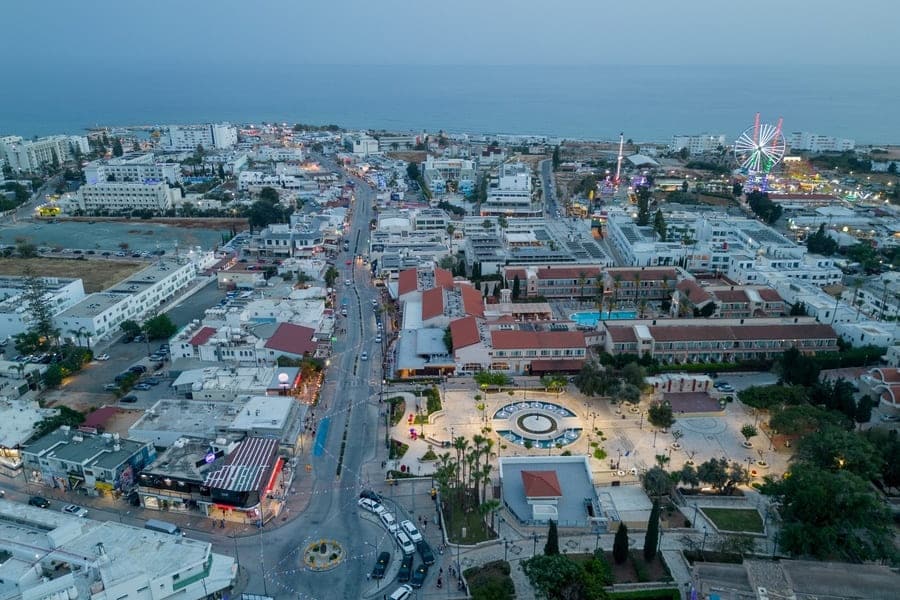
Cyprus offers a comfortable and welcoming environment for newcomers, with a warm climate, affordable living costs, a diverse population, and well-developed education and healthcare systems. Below are the key aspects of life on the island that are useful to know before relocating.
Living in Cyprus is relatively affordable compared with many Western and Northern European countries. On average, a single person needs about €1,500—1,800 per month, including rent, while a family of four requires around €4,500 per month[21].
A reasonable monthly budget for food alone is roughly €300—400 for one person and €700—900 for a family of four, depending on lifestyle and whether you mainly cook at home or eat out.
Renting a one-bedroom flat in a city centre costs on average about €880 per month, while a 3-bedroom flat in the centre is typically around €1,600 per month. Prices vary considerably by city, with Limassol significantly more expensive than Nicosia, Larnaca and Paphos.
Utilities, including electricity and water, cost around €200 per month for a 90 m² apartment, although bills can rise considerably during the summer due to air conditioning. Building maintenance charges may apply separately.
As of January 1st, 2026, around 997,000 people live in Cyprus[22]. Nearly 25% of Cyprus's population consists of foreigners, according to Eurostat[23]. In the European Union, only Luxembourg and Malta have a higher percentage of foreign residents.
Cyprus has private schools for international students linked to the British and American education systems. These include ASPIRE British School, the International School in Paphos, and American schools such as American Academy in Larnaca, Limassol, and Nicosia.
There are many English-language universities: the University of Nicosia, Frederick University, European University Cyprus, and Neapolis University.
Cyprus offers high-quality medical services at affordable prices. Investors can access healthcare through the General Healthcare System, GESY, after registering as beneficiaries.
GESY covers primary, specialist and inpatient care. Personal doctor consultations and inpatient treatment are generally provided without co-payments, while small fees may apply to services such as specialist visits without referral, medicines, laboratory tests, and emergency care.
Cyprus enjoys between 300 and 340 sunny days per year, with summer temperatures often reaching +30…35°C and mild winter days averaging around +15…17°C. The country’s beaches are recognised as the best in Europe, according to a report by the European Environment Agency.
Cyprus is also known for exceptionally clean bathing waters. In 2025, all coastal bathing waters in Cyprus were rated excellent[24].

Immigrant Invest supports applicants throughout the Cyprus permanent residence process, from the initial compliance screening to card collection, and continues to assist with renewals and status changes after approval.
Before the process begins, our AML Compliance officers conduct a preliminary check of the applicant’s passport to identify potential rejection risks before any fees are paid or investment funds are committed. If any issues arise, we advise on possible solutions. This approach helps us keep the rejection rate below 1%.
As a member of the Investment Migration Council, Immigrant Invest follows its code of ethics and maintains ongoing professional development across programmes and jurisdictions.
Our support continues after permanent residence is granted. The team remains available to assist with card renewals, replacements and future status changes.
Immigrant Invest has offices in Cyprus and several other countries worldwide. Our multilingual team works with clients in English, Spanish, Portuguese, Arabic, Persian, and other languages.
Owning property in Cyprus does not in itself grant the right to stay long-term. Non-EU citizens may remain in the country for up to 90 days within any 180-day period, and purchasing property does not extend this limit.
EU and EEA citizens also have the right to stay for up to 90 days, after which they must register their residence if they wish to remain longer.
Property ownership is relevant only when the buyer applies for a residence permit. The Cyprus Golden Visa grants long-term living rights without time restrictions.
Investments in real estate can only be refunded after obtaining citizenship by naturalisation. To do this, you must live in the country for at least 8 years. If the property is sold earlier, the permanent status will be revoked.
Before obtaining citizenship, the property may also be sold, provided it is immediately replaced with another eligible investment of the same or greater value.
Permanent residence by investment is obtained within 9 months.
The status is granted for life. However, the permanent residence card must be renewed every 10 years.
The resident submits an application along with their passport, its copy and the expiring card. This must be done no later than 3 months before the current permanent residence card expires. The renewal fee is €50.
The so-called ‘Golden Passport scandal’ in Cyprus refers to abuses of the former Cyprus Investment Programme that allowed wealthy foreigners to gain Cypriot citizenship by investment.
According to a leak known as the Cyprus Papers, many passports were issued to individuals linked to criminal activity, corruption or money-laundering, in violation of the scheme’s rules, including people under international sanctions or with criminal records.
As a consequence of the scandal, the Cyprus government terminated the programme in 2020.
In the years since, Cyprus revoked citizenship from hundreds of individuals whose passports had been obtained via the scheme, amid ongoing investigations into fraud, corruption and false representation[25].
An applicant who has lived on the island for 8 of the last 11 years is eligible to apply for a Cyprus passport. During the 12 months before the citizenship request, they must not leave Cyprus.
Cyprus permanent residence does not grant visa-free travel across Europe. As Cyprus has not yet fully joined the Schengen Area, residence permits issued by Cyprus do not exempt third-country nationals from Schengen visa requirements. Whether a visa is required depends on the holder’s nationality and the rules of the destination country.
Foreigners have more than 15 ways to become residents of Cyprus. Some of them require a work or study permit or an invitation from relatives. Investors are eligible to obtain permanent residence directly within 9 months.
Yes, you can obtain residency in Cyprus by purchasing a house on the primary market. The Cyprus Golden Visa allows you to get permanent residence by investing at least €300,000 in real estate.
Yes, the process of obtaining permanent residence in Cyprus is straightforward if you meet the investment criteria. The application process takes about 9 months, and the requirements are clearly defined.
The minimum investment for a Cyprus Golden Visa is €300,000. Additional costs include VAT, government fees, and legal fees. If purchasing residential property, VAT can be reduced to 5%, amounting to €15,000 for a €300,000 property. For commercial property, the standard 19% VAT applies, totalling €57,000.
The total Cyprus Golden Visa cost starts at around €318,640 for a single applicant. The main applicant must also demonstrate annual income from abroad: €50,000 for the investor, plus €15,000 for a spouse and €10,000 for each child.
No, it does not. The €300,000 investment amount is fixed regardless of family size, but the required foreign income rises by €15,000 for a spouse and €10,000 per dependent child.
Investors are prohibited from taking up employment in Cyprus, though they may hold shares in Cypriot companies, act as directors under the company-share route, and receive dividends.
An application may be refused if the investor does not meet the programme’s eligibility requirements, cannot provide satisfactory evidence of the investment or income, fails the required Due Diligence checks, or does not submit the necessary documentation.
Yes, as Cyprus permanent residence does not require holders to live in the country full-time or spend a minimum number of days there each year. At the same time, investors can move to Cyprus whenever they wish and live there without a time limit.
However, the permit may cease to be valid if the holder remains outside Cyprus for 2 consecutive years or fails to maintain the qualifying investment and comply with the programme’s ongoing requirements.
Failure to meet the foreign income requirement may lead to the permanent residence permit being revoked.
In addition, Golden Visa holders must provide annual evidence that they continue to maintain the investment and keep valid health insurance if they are not covered by GESY.