Cyprus has one of Europe’s most affordable residential real estate, with an average price of €2,600 per 1 m². The most popular regions among property buyers are Paphos, Limassol, Nicosia, Southern Famagusta, and Larnaca.
By investing €300,000 or more, property owners can get permanent residence in Cyprus. This program’s terms allow them to rent the properties out and earn passive income.
Here is how to buy and sell real estate in Cyprus
and what taxes to pay.




Investors can obtain lifelong residence in Cyprus by purchasing real estate worth at least €300,000. This option appeals to globally minded individuals seeking to maintain multiple homes, relocate seasonally, or bring their families into EU life.
The residence permit is issued in at least 9 months and remains valid for life, with only the ID card requiring renewal every 10 years.
To qualify for Cyprus permanent residence, the investor must meet the following eligibility criteria:
The spouse or partner and children under 25 are also eligible for Cyprus residence. Children aged 18 to 25 must be unmarried, financially dependent on the investor, and enrolled as students. Children with disabilities can be included regardless of their age.
To apply for permanent residency, an investor can purchase either residential or commercial real estate worth at least €300,000.
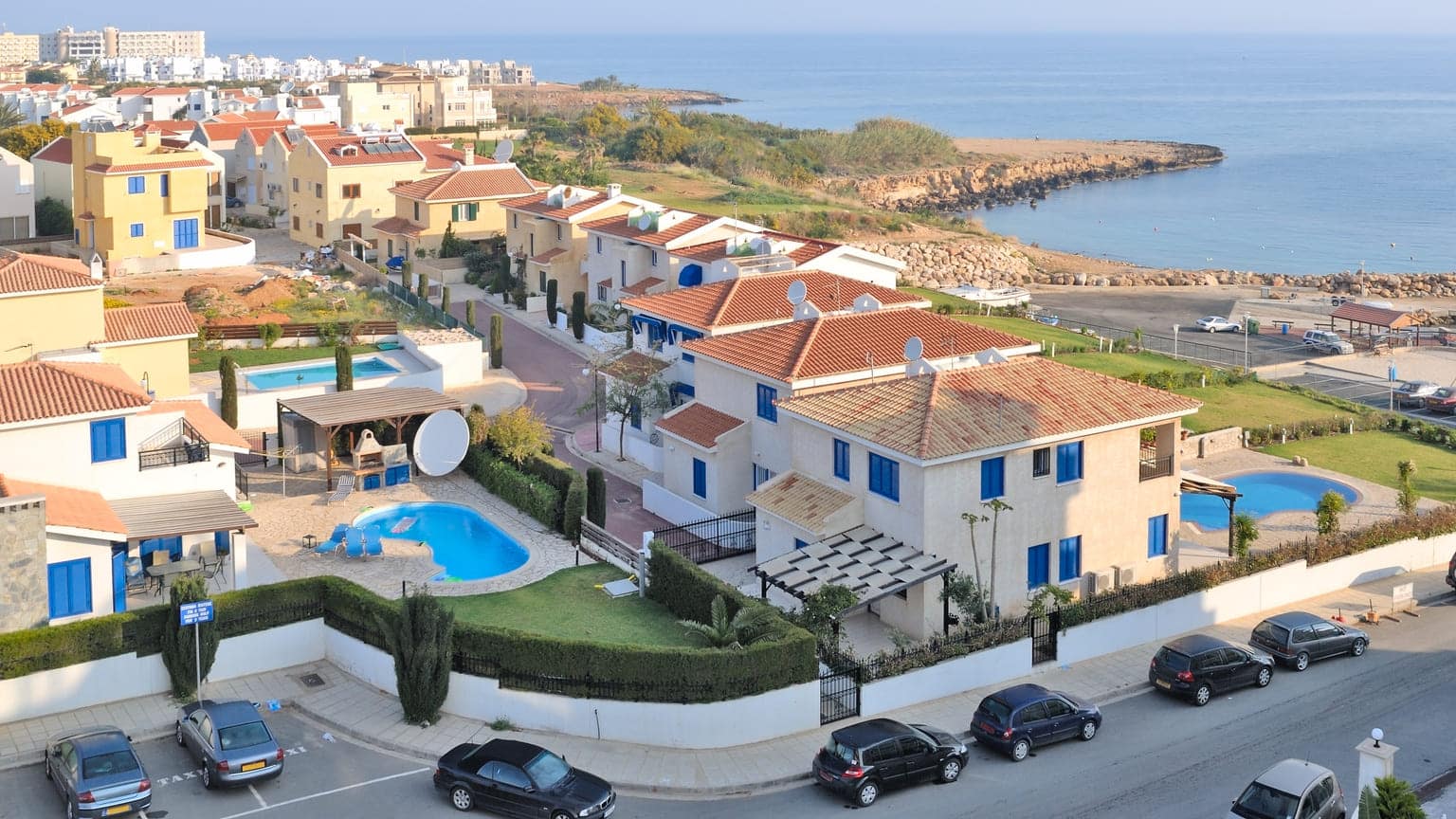
Residential real estate may have many forms: apartments, townhouses, seaside villas, etc. Apart from the property's value, the main requirement is that it is a primary sale, meaning the purchase must be made directly from the developer.
Buyers are also subject to a 19% VAT. However, this can be reduced to 5% if the property will serve as the buyer’s only residence and will not be rented out. Purchasing a resale property is not permitted.
Commercial real estate can come from both primary and secondary markets. Investors can purchase hotels, shops, offices, and industrial properties. These transactions also include VAT, and the properties can be either newly built or pre-owned.
An investor can buy one or two properties as long as their combined value is at least €300,000. There’s no requirement to purchase just a single unit.
The investment must be maintained for as long as the permanent residence status is held. It can only be withdrawn after the residence expires or if the investor obtains Cypriot citizenship, which becomes possible after 8 years of legal residence.

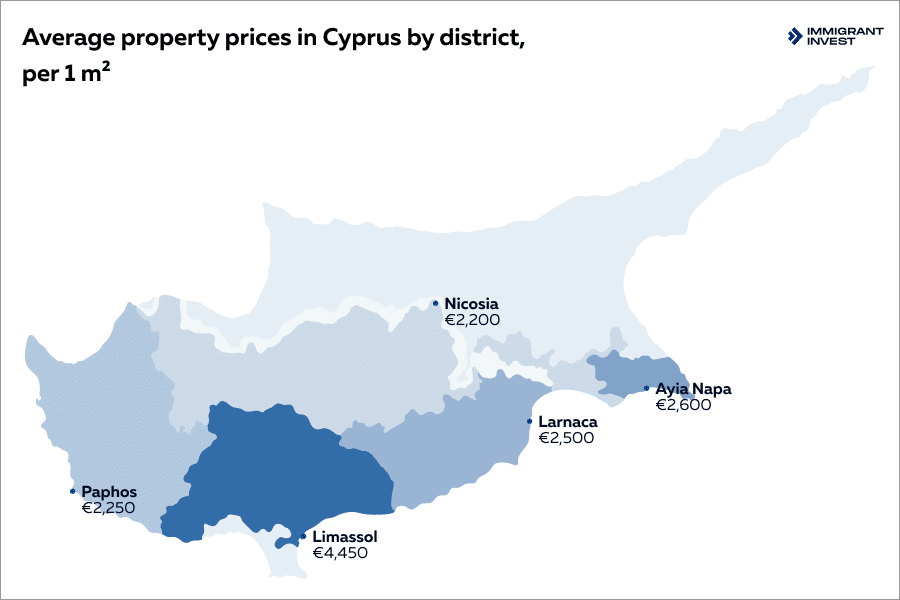
The nationwide average is about €2,600 per 1 m². Apartments and villas in Cyprus are generally more affordable than in many other EU countries. For example, prices are around €3,600 in Poland and €2,800 in Portugal and France.
The luxury end sits much higher: €6,000—8,000 per 1 m² in Limassol’s prime coastal and marina new-builds, with standout units exceeding €10,000 per 1 m². By comparison, costs per 1 m² for prestige housing in Lisbon and Barcelona are €7,000—10,000 and €8,000—12,000 in Milan, while Paris can exceed €10,000—20,000.
In general, Limassol has the highest property prices, almost twice the national average. Famagusta and Larnaca also rank among the top three most expensive districts for real estate in Cyprus.
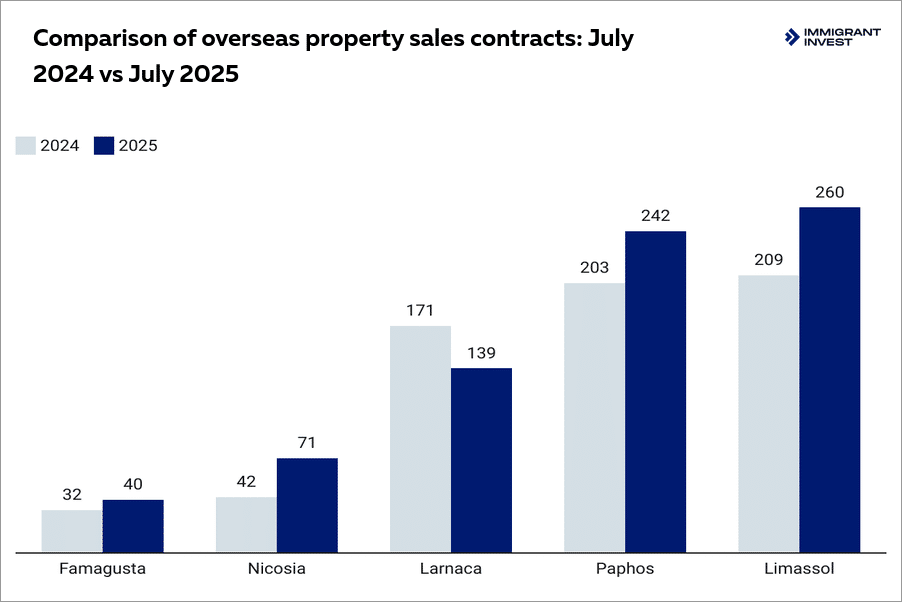
Foreign buyers in Cyprus continue to favour Limassol and Paphos, followed by Larnaca, Nicosia, and Famagusta.
So far in 2025, property sales to international buyers have increased by 21% year-on-year, with all districts benefiting from the rising demand. In July 2025 alone, 752 contracts were filed in favour of foreign buyers — up 14% from 657 in July 2024. These transactions accounted for 41% of all property sales that month.
The strongest growth was in Nicosia. Famagusta and Limassol followed with 24—25%. Paphos also saw steady growth of 19%. In contrast, Larnaca recorded a 19% decline.
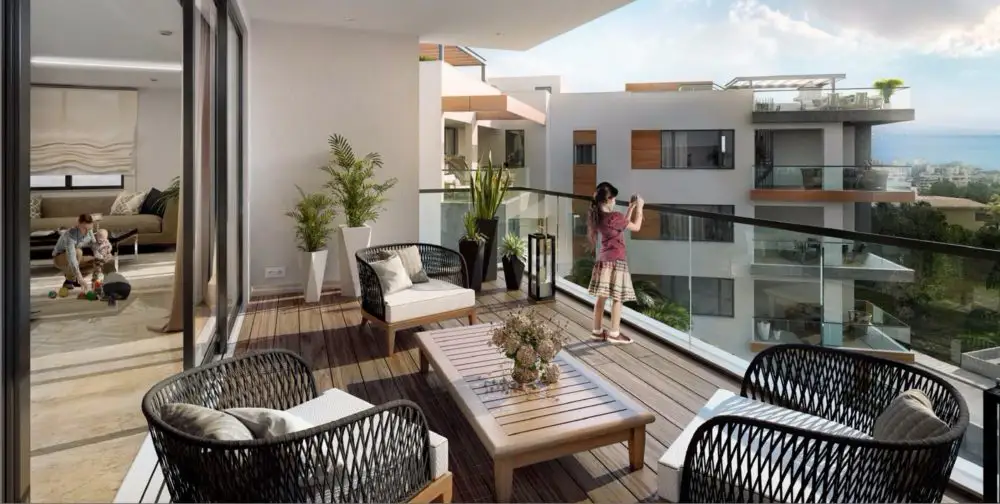
Limassol is the most expensive area in Cyprus. Residential property prices vary from €4,100 to 4,800 per 1 m², depending on the building's location and year of construction.
Foreigners make up about 30% of all real estate transactions in the region. British, Israeli, and Russian buyers are among Limassol's most frequent housing buyers.
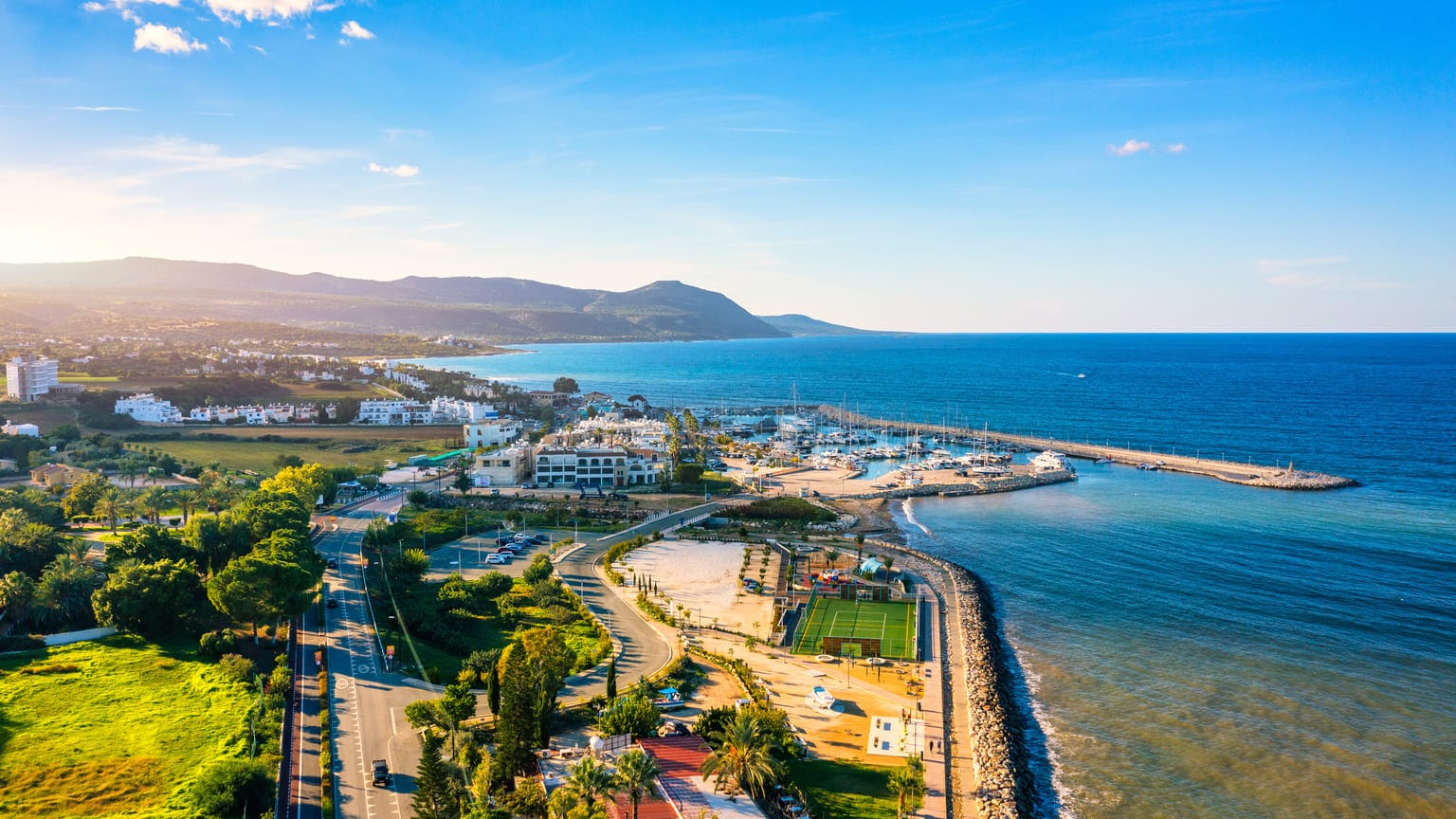
Lifestyle and attractions. Limassol has many shops, restaurants, hotels, and bars and is one of the most popular resorts in the country, along with Paphos and Ayia Napa. Limassol Marina is in the historical part of the city, with yacht docks, a beach, hotels, and a spa complex.

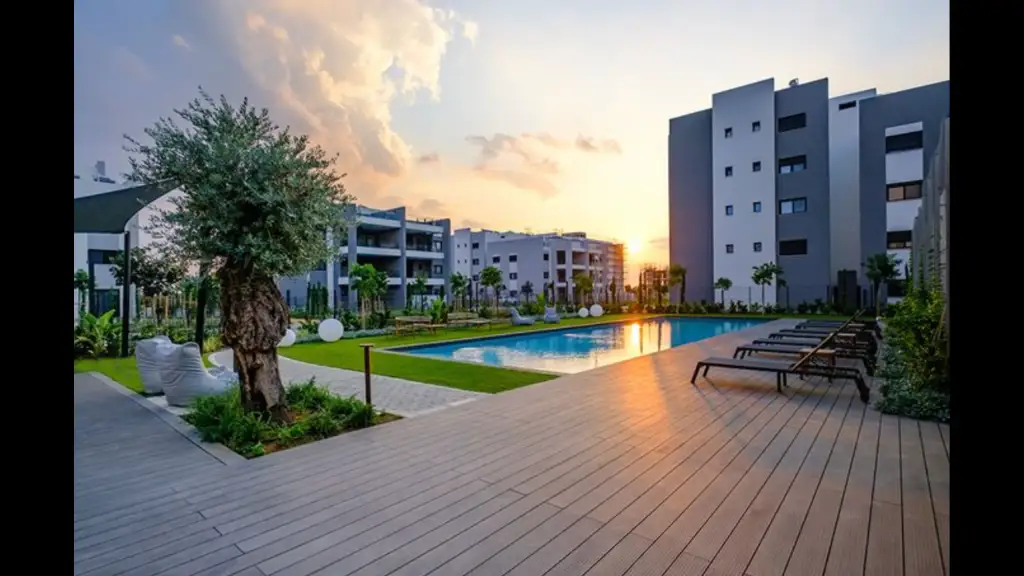
Nicosia's southern part is the capital of the Republic of Cyprus. The areas in the north are the Turkish Republic of Northern Cyprus, whose independence is recognised only by Turkey.
Property prices in Nicosia range from €1,900 to 2,500 per 1 m². The most popular areas for buying a home are Ayioi Omoloyites, Strovolos, Aglandja, and Platy.
Low foreign demand in the capital. About a third of all real estate transactions in Cyprus take place in Nicosia. However, it has the lowest level of foreign buyer activity among all districts. Only 11% of foreign-owned property is located in the capital.
Lifestyle and attractions. The developed infrastructure causes the high demand for real estate in Nicosia. The city has Cypriot and international companies offices, government agencies, kindergartens, schools, clinics, parks, restaurants, and shops in every district within walking distance.
Nicosia is also home to four private and two public universities — the University of Cyprus and the Open University of Cyprus.

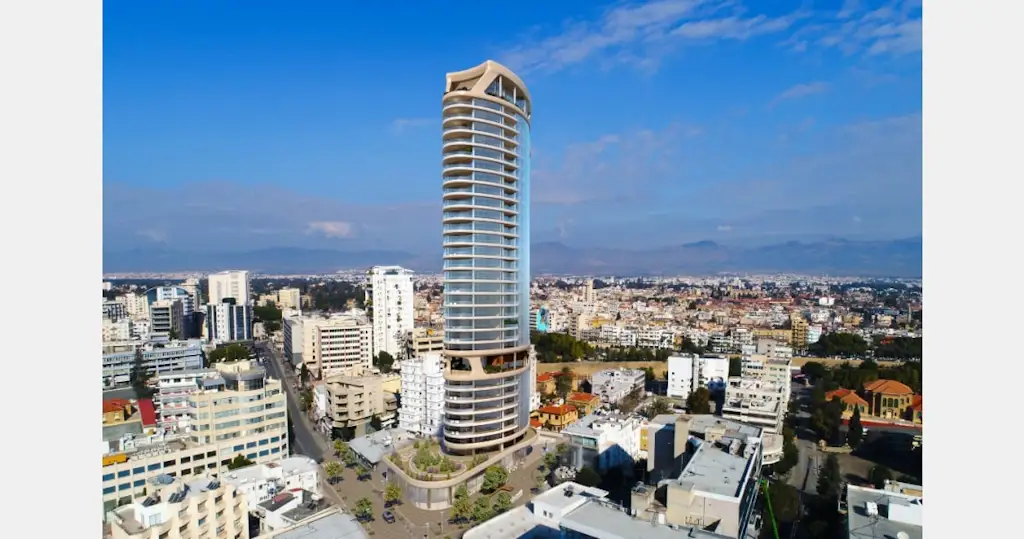
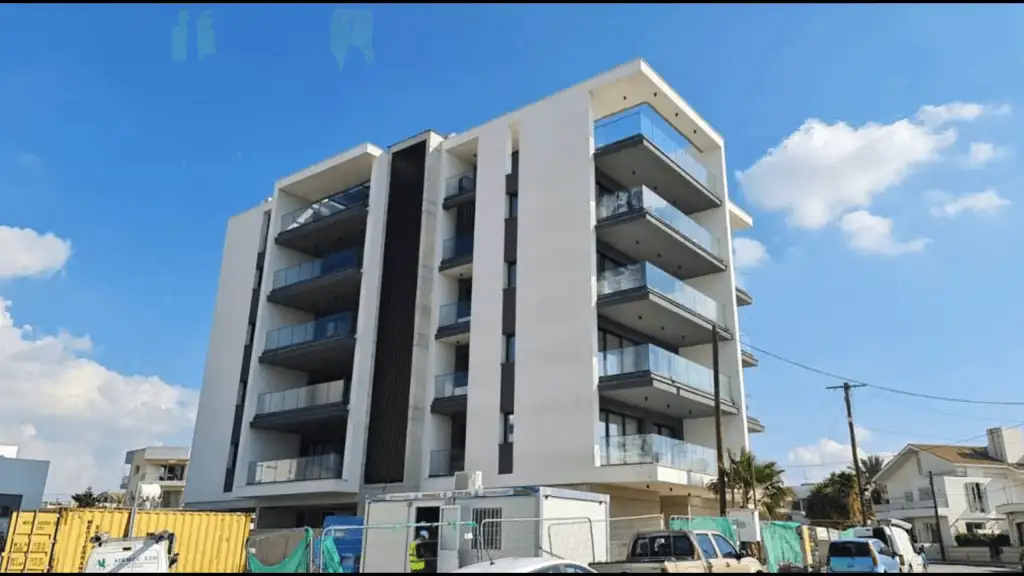
Apartments in Larnaca are sold for at least €2,100 per 1 m². This is the third-largest city in Cyprus, however the property prices here are lower than in Limassol and Nicosia. Real estate is in demand not only in Larnaca, but also in nearby villages: Pyla, Oroklini, and Perivolia.
Lifestyle and attractions. The region is attractive due to its Mediterranean beaches, 6 of which have received the Blue Flag for cleanliness and safety. Property buyers also choose Larnaca because of its convenient transport system: the city is close to the international airport and one of the largest ports in Cyprus.


Apartment prices in Paphos range from €1,900 to 2,600 per 1 m². The most popular areas to buy property in the region are Kato Paphos & Tomb of the Kings, Peyia & Coral Bay, Tala, Chloraka, and Aphrodite Hills.
Paphos leads all Cypriot districts in property sales to non‑EU buyers. As of July 2025, 20,755 out of 53,076 real estate transfers to non‑EU nationals across Cyprus took place in Paphos, the highest share nationwide.
In January 2025 alone, 36% of all property sales to foreigners in Cyprus occurred in Paphos, with non‑EU citizens accounting for the majority of those transactions.
Lifestyle and attractions. The climate in Paphos is milder than in other parts of Cyprus, with average temperatures of +29°C in summer and +17°C in winter. The beach season lasts from May to the end of October, when the locals relax on sandy and pebbly beaches. Of these beaches, 17 are marked with the Blue Flag.
The city has one of Cyprus’ international airports, PFO. The airport can be reached in 20 minutes by bus or taxi from the city centre.
Apartment and housing prices in Southern Famagusta start at €2,000 per 1 m². Popular are resort areas such as Ayia Napa, Protaras, Pernera, Paralimni, and Ayia Thekla, known for their infrastructure, strong tourism flow, and investment potential.
Foreign nationals account for approximately 11% of all property purchases in Southern Famagusta.
Lifestyle and location. The Famagusta district is known for its many Blue Flag beaches, including Fig Tree Bay, Nissi Beach, Ayia Thekla, and Pernera, with clear waters and coastlines that attract visitors throughout the year.
Historic towns such as Paralimni and Protaras stand alongside Ayia Napa, where nightlife, dining, and leisure blend seamlessly. The region also offers sea sports, coastal walks, and waterfront restaurants, creating a lifestyle that balances recreation with relaxation.

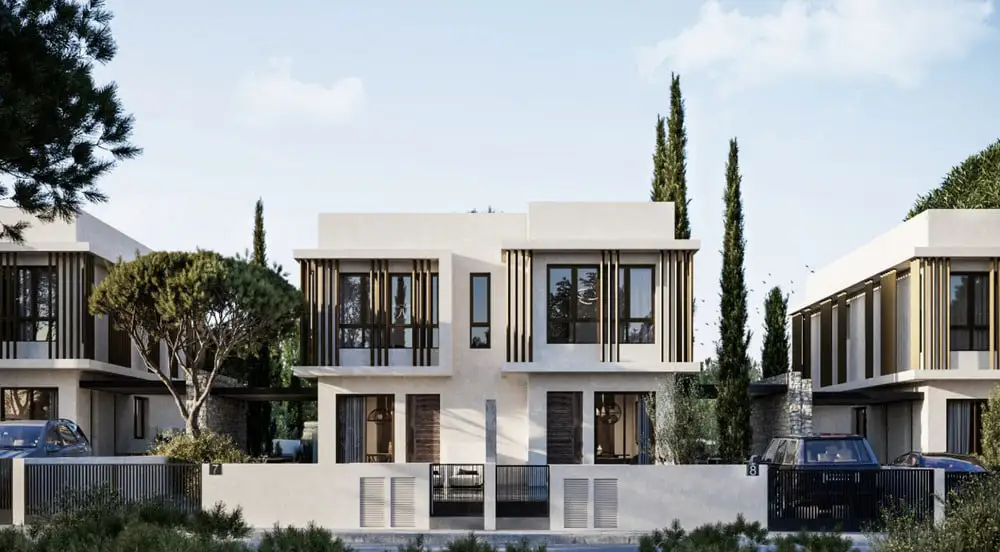

High rental yields, a stable real estate market, and low property taxes make property in Cyprus a smart investment. Beyond financial returns, buying a house in Cyprus also grants permanent residency, opening lifestyle opportunities for the entire family.
Families who buy a house in Cyprus gain lifelong residence in a peaceful, well-connected country. They get access to reputable international schools, quality healthcare, and modern infrastructure.
Cyprus property investment also grants visa-free travel across the Schengen Area. Whether settling by the sea or in one of the country’s refined urban centres, families benefit from comfort, stability, and freedom of movement from day one. Adding to its appeal, permanent residence is easy to maintain, requiring just one visit to Cyprus every 2 years.
Ranked among the world’s 20 safest countries by Insurly, Cyprus offers a reassuring level of safety for families. Low crime rates, reliable healthcare, road safety, and minimal risk of natural disasters make the island not just a place to invest, but a place to call home.
Foreigners with residence permits can rent out real estate long-term. The average gross rental yield in Cyprus stood at 4.77% in the first quarter of 2025.
The rental rate depends on the region, the lease term, and the property area. One-bedroom apartments can be rented for an average of €1,300 in the centre of Limassol, €860 in Larnaca, and €910 in Paphos.
Landlords pay rent income tax on a progressive scale of 20 to 35%. No tax is levied if the property brings the owner less than €19,500 per year.
In January 2025, the number of property sales contracts registered with Cyprus Land Registry offices rose by 21% compared to the same period in 2024. All districts recorded growth: Famagusta led the surge with a 40% increase, followed by Limassol at 36% and Larnaca at 20%. Nicosia saw a steady rise of 13%, while Paphos posted the smallest gain at 5%.
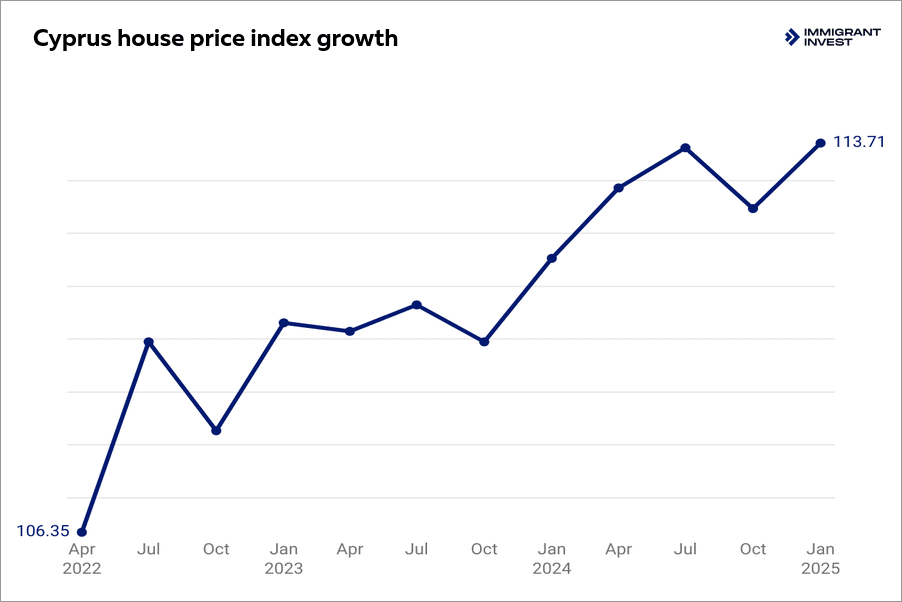
The residential property price index in Cyprus rose by 4.8% year-on-year: detached homes up 5.6% and apartments up 3.5%.
Property buyers can lower the standard VAT rate of 19% to 5% if this is the first property they buy in the country and they intend to live in it. There are no property transfer fees if the real estate is bought on the primary market.
There are almost no taxes related to owning property: owners only pay insurance of around €40 per month, and property maintenance fees, which differ depending on the type and location of the real estate.
Cyprus offers a wide spectrum of properties to match every vision of home. Families find practical apartments and townhouses near schools and parks, while high-net-worth individuals opt for villas with panoramic sea views or residences within exclusive yacht marinas.
Coastal living means children can head to the beach or sailing clubs straight after school, while parents enjoy refined leisure, from fine dining to private spas. Each property is more than a dwelling: it is a lifestyle choice shaped by the island’s sea, sun, and sophistication.
English is the dominant foreign language and widely spoken, making everyday integration straightforward. Around 80% of Cypriots speak English to some degree. It is widely used in business, tourism, and education, and many official documents are available in English.
Buying a home in Cyprus offers more than just bricks and mortar: it delivers a genuine sense of belonging. Foreign residents make up nearly 25% of Cyprus’s population, drawn from at least 65 different countries, including Greece, the UK, and Romania, alongside sizable groups originating from Georgia, the Philippines, India, Nepal, Sri Lanka, and Ukraine.
The island blends Mediterranean traditions with a modern European lifestyle, offering local festivals, family-friendly neighbourhoods, and seaside tavernas. Culture is everywhere: ancient ruins and Byzantine churches meet open-air concerts, art shows, mountain hikes, and year-round water sports.

Buying property in Cyprus for residency is a streamlined process for foreign investors. They can purchase real estate independently or with help from licensed agents. Immigrant Invest is a licensed agent, whose specialists guide clients toward options that meet the program’s requirements and fit their personal goals.
We only work with realtors registered with the Cyprus Real Estate Agents Association, CREAA. Membership confirms that the realtor is authorised by the state, listed in the official registry, and covered by mandatory professional indemnity insurance.
Based on Immigrant Invest’s experience, obtaining permanent residence in Cyprus through real estate takes at least 9 months. Our team supports investors at every stage, from selecting the right property to preparing and submitting documents.
Immigrant Invest runs a confidential one-day check before application submission. A certified AML officer screens the investor’s documents in global databases to reduce the risk of rejection to 1%. If any concerns arise, the team suggests solutions.
Immigrant Invest lawyers collect and prepare the necessary forms, passports, income declarations, proof of address, and other documents.
The investor transfers €300,000 plus 19% VAT to the developer. If the property qualifies for a reduced VAT rate, an application is submitted to the Cyprus Department of Lands and Surveys. Once approved, the VAT is lowered to 5%, and the excess 14% is deducted from future payments.
Immigrant Invest maintains an in-house database of pre-approved properties. Our legal team assists clients in selecting the right property, preparing the sale agreement, and completing the purchase process in full compliance with residency programme requirements.
The application and documents are submitted to the Civil Registry and Migration Department. Review takes 3 to 6 months.
Once approved, the investor and family visit Cyprus to submit biometric data. Lawyers assist with visa arrangements and schedule appointments.
Within 40 days of biometrics, permanent residence cards are issued and must be collected in person at the Civil Registry and Migration Department.
Mandatory documents. These are required to complete the real estate purchase and support the permanent residence application:
Optional documents. While not legally required, several supporting documents can strengthen the application and help ensure a smooth process. These may include a lawyer’s Due Diligence report on the property, proof of funds, a power of attorney if using a representative, and sworn statements explaining finances or family status.
Stamp duty is a one-time tax that is paid when buying a home. The bid depends on the property value:
The fee must be paid within 30 days after the purchase and sale transaction is concluded.
VAT at 19% is charged when purchasing a newly built house or apartment in Cyprus. However, if the property costs up to €350,000, a reduced VAT rate of 5% may apply.
Property size rules are the following:
If the value is between €350,001 and €475,000, 5% VAT can still apply only on the first €350,000 and only if the size is 190 m² or less. If the property costs more than €475,000, the full 19% VAT is charged.
Buyer also must intend to use the property as their main and permanent home and must not have received the reduced VAT rate for another property in the last 10 years.
The transfer tax is paid by buyers of resale real estate. The tax rate is calculated on a progressive scale and depends on the property value:
The annual municipal tax is paid by property owners in Cyprus; it is charged in the amount of €90 to 300, depending on the housing area.
The cost of housing maintenance in Cyprus includes taxes and utilities: electricity, water, Internet, and digital television. On average, utility bills per person living in an apartment of 85 m² are €187 per month.
Electricity. Cyprus is one of the top ten European countries with the highest electricity tariffs: Cypriot residents pay €0.33 per 1 kW. According to Eurostat, the average figure for the EU countries is €0.28 per 1 kW. Electricity bills in Cyprus are issued once every 2 months.
Water supply. Tariffs for cold water depend on the consumption volume, and Cyprus has no centralised hot water supply. Water supply rates are progressive and vary by locality. For example, in Nicosia, you pay a fixed base fee of €22 plus ~ €0.64 per m³ of used water.
Internet and digital TV. Cyprus has several home Internet providers: Cyta, Primetel, Epic, and others. The Internet connection is free of charge, and the cost of the tariff depends on the Internet speed. For example, in Primetel, the monthly payment will be €24.99 per month for Internet speeds of 200 Mbps and €34.99 for 500 Mbps.
Payment for digital TV depends on the number of channels included in the package. For example, the minimum package price at Epic is €7.99 per month, and the connection itself is free.
Income tax. Both residents and non-residents must declare rental income from Cyprus properties. Individuals are taxed progressively on their net rental income:
Special Defence Contribution, SDC. This applies to tax residents who are also domiciled in Cyprus and is calculated as 3% on 75% of gross rental income.
General Healthcare System Contribution. All residents earning rental income pay 2.65% of gross rental income to fund the healthcare system.
Deductions. Individual landlords can deduct certain expenses and allowances to reduce the taxable amount:
A mortgage in Cyprus is only available to citizens or foreigners with a residence permit or permanent residence.
The average mortgage rate in Cypriot banks is around 4% per year. The interest rate depends on the property's value, the term, the down payment amount, and the borrower's financial condition. For example, at the Bank of Cyprus, the mortgage rate varies from 3.9 to 5.7% per year.
Banks in Cyprus issue mortgage loans for 5 to 40 years. A borrower must be at most 65 by the time their mortgage is to be paid out.
A down payment is from 20 to 40% of the cost of housing. The larger the initial payment amount, the lower the loan overpayment and interest rate.
Some banks charge a fee for completing a loan. For example, at Ancoria Bank, the commission is 1% of the loan agreement amount.
The average cost of real estate in Cyprus is €2,600 per m². The most expensive villas and apartments are in Limassol, Nicosia, and Larnaca.
Cyprus permanent residence can be obtained by foreigners who have bought apartments in new buildings or new houses at a price of €300,000. After 8 years, the owner can apply for citizenship.
For investments in real estate starting at €300,000, a foreigner can get Cyprus permanent residence. The procedure takes about 9 months.
Other ways to get Cyprus permanent residence take longer. A foreigner must have lived in Cyprus for at least five years to apply for the status.
The Cyprus passport is obtained in one of three ways: through marriage, naturalisation, or descent. The Cypriot government closed the citizenship by investment program in real estate in 2020.
Foreigners can get Cyprus permanent residence when buying a property worth €300,000 or more. After eight years of living in Cyprus, they can apply for citizenship.
Foreigners can take out a mortgage to buy a home in Cyprus if they already have a residence permit.
The average mortgage rate is around 4% per annum. The rate depends on the initial payment amount, the borrower’s financial condition, the property’s value and the mortgage’s term.
Stamp duty in Cyprus varies annually, but only slightly. Stamp duty ranges from 0.15 to 0.20% and depends on the property’s value.
Both citizens and foreigners can open bank accounts in Cyprus — for instance, to secure a mortgage. Alpha Bank Cyprus and AstroBank cater to non‑residents. However, foreigners with a residence permit or permanent residence status are more likely to successfully open an account in a Cypriot bank.
To open a current account, you need to contact the branch of the selected bank personally. The bank will review the application and verify the client’s trustworthiness. Verification can take anywhere from one week to one month.
Insuring real estate in Cyprus is recommended, but there is no umbrella real estate policy. For example, General Insurance of Cyprus provides separate theft, burglary, fire, and natural disaster plans. The cost of insurance depends on the type of property, the sum insured and the damage caused.
Foreigners can buy property in Cyprus after getting permission from the Council of Ministers of Cyprus.
The buyer and the seller enter into a preliminary contract of sale, in which they fix the price of an apartment or house, the payment procedure, and the rights and obligations of the parties.
The buyer opens a current account in a Cyprus bank, to which they deposit 10 to 30% of the housing cost. The deposit will not be returned if the buyer changes their mind and recalls the transaction.
The remaining property value, minus the deposit, is paid after signing the main contract to purchase and sell apartments or villas. Then the new owner receives the title of owner, a document confirming real estate ownership in Cyprus.
Yes. In Cyprus, a foreign citizen cannot buy a plot of land or real estate with an‑area of more than 4,000 m².
Cyprus permanent residence can be obtained by non-residents who have bought one or two new properties with a total value of at least €300,000.
If a foreigner buys a house or an apartment in Cyprus for at least €300,000, they become eligible for permanent residence. It means that they can spend as much time in the country as they wish.
Apart from making an investor eligible for permanent residency, buying a house or an apartment in Cyprus could be a good idea due to the country’s favourable climate, strategic location, and relatively low property taxes.
In addition to common issues, like hidden fees or differences in legal systems, there are some specific pitfalls concerning purchasing property in Cyprus. For example, some properties can be sold without clear or finalised title deeds, complicating the transfer of ownership. It is advisable to consult experts specialising in real estate in the country before deciding which property to buy.
To verify a CREAA-licensed agent in Cyprus, ask for their official Registration Number and check it on the Council of Cyprus Real Estate Agents online registry, where all licensed professionals are listed. Genuine members also appear in the CREAA directory and display the association’s logo, backed by mandatory professional indemnity insurance. This quick check ensures you are dealing with a properly authorised agent.
You can absolutely purchase property in Cyprus remotely — you don’t need to be physically present. The entire process can be managed via Power of Attorney, PoA.
Not automatically — buying property in Cyprus does not by itself grant residency. To qualify, a foreigner must buy a new residential property worth at least €300,000 and show legal income of €50,000 per year. With this, the buyer and their family can apply for permanent residence. Processing takes around 9 months.