+357-22-232-044
Worldwide Offices
August 24, 2025
Reading time: 13 min

Investing in Cyprus real estate: how to buy property and benefit from the purchase

In 2024, Cyprus ranked 12th among the best countries for investment globally. The country offers low tax rates, favourable conditions for business development, and a high standard of living.

By purchasing an apartment or a shop space and renting it out, one can earn between 5% and 10% annually.

Investing in Cyprus real estate can bring not only profit. By investing €300,000, you can obtain a permanent residence permit. Both residential and commercial properties are eligible as investments.

In this article, we collaborate with an expert to explore the most profitable investment opportunities, ranging from apartments to hotels.


Elena Kozyreva
Explains how to choose and buy property in Cyprus
Fact checked by Elena Ruda Elena Ruda
Elena Ruda
Fact checked by Elena Ruda
Elena helped over 500 investors’ families to choose and obtain second citizenship or residency. She knows the pros and cons of each investment option and improves the industry expertise at the company.
Reviewed by Vladlena Baranova Vladlena Baranova
Vladlena Baranova
Reviewed by Vladlena Baranova
Vladlena leads preparation to Due Diligence and application for citizenship or residency by investment. She performs independent and in-depth analysis of investors’ situations and indicates possible risks. Vladlena helped to get second passports and residence permits to over 300 investors from all over the world.
Сyprus real estate investment

Why invest in Cyprus real estate: 9 main points

1. Low taxes on property purchases. The tax rate depends on the type of property: for new builds — up to 19%, for resale properties — from 3% to 8%, depending on the property value. A stamp duty of 0.15% to 0.20% of the property price must also be paid within a month after the deal is closed.

2. Tax benefits for new builds. If an investor is buying residential property in Cyprus for the first time and registers it in their name as an individual, not a company, they can reduce the tax from 19% to 5%. However, this benefit comes with a condition: the investor must keep the property for at least 10 years and cannot rent it out.

3. Residency in a European country. Buyers of property valued at €300,000 or more are eligible for permanent residence in Cyprus. The resident card is issued indefinitely. To maintain residency, there is no need to live in Cyprus — a simply visit to the island once every two years is enough.

4. High liquidity. Data from the last ten years show that real estate prices in Cyprus increase by 0.5% to 1% annually, adjusted for inflation. This ensures that an investor is unlikely to lose money when selling, and may even profit.

5. Rental yield up to 10%. Renting out an apartment in Cyprus in 2024 can generate 7—10% annually. This is one of the highest yields among EU countries.

6. Wide range of properties. Cyprus offers a variety of real estate options, from small apartments to spacious flats and villas. Prices start from €870 per square metre.

7. Simple purchasing process. The Cypriot government reduces bureaucracy for foreign buyers: one simply needs to choose a property, sign a contract, get approval for the deal, and complete the purchase. An experienced lawyer can handle the entire process.

8. Up to 340 sunny days a year. In winter, the average temperature in Cyprus is +13…+15°C, and in summer, it ranges from +28...+33°C. The average water temperature is +22°C, and it doesn't drop below +17…+19°C in winter, allowing for swimming and water sports year-round.

The island is home to oak, juniper, pine, and maple trees, along with many flowers, ensuring greenery throughout the year. Cyprus' climate is considered one of the healthiest in the world.

9. Safe and comfortable living. Cyprus is one of the safest countries in the world. Earthquakes are rare — the last major one occurred in 1999, and there are no risks of other natural disasters.

The Insurly portal rated Cyprus 88.6 out of 100 for safety, analysing healthcare, education, environment, and crime rates. 

Cyprus real estate market: overview

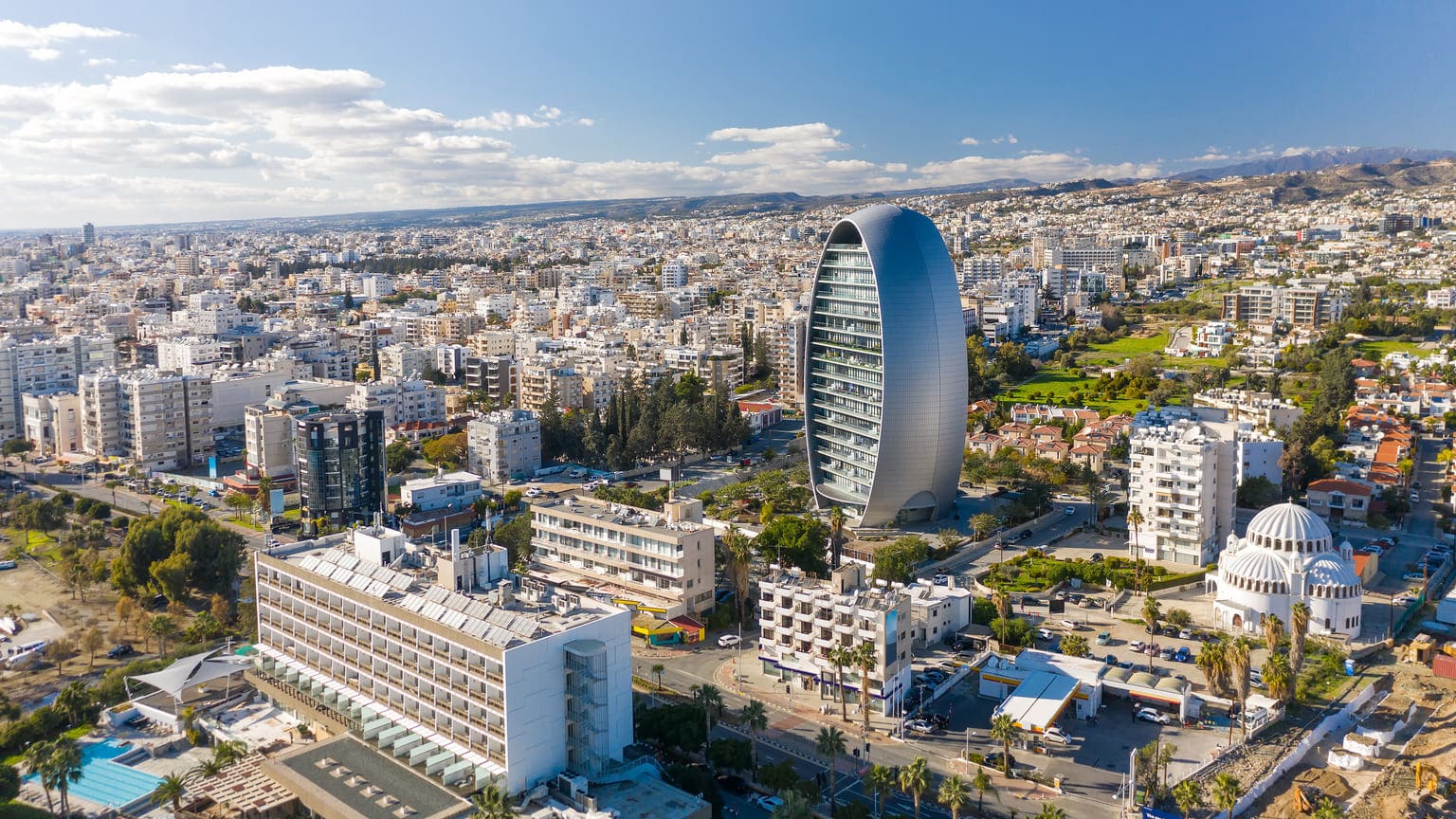
According to the Cyprus Land Department, the number of real estate transactions in February 2024 increased by 14% compared to February of the previous year. Investors most frequently purchase residential and commercial properties in Limassol and Nicosia.

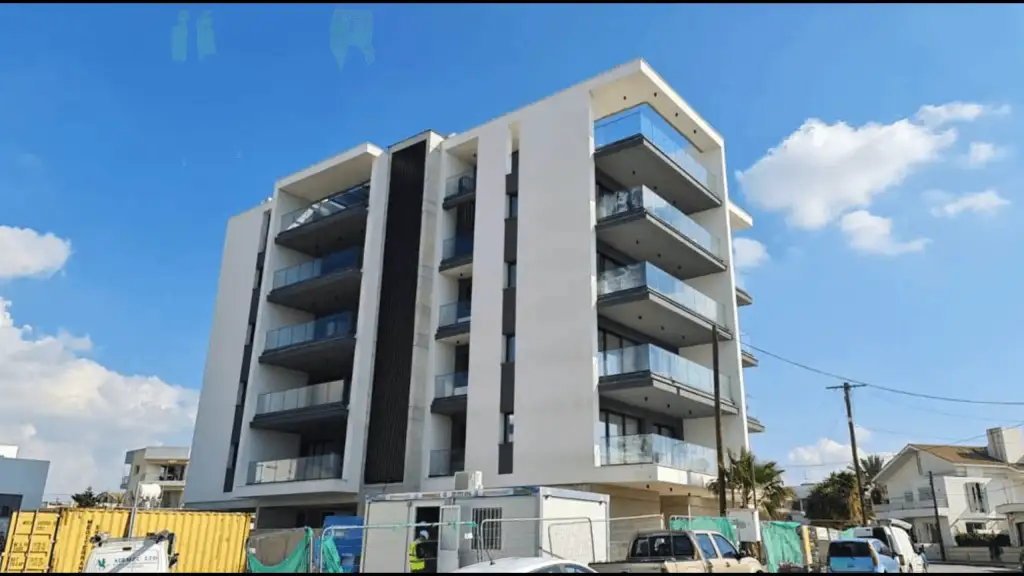
New builds in Cyprus come in three types. Available for sale are apartments in 3—6 storey buildings, apartments in mini-skyscrapers with 20—30 floors, as well as villas and cottages with private land.

The resale market consists of properties that have had at least one previous owner. This category includes older properties, homes built in the 1970s, and modern developments. Most are low-rise buildings of up to 6 floors, though the 20th century saw the construction of buildings up to 14 floors.

Residential property for investment in Cyprus

Cyprus, Limassol
€299,000 — €519,000
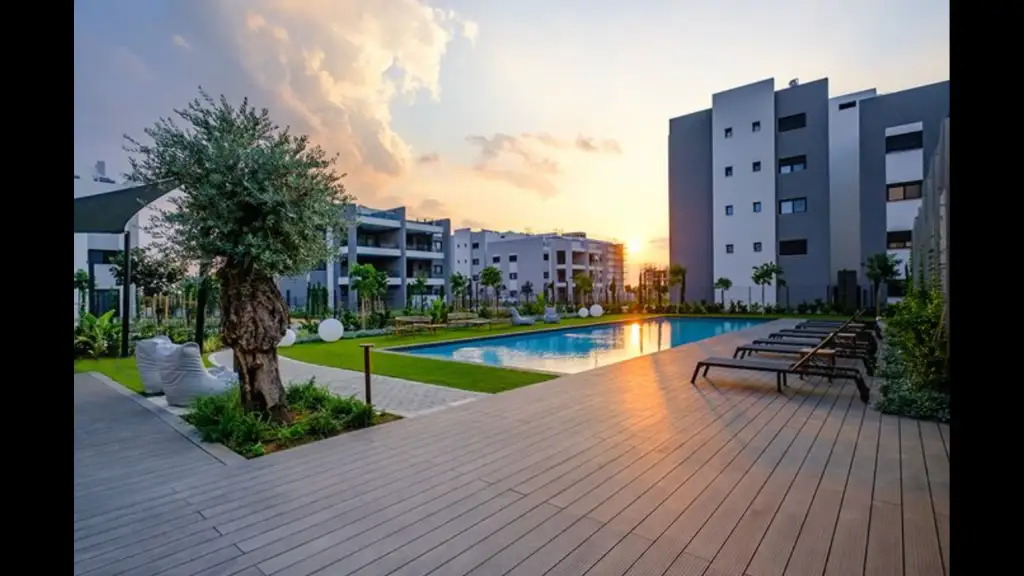
Apartments in a unique closed residential eco-project
72 m²
1—3
1—3
Cyprus, Nicosia
€258,000+
Modern apartments in a residence with a swimming pool
124 m²
2
2

Hotel properties — apartments within hotels and entire complexes with infrastructure. The season in Cyprus lasts almost all year round, and the destination's popularity is growing. 

Investing in a rental property is a profitable decision. You can manage the business yourself or entrust it to one of the development companies in Cyprus that offer such services.

Commercial properties. Most available commercial spaces are on the ground floors of residential complexes, with standalone units being less common. When purchasing such property, there’s no need to run the business yourself — you can simply find a tenant and receive a guaranteed monthly income from their rent payments.

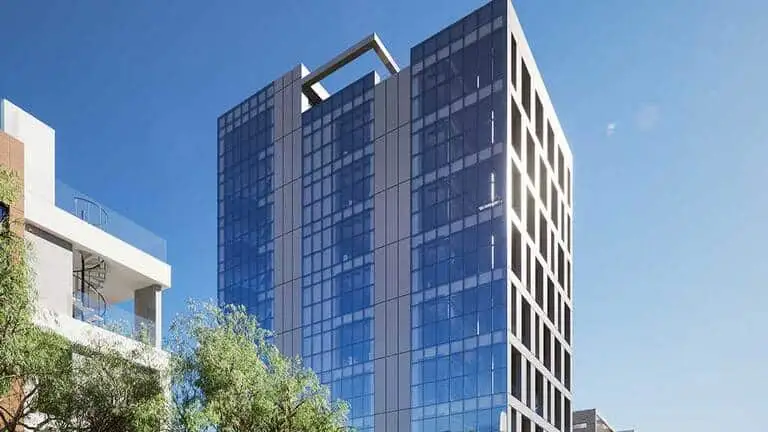
Offices are located in business centres, primarily in Limassol and Nicosia. Since 2022, many IT companies have relocated to Cyprus, bringing their employees, including JetBrains, InDrive, and Gett. Smaller businesses continue to move as well, often in need of office space. This presents another strong investment opportunity. 

Commercial property for investment in Cyprus 

Cyprus, Limassol
€1,446,000 — €3,824,000
Commercial building in a prestigious Limassol area
182 m²
2—3
Cyprus, Nicosia
€848,000 — €1,060,000
Office in a modern business center in Nicosia
218 m²

Hot spots for buying Cyprus property

Limassol is a resort city stretching 15 km along the southern coast of Cyprus. The city has a population of around 240,000 people.

The city is famous for its cultural events, nightclubs, and restaurants, attracting many tourists. Limassol also serves as a business hub of Cyprus, drawing international companies, especially in the financial sector.

On average, Limassol residents spend around €900 per month on living expenses, excluding rent, while a family of four spends about €3,100.

Comparison of Limassol districts

DistrictProsCons
Historic Centre

Mainly home to young people and tourists
Well-established area;

Many shops and restaurants, as well as markets;

Features a promenade and walking areas
Few new builds, mostly older properties;

Lacks parking, kindergartens, schools, and medical facilities;

Crowded with tourists, noisy, and expensive
Central District

Mainly home to families with children
Close to the historic centre and parks;

Many kindergartens, schools, and medical facilities
Almost no new builds;

Mostly economy-class housing, but apartments are expensive
Neapolis

Suitable for office workers, families with children, and retirees

The most developed area in terms of infrastructure — modern residential complexes, many offices, and shopping centres;

Everything is nearby, including the city beach
The area is actively being developed, so roads are often closed;

Dusty and noisy during the day
Germasogeia

Mostly home to wealthy families who prefer private houses over apartments
Quiet coastal area with a eucalyptus park;

Well-developed infrastructure with many villas and houses
Many villas are rented out short-term to tourists during the season;

High property prices
Amathus

A new area with villas and townhouses, ideal for investment
The most modern houses, large private plots, and clean beaches;

Relatively low prices
Infrastructure is still developing: you’ll need to drive to the city centre for shopping

Nicosia is the capital of the country, located inland. The city is divided into two parts: the southern part is controlled by the Republic of Cyprus, while the northern part is under Turkish control.

The southern part of the city has a population of 276,000, while around 200,000 live in the northern part. 

On average, Nicosia residents spend about €800 per month on living expenses, excluding rent, while a family of four spends around €2,900.

Comparison of Nicosia districts

DistrictProsCons
Agios Omologites

Small district near the old town: suitable for office workers with families
Cultural sites, parks, shops, offices, as well as schools, kindergartens, and clinics are within walking distance;

Easy access to any part of the city
Expensive housing; 

Parking issues
Strovolos

Business district where most locals live
Developed infrastructure: there are squares, shops, hospitals, schools, kindergartens, and offices;

Good transport accessibility 
The area is being developed, so it can be noisy;

Not as scenic as the central part of the city
Aglantzia

The second largest district in Nicosia after Strovolos


Quiet area with the Athalassa Forest Park, which is pleasant for walks;

Property prices are lower than in Strovolos, with many options in new developments
Less developed infrastructure compared to Strovolos;

Relatively far from the city centre and inconvenient without a car, as public transport runs infrequently

Larnaca is a seaside city and the third-largest region in Cyprus. It is home to the largest airport in Cyprus, handling most international flights.

Larnaca has a population of about 50,000.

On average, Larnaca residents spend the same amount on living expenses as Limassol residents: €900 per month, excluding rent. A family of four would need around €3,100.

Comparison of Larnaca districts

DistrictProsCons
Historic Centre

Finikoudes promenade and several picturesque nearby streets
Lively area;

Well-developed infrastructure
Many tourists, noisy;

Expensive real estate, mostly older properties
Mackenzie

A 15-minute walk from the promenade, close to beaches
Quiet on weekdays, an excellent place for sports activities;

Housing costs are lower than in the city centre
Noisy in the evenings on weekends;

Longer walk to supermarkets for groceries
Business District

Areas: Aradippou, Droushia, Kamares
Many new developments, well-developed infrastructure: shopping centres, kindergartens, schools, a hospital, and easy access to the cityPublic transport is not well-developed, inconvenient without a car;

Walking to the city centre is far
Suburbs

Eastern and western coasts: Dekelia, Livadia, Kiti, etc.
Private land;

Close to the beach and nature
Houses are quite expensive;

A car is necessary for getting around

Paphos is an elite resort in Cyprus, a tourist hub adjacent to a unique ancient city. It is listed as a UNESCO World Heritage Site due to its remarkable landmarks, including ancient royal tombs, mosaics, and monuments.

Paphos has a population of 35,000.

On average, Paphos residents spend the same amount on living expenses as those in the capital, Nicosia: €800 per month, excluding rent. A family of four would need around €2,900.

Comparison of Paphos districts

DistrictProsCons
Universal

Mostly home to middle-class retirees and family tourists
A compact area close to the promenade and near the city centre;

Well-developed infrastructure, with villas featuring pools
No gyms;

Few new developments, mostly resale properties
Kato Paphos

Area near the harbour, with 1990s buildings but some modern villas. Mainly inhabited by tourists
Many restaurants nearby;

The promenade and beaches are within walking distance
In the off-season, most establishments close, making it inconvenient for families;

Houses are expensive or in poor condition
Melanos

Located between the Tombs of the Kings and the suburb of Chloraka
Numerous new developments and villas with panoramic sea views;

Relatively affordable prices and good infrastructure
Far from the sea, no beaches within walking distance — for a comfortable lifestyle, a villa with a pool is necessary

Expenses for property purchase

The cost of purchasing real estate consists of the property's price and related expenses, such as duties and commissions. There is no mandatory property insurance when buying in Cyprus.

Prices. The price per square metre in central Limassol is €4,330, and in residential areas, it's €3,284. These are the highest prices on the island. In Paphos, Larnaca, and Nicosia, prices are at least half as much.

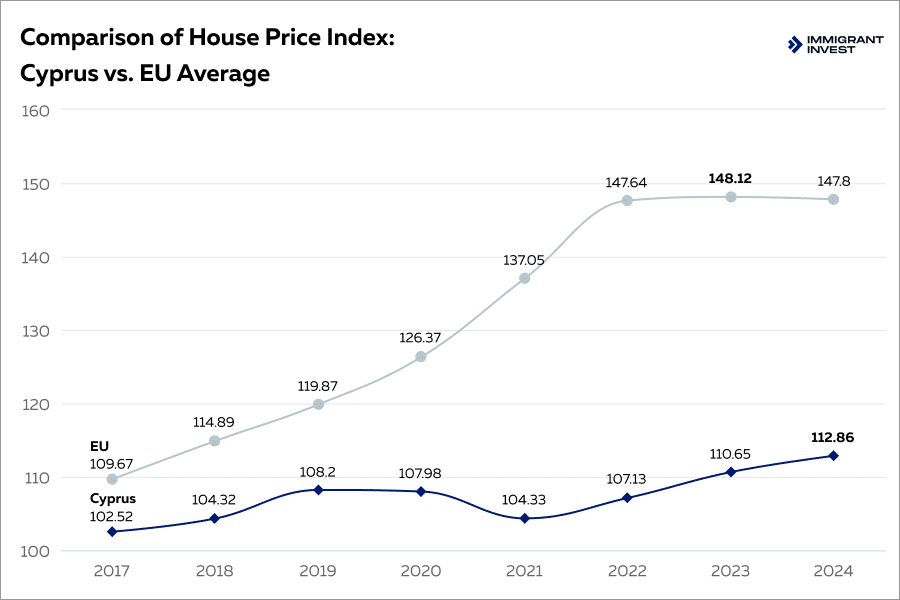
As of the second quarter of 2024, Cyprus's House Price Index increased by 2.5% year-on-year, reaching 112.86. This reflects a steady rise in property prices following a series of minor quarterly fluctuations in previous periods. Specifically, house prices grew by 1.2% compared to the first quarter of 2024, continuing an upward trend that has characterised much of the past few years​.

Investing in real estate in Cyprus

Taxes range from 3% to 19.2% of the transaction amount. The tax rate depends on the property’s value, size, age, and the seller’s legal status. If the apartment is bought from a developer, the investor only pays VAT; if on the secondary market, only the transfer tax is paid. Stamp duty must be paid in either case.

VAT in Cyprus is 19%, but in some cases, the rate is reduced to 5%. Discounts are available to buyers of residential properties who plan to use the property as their main and permanent residence.

The reduced VAT rate applies to the first 130 m² of the property if the value does not exceed €350,000; the remaining portion is taxed at the standard 19% rate. The total area of the property must not exceed 190 m², and it must cost less than €475,000 for the discount to apply.

The transfer tax ranges from 3% to 8%. The final amount is calculated by the Land Committee based on the transaction value, the average cost of similar properties in the region, and the number of owners.

Stamp duty ranges from 0% to 0.2% of the transaction value. This fee must be paid within 30 days after signing the contract.

Realtor commissions and notary fees average 3% to 5% of the transaction amount, but this varies by agency. Immigrant Invest does not charge a separate fee for property selection for those obtaining permanent residence in Cyprus through our services.

Example of expense calculation for a 90 m² apartment purchased directly from a developer:

  • property price: €320,000;
  • VAT at 5% or 19%: €16,000 or €60,800;
  • stamp duty at 0.2%: €640;
  • agent commission at 3–5%: €9,600–16,000;
  • Total: from €346,240.

Property maintenance expenses

Maintenance expenses include utility payments, municipal taxes, and fees for additional services. An investor can insure the property, but it is not mandatory.

Utility payments for a 90 m² apartment average between €100 and €300 per month. This amount includes charges for electricity and water, based on metre readings. In older buildings, gas is often included in the utility payments.

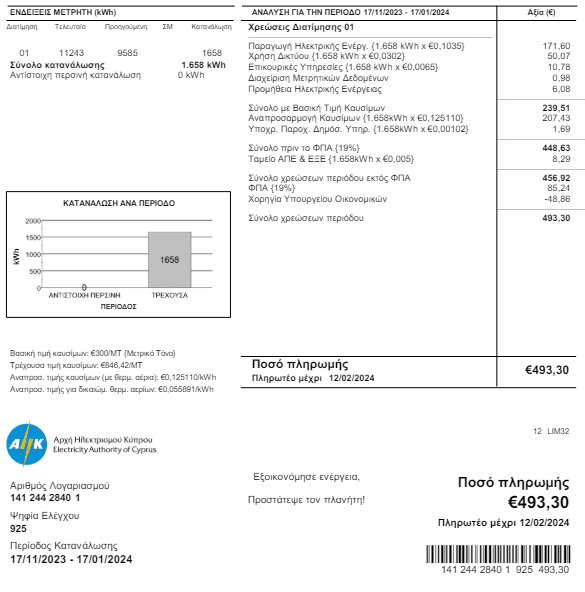
The electricity tariff is flexible — up to €7 is a fixed charge, with the remainder based on metre usage. Electricity is used for heating water, lighting, internet, and air conditioning. The average bill for a 90 m² apartment is €300.

Electricity bill in Cyprus
This is what an electricity bill in Cyprus looks like: most electricity is consumed by air conditioning

A gas cylinder costs about €15 and lasts for 2—3 months. Gas is used for cooking in homes without electric stoves.

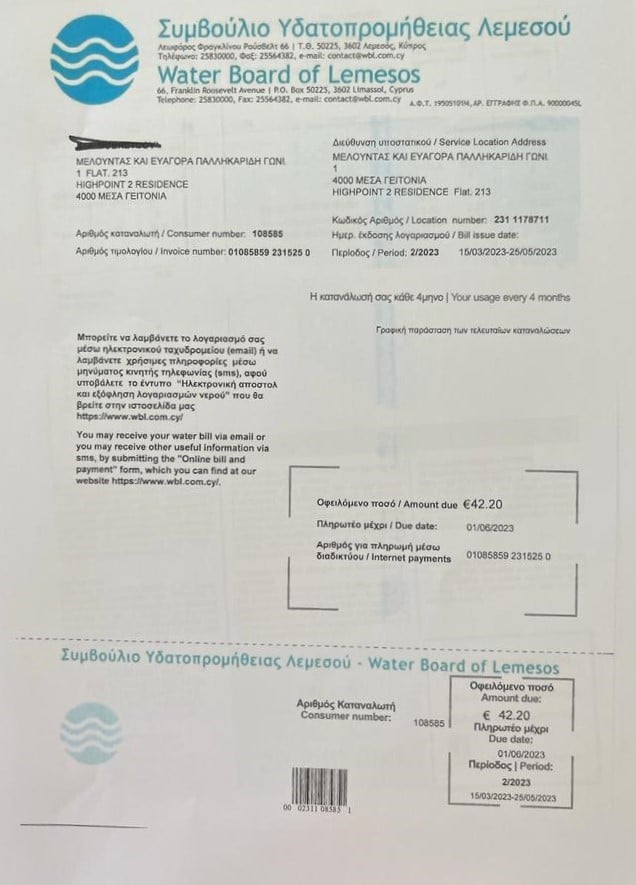
The water tariff consists of two parts — fixed and variable. In 2024, the fixed part is €15 to €17 per month, and the variable part is around €6. Sewage usage is also charged at €0.6 per cubic metre of water. The average water bill for a 90 m² apartment is €40.

water bill
This is what a water bill in Cyprus looks like. It can be paid in cash or by card at the nearest bank.

Municipal taxes start at €100 per year. This covers waste collection, street lighting, and sewage. The exact cost depends on the district’s rates and the value of the property.

Additional services cost between €60 and €300 per month. This includes payments for internet, phone, television, concierge and security services, pool cleaning, and the maintenance of communal property.

Maintaining a pool and garden for a private villa costs about €300 per month.

Property insurance in Cyprus is not mandatory but recommended. The island is in a seismically active zone, where earthquakes are possible. The cost of insurance is calculated individually for each property, depending on its type, size, location, and price. On average, €1.5 to €2 is paid per €1,000 of property value.

Example of monthly maintenance expenses for a 90 m² apartment

Expense breakdownExpenses
Water€42.5
Electricity€270 
Internet, communication€65 
General fee€98 
Municipal tax€12.5 
Total€477 

Property rental in Cyprus

A foreign citizen can legally rent out property and earn income if they comply with the law. There are two ways to do this — through an agency or independently.

Real estate agency. Most investors rent their apartments to agencies registered in Cyprus, which then sublet them to tourists. This method allows the investor to earn passive income without worrying about finding tenants, maintaining the apartment, or preparing it for renters.

Independent rental. To rent apartments short-term to tourists, such as through Airbnb or Booking.com, the investor must register the property with the Cyprus Ministry of Tourism and pay a fee. Renting an apartment without registration can result in a fine of up to €5,000 or even imprisonment for up to 1 year.

By earning rental income, the owner also pays taxes and partially covers the property’s maintenance costs.

Rental income taxes are based on a progressive scale from 0% to 35%, depending on annual income:

  • less than €19,500 — 0%;
  • €19,501 to €28,000 — 20%;
  • €28,001 to €36,300 — 25%;
  • €36,301 to €60,000 — 30%;
  • over €60,001 — 35%.

Maintenance costs are typically shared between the owner and tenant. Generally, tenants pay utility bills and internet costs, while the owner covers minor repairs, pool and garden maintenance, and municipal taxes. However, this can vary depending on specific agreements.

Renting apartments to tourists can generate an average monthly income of €1,500—2,000. The final earnings depend on the city, type of property, renovation quality, and proximity to the centre.

In recent years, rental prices in Cyprus have been rising. In 2023, apartment rental prices in city centres increased by almost 11% compared to the previous year, while house rentals rose by nearly 9%. Moreover, the government is willing to accommodate landlords: in 2023, a law to reduce the tax burden for investors was under consideration.

Cyprus real estate investment
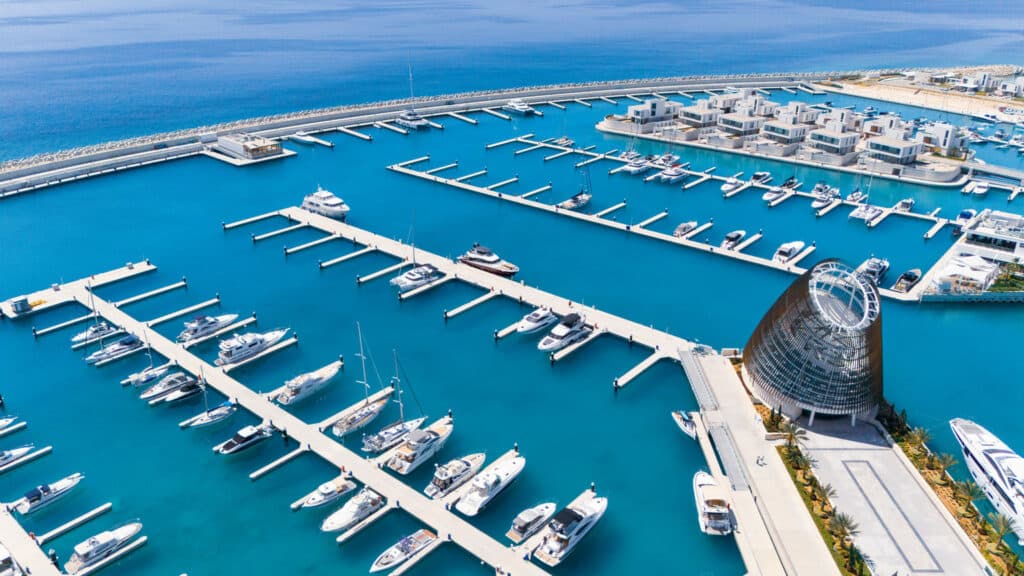
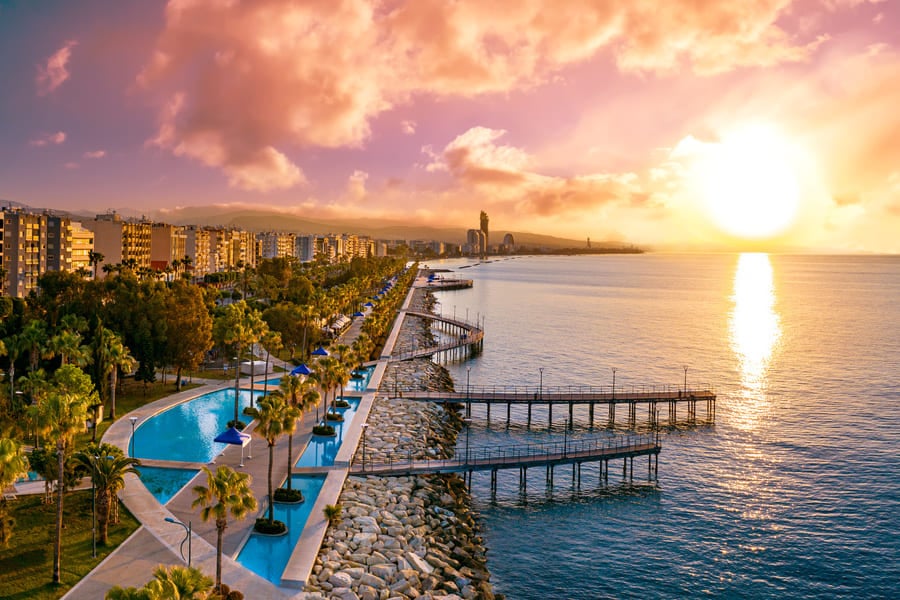
Apartments in residential complexes along the promenade are particularly popular with tourists visiting Limassol

Selling Cyprus property: requirements

When selling property in Cyprus, the seller’s expenses consist of capital gains tax, a contribution to the social fund, and realtor commissions.

Capital gains tax is 20% of the profit, which is the difference between the purchase and sale price, minus associated costs.

A foreign investor can receive a one-time tax deduction for this tax. The deduction amount depends on the ownership period and the property's use. If the property was the investor's sole residence and they owned it for more than 5 years, they can claim the maximum deduction of up to €85,430.

Social fund contribution. Since 2021, investors must pay 0.4% of the transaction amount into a special fund to support displaced persons from Northern Cyprus.

Realtor commission is up to 5% of the transaction amount. If the sale is done independently, no commission is required.

The property sale process takes 3 to 5 months, not including the time to find a buyer.

Inheritance rules for real estate in Cyprus

Cypriot law allows the transfer of property ownership by inheritance, even if the deceased was a foreigner and did not reside on the island. Inheritance can be passed either by law or by will.

By law. The deceased's property is passed to relatives in the following order:

  • children and spouse — first category heirs;
  • parents, brothers, and sisters — second category heirs;
  • grandparents and nephews — third category heirs;
  • cousins — fourth category heirs.

If the deceased has no children or spouse, the property goes to the parents, brothers, or sisters; if they are also not alive, it passes to the grandparents, and so on.

Cyprus has a forced heirship provision for close relatives. If the deceased has children, a spouse, or parents, they are entitled to a portion of the property, even if not mentioned in the will. If the deceased has a family, only 15% of the total value of assets can be freely transferred to third parties.

By will. The property is distributed according to the deceased’s wishes. It is important to name an executor in the will, who will handle the paperwork and ensure the deceased's wishes are fulfilled. This is usually a lawyer but can also be a family member.

Since 2000, property inherited on the island has been exempt from tax. This rule applies to those born on the island or who have chosen it as their permanent residence, holding a special document called "domicile." Without domicile status, an inheritance tax of 3—8% of the property’s value applies, depending on the degree of kinship.

3 risks of real estate investment in Cyprus

1. Transactions in Northern Cyprus can be annulled. It is safe to purchase property in the southern part of the country, including Limassol, Nicosia, Paphos, where the land is controlled by the Cypriot government.

In the north, which is a disputed territory in conflict with Turkey, property transactions require more caution. Real estate in Famagusta and Larnaca may be cheaper, but there is a risk that previous owners, who were forcibly relocated to the south, may claim ownership rights.

2. Decline in rental income. Cyprus is a resort island where many investors earn from renting property to tourists. In recent years, rental income has steadily increased: over five years, yields rose from 2.5% to 10%. However, the island is undergoing rapid development, increasing competition, which may reduce future returns.

3. Dishonest sellers. Some major developers include clauses in contracts that prohibit or temporarily limit the resale of a property. They do this to reduce competition. If the owner lists the apartment at a lower price than the developer, it will sell faster. To avoid such situations, it is advisable to work with an experienced lawyer when making transactions.

How to invest in Cyprus real estate: step-by-step process

The process of purchasing a property, from selecting the property to receiving the keys, involves five stages. These can be completed independently or through a trusted agency.

PT2M
7+ days
Choose an apartment or house

It’s best to visit the island and inspect the options in person. If that’s not possible, you can choose a property online. Immigrant Invest offers a verified catalogue of listings from various developers. If needed, a manager can provide a video tour of the house or apartment and answer questions in detail.

1+ day
Reserve the property

A preliminary contract with the seller must be signed, and a deposit of 10% of the market value or another agreed-upon amount must be made. The contract specifies the refund conditions, such as if there are unpaid utility bills or other issues. The bank guarantees the refund.

1+ month
Prepare for the transaction

At this stage, the seller’s reliability must be verified, documents collected, fees and taxes paid, and the sales contract drafted.

Here are the documents needed in the preliminary stage:

  • a statement from a Cypriot bank confirming payment will be made with foreign funds;
  • property registration certificate;
  • documents showing no debts on taxes, fees, or utilities from the current owner.

Depending on the transaction’s specifics, additional documents may be required.

1+ day
Sign the contract
Sign the contract

In the final stage, the parties sign the purchase agreement, which is notarised, and the buyer pays the remaining amount. The buyer then pays the stamp duty, and the lawyer files a purchase application with the Council of Ministers.

Up to 10 days
Receive the keys
Receive the keys

Once the transaction is complete, the buyer receives the keys and registers as the new property owner. The buyer and their family can then apply for permanent residence in Cyprus if the purchased property is worth more than €300,000.

How property owners can obtain permanent residence in Cyprus

Property owners with real estate worth €300,000 or more can obtain permanent residence for themselves and their family.

Features of Cyprus's investment program:

  • you can purchase one or two properties, as long as the total value is €300,000 or more;
  • the investor has the right to rent out the property and earn passive income;
  • the applicant must show an annual income of €50,000, plus an additional €15,000 for a spouse and €10,000 for each child;
  • the processing time for obtaining permanent residence in Cyprus is up to 9 months.

The permanent residence card is issued indefinitely. To maintain the status, you must visit the island at least once every two years.

Purchasing property in Cyprus remotely

You can complete the sale and purchase deal remotely by hiring local professionals and using a power of attorney. This document authorises a lawyer or real estate agent to represent you during the sale, transfer of property, or rental negotiations.

The power of attorney can be either specific, for a particular task, or general, for broader responsibilities. In both cases your appointed representative holds a fiduciary duty, meaning they are legally obligated to act honestly, loyally, and responsibly on your behalf.

Key points about Cyprus real estate investment

  1. Purchasing property in Cyprus allows you to participate in the investment program and obtain permanent residence for yourself and your family. To qualify, you must buy real estate worth €300,000.
  2. Most properties are bought in Limassol and Nicosia, the island's capital; other popular cities include Larnaca and Paphos.
  3. Property buyers pay taxes and realtor commissions, amounting between 6% to 25% of the transaction value.
  4. Renting out property generates an income of 7—10% annually.
  5. Maintaining a 90 m² apartment in a modern complex with security and a pool costs €500—700 per month.

Frequently asked questions

Can foreigners buy real estate in Cyprus?

Yes, foreigners are allowed to buy real estate in Cyprus. However, they must obtain permission from the Council of Ministers, which is typically a straightforward process. There are no restrictions on the type of property foreigners can purchase, but there may be limitations on the amount of land they can own.

Is Cyprus a safe place to buy property?

Yes, Cyprus is considered a safe place to buy property. The island has a stable legal system, and property transactions are well-regulated. As long as you buy property in areas controlled by the Cypriot government, such as Limassol, Nicosia, Larnaca, or Paphos, the process is secure. Northern Cyprus, however, poses more risks due to its disputed status.

What does buying property in Cyprus offer?

It provides the opportunity to obtain permanent residency for yourself and your family, and after five years, you can apply for citizenship. Additionally, real estate investors can earn rental income. On average, renting out an apartment generates around €2,000 per month.

Is buying property in Cyprus a good investment?

Real estate in Cyprus is suitable for living, renting out, or running a business. Unlike other EU countries with temporary residence permits by investment, Cyprus offers permanent residence in exchange for property purchases. The entry threshold is relatively low — €300,000.

How much does an apartment in Cyprus cost?

The cost of property depends on the city. The most expensive properties are in Limassol, followed by Nicosia, with Larnaca and Paphos in third place. Properties can be found starting from €100,000, while the average price for a home in a new building in a good area is around €175,000.

Where is the best place to buy property in Cyprus?

There are five popular locations for property purchases on the island. If the goal is to earn rental income, major cities like Limassol and Nicosia are ideal; if you’re looking for a place to live comfortably, consider Paphos, Larnaca, or the suburbs.

Who can buy property in Cyprus?

Foreigners are allowed to purchase property in Cyprus, but it is almost impossible to obtain a mortgage or loan.

If a foreigner buys property worth €300,000 or more, they are eligible to apply for permanent residence in Cyprus through investment.

Can you rent out an apartment in Cyprus?

A foreign investor can earn income as a landlord. Property can be rented out through an agency or registered for short-term rentals with the Ministry of Tourism and listed on platforms like Airbnb or Booking.com.

How to obtain Cyprus citizenship through property purchase?

Buying property grants permanent residence. It is an indefinite document that allows legal residency in the country. To apply for citizenship, one must live on the island for more than 8 years.

What is required to buy an apartment in Cyprus?

To purchase an apartment, a foreign investor must obtain approval from the Council of Ministers. This involves finding a seller, gathering documents, and paying taxes. A lawyer can assist with the entire process.

[wpdiscuz_comments]
Investing in Cyprus real estate: how to buy property and benefit from the purchase
Share:
Home Guides
Investing in Cyprus real estate: how to buy property and benefit from the purchase
Malta
8/2, Portomaso Business Tower, 1 Church Street, St Julian's, STJ 4011
Show on map +356‑2033‑01‑78
Austria
Porzellangasse 43, office 14, Vienna, 1090
Show on map +43‑650‑540‑49‑79
Portugal
Avenida Fontes Pereira de Melo 25, 3 Esq 1050-116 Lisboa
Show on map +351‑963‑996‑406
Greece
91 Alexandras Ave, Athens, Greece 114 74
All Offices