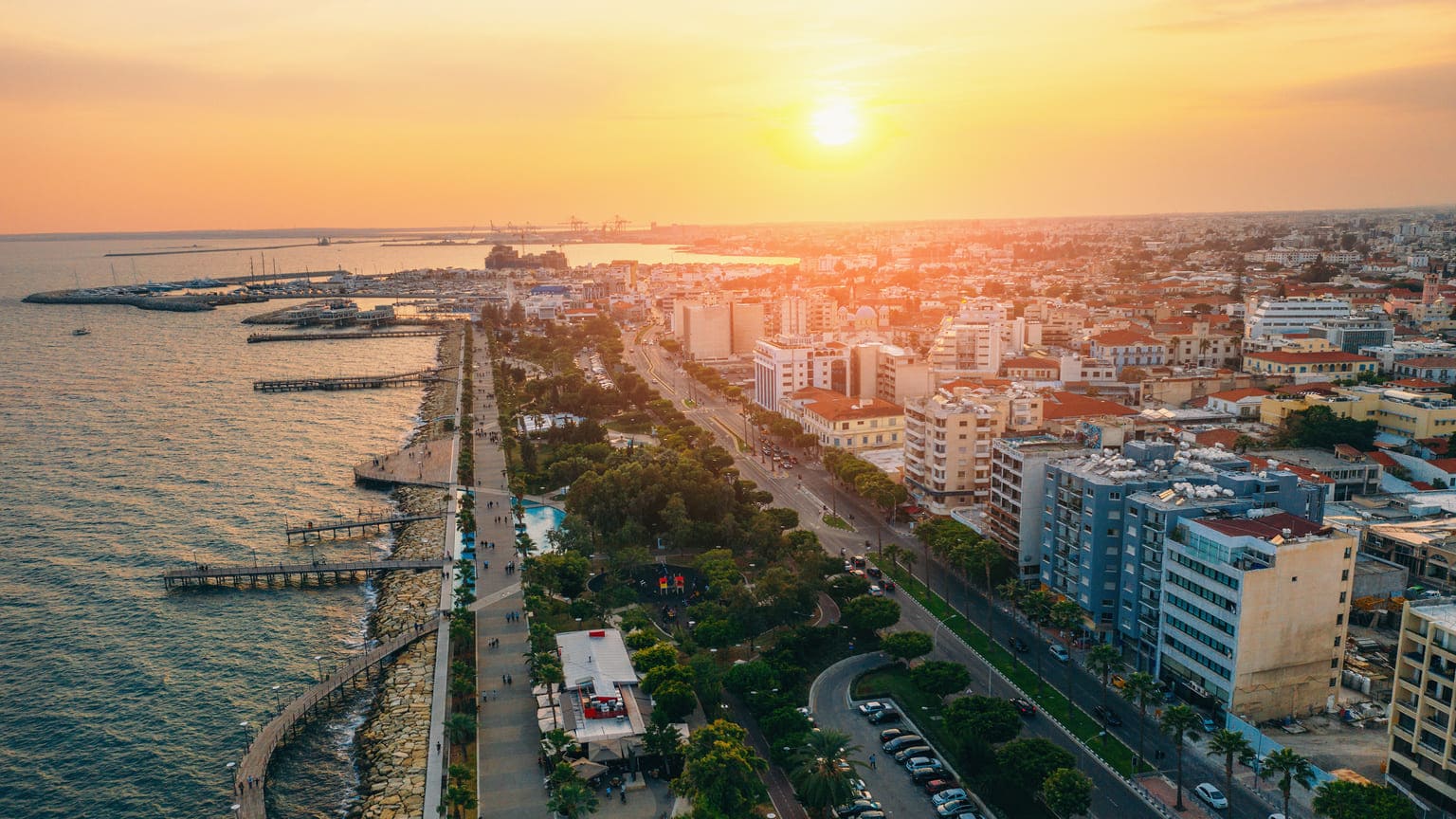
Cyprus is recognised as one of the top EU countries for migration, according to Eurostat. Cyprus ranks 3rd after Luxemburg and Malta, with 43 non‑EU citizens per 1,000 people.
Cyprus stands out as a strategic relocation option for discerning global investors, offering favourable investment thresholds, robust banking safeguards, and a cosmopolitan lifestyle.
This article provides a balanced examination of the positive and negative aspects of life in Cyprus, ensuring you have a clear foundation for your residency decision.


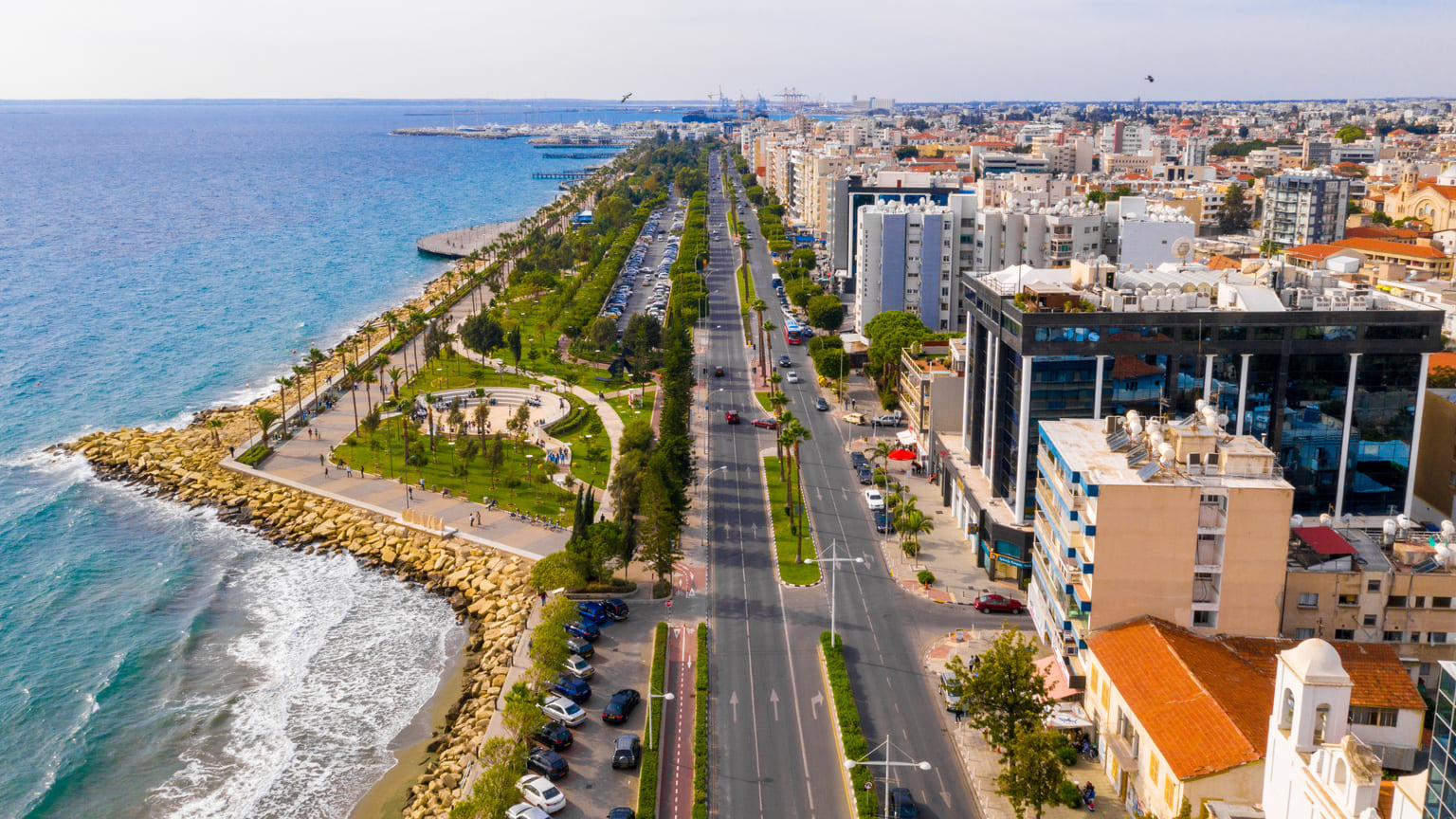

Cyprus is one of the most popular tourist and immigrant destinations in Europe for a reason. Obtaining residency and living on this Mediterranean island provides several benefits, attracting foreigners for years.
1. Quick obtaining of a residence permit. Foreigners moving to Cyprus must obtain residence permits. The country provides a variety of residence permits for different goals:
Getting a residence permit takes about 4—6 weeks. First, the applicant receives an Alien’s Registration Certificate confirming their right to reside in Cyprus, which takes about 2 weeks. 3—8 weeks later, they get a resident’s ID card.
Investors can obtain life-long permanent residence in Cyprus without going through the temporary residence stage. Instead of living in the country for 5 years to qualify, they gain direct access to permanent status by investing in real estate, company shares, or local funds. The entire process takes as little as 9 months.
2. Affordable real estate prices. Property in Cyprus is one of the most affordable in the EU.
The rental fee for a one-bedroom apartment starts from €550, depending on the city.
The average rental prices for a one‑bedroom apartment are as follows:
Cypriot property is also very attractive to foreign buyers. The average sale price per square metre is €2,600. Average prices in the most popular cities of Cyprus are:



3. High rental yields and long-term appreciation. In 2024, Cyprus’s property market continued its upward trend, with apartment prices rising by 8.8% and house prices by 6%. The strongest year-on-year growth was seen in the Paphos district at 11.8%, followed closely by Famagusta at 11.1%.
By 2025, the average gross rental yield across the country reached 4.77%. Annual rental income before expenses amounts to nearly 5% of a property's value — highlighting the market’s appeal for investors.
4. Stable economy. In 2024, Cyprus demonstrated strong economic performance, with real GDP growing by 3.4%. Growth was fueled mainly by private consumption and robust net exports in sectors such as ICT, tourism, and maritime services. GDP per capita rose by approximately 6% year‑on‑year, reflecting this broad‑based growth.
The country also showed impressive fiscal discipline. Cyprus recorded the second‑highest budget surplus in the EU at 4.3% of GDP, while most member states returned to deficit spending. It led the EU in public debt reduction, lowering its debt‑to‑GDP ratio from around 72% mid-year to nearly 65% by year-end.
5. Tax optimisation. Cyprus is a country that provides various tax benefits to its residents. For example, the standard corporate income tax is 12.5%, one of the lowest in Europe.
Tax on personal income ranges between 20 and 35%. But if the annual taxable income is less than €19,500, a person is exempt from this tax.
Property owners who buy primary real estate where they will live themselves can benefit from VAT deduction: they can decrease their VAT from 19 to 5%. There is also no annual property tax; the owners pay only a yearly fee as a municipal tax. This fee depends on the property price and can range approximately from €60 to 150 per year.
6. Favourable business environment. Strong tourist demand supports Cyprus’s economy, with around 4 million visitors arriving annually. This steady flow fuels growth in sectors like hospitality, real estate, and retail. Reflecting this, Cyprus ranks 30th globally in the Travel & Tourism Development Index.
The country also offers a broader pro‑business environment, ranking 17th out of 180 countries in the 2024 Economic Freedom Index. It places 11th among 44 European economies, thanks to investor-friendly regulations, strong property rights, and open markets.
Due to the low taxes for businesses and stable economy, Cyprus has become a place where many international companies are registered. Among them are Gunvor Group Ltd, Wargaming Group Limited, and Globaltrans Investment Plc.
Learn the benefits, conditions, and specifics of the Cyprus Permanent Residence for investors in 2 minutes
7. Easy travel onward. Located at the crossroads of Europe, the Middle East, and North Africa, Cyprus offers quick access to dozens of destinations. International airports in Larnaca and Paphos provide year‑round flights to major cities like London, Dubai, and Tel Aviv.
8. Favourable language environment. English is widely spoken in Cyprus, especially in cities, tourist areas, and professional settings. This means you won’t need to learn a new language to navigate daily life, and you’re unlikely to face communication barriers with locals.
9. Extensive expat communities. Cyprus is a multinational country. The biggest ethnic group is Greek Cypriots, followed by Turkish Cypriots and others.
Cyprus is one of the top 3 EU countries for migration: 26.9% of citizens are foreign-born. The immigration rate remains quite high: in 2023, 43 non-EU citizens per 1,000 people arrived in the country.
The island is very popular among foreigners, so you will find expats from your country who moved there earlier. They will share details about living in Cyprus, and finding friends in a new country will be easier.
10. Prestige and network building. Luxury marinas, members’ clubs, and golf courses along scenic coastlines naturally make Cyprus ideal for high‑net‑worth expats. Events like Limassol regattas or Paphos wine festivals create space for business connections.
Cyprus address reflects international prestige and opens doors to exclusive circles where connecting with investors and entrepreneurs comes naturally.
11. Safety. Cyprus is considered to be a safe country for life and travel. In 2024, Global Finance Magazine placed Cyprus 13th out of all nations in its “Safest Countries in the World” list, noting especially low levels of violent crime. Survey data Numbeo show that over 80% of residents report feeling safe walking alone at night in major Cypriot cities.
The homicide rate in Cyprus is only 0.8 per 100,000 people.
12. Affordable cost of living. While prices can vary depending on the location, life in Cyprus is relatively cheaper than in other European countries. According to Eurostat data, the price level is 8% lower than the EU average. A meal in a café or a small restaurant would cost €10 to 20, and a mobile monthly plan is around €30.
13. Affordable housekeeping services. Many expats in Cyprus employ part‑time or full‑time cleaners, nannies, or caregivers. Hourly rates for cleaning services range from €8 to 12, while full‑time live‑in domestic workers may earn around €400—600 per month, depending on experience and duties.
14. High-quality healthcare. The Global Health Index 2024 ranked the Cypriot healthcare system 29th globally, making it better than in the UAE, Canada, and the United States.
Locals and foreigners trust Cyprus's healthcare: the number of tourists entering the country for health reasons is steadily increasing. The primary healthcare fields popular with foreigners are plastic surgery, infertility treatment, IVF, dentistry, cardiology, orthopaedics and spine treatment, recovery and rehabilitation.
15. Access to education. Permanent residents in Cyprus have free access to the public school system up to secondary education. However, university and private-sector schooling come with costs.
Annual tuition at English-medium international schools ranges from €8,000 to 9,000.
For higher education, public university fees vary between €3,400 and 6,800 per year. Private university tuition ranges from €3,500 to 15,000 annually.
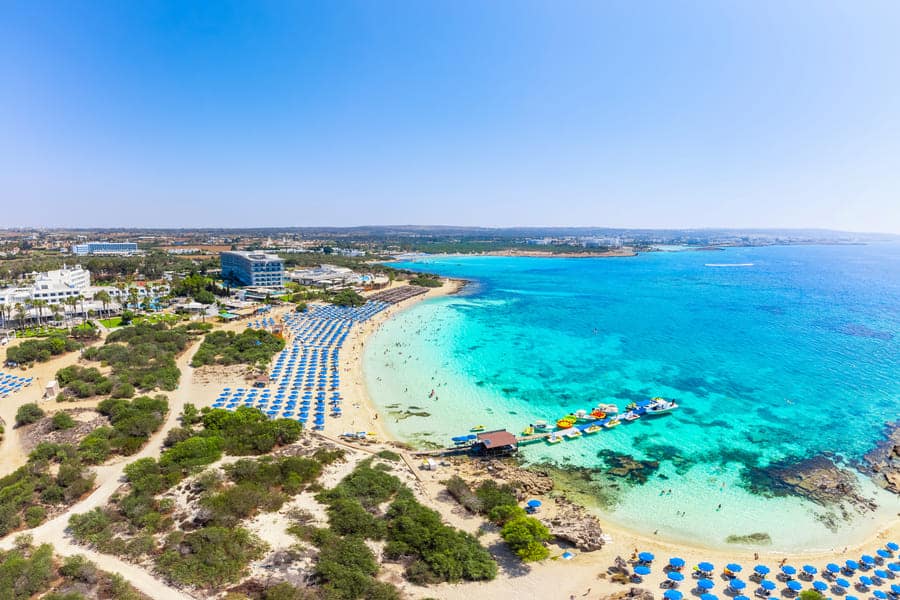
16. Laid-back yet luxury lifestyle. Living in Cyprus as an expat means blending a relaxed Mediterranean pace with high-end lifestyle. Warm weather, scenic beaches, and a culture that values unhurried meals and outdoor socializing create a peaceful daily rhythm.
At the same time, the island offers world-class marinas, fine dining, boutique hotels, and upscale real estate. Compared to Western European hotspots, luxury living here is more affordable, making premium homes, and gourmet experiences accessible at a lower cost.
17. Mild climate, beautiful landscapes, and rich culture. In Cyprus, there are about
The island has a rich history reflected in its ancient sites, fine Byzantine churches, monasteries, and museums. There are three UNESCO World Heritage sites, and 11 more objects are on the UNESCO Tentative list.
Cyprus also features incredible flora and fauna and is a great place for hiking.
Despite many benefits, some disadvantages of living in Cyprus should be considered when moving to the island.
No visa-free travel within Schengen. Cyprus is not currently part of the Schengen Area. Residents and citizens cannot travel freely across Schengen countries without border checks and may require additional visas.
However, Cyprus plans to join the Schengen Area in 2026, which would significantly ease travel across much of Europe.
Political instability. In the past, there were political issues between the southern and northern parts of the island. Currently, the northern part is occupied by an unrecognised state — the Turkish Republic of Northern Cyprus. Although there has been relative stability in recent years, the situation could change.
Low level of urban development. Cyprus is mainly a rural country with a few cities. The centre of cultural life is Limassol, which usually hosts most events. Expats — especially those from large, cosmopolitan cities — may find life in other parts of the island quiet and lacking in events or entertainment.
Public transportation is also limited, making it harder to get around without a car.
High electricity prices. According to Eurostat, Cyprus ranked 6th in the EU for high electricity prices overall. In 2024, it had the highest non-household electricity rate at €0.2578 per kWh.
The electricity consumption is also high: apart from usual household appliances, it includes air conditioning for cooling in summer and for heating in winter, and warming water in boilers. Average two-monthly bills for a family of two start at €100.
Limited job opportunities. The labor market in Cyprus is relatively small. Although the overall unemployment rate dropped to 3.7% in 2025, youth unemployment remains high at 13%. While the country offers a favourable environment for doing business, expats seeking career opportunities may still face challenges.
Natural hazards. Cyprus is prone to wildfires, flash floods, and earthquakes. The Geological Survey of Cyprus registers about 500 tremors annually, but no severe earthquakes have occurred in recent years.
Relaxed lifestyle. This is often one of the main reasons why foreigners choose Cyprus for living. However, this lifestyle also has a drawback: things are done quite slowly, and solving issues on the same day is almost impossible.
Summer heat. Cyprus summers are long and very hot, with temperatures often topping +40°C. The heat can make outdoor activities difficult and lead to high electricity costs due to constant air conditioning.
In Cyprus, there are a lot of beautiful cities and towns that attract expats from all over the world. No matter what lifestyle you like — an active or a relaxed one — in Cyprus, you will be able to find the best place for you.
Expats typically choose four main destinations for their relocation: Limassol, Nicosia, Larnaca, and Paphos.
Nicosia is the capital city of Cyprus. It lies inland and, therefore, has no direct access to the sea. As a result, it is not as crowded with tourists as seaside cities but has a wide expat community with around 20% of non‑nationals.
The capital is Cyprus's business, financial, educational, and cultural centre. Nicosia is the best place to live in Cyprus for expats with children seeking higher education. The country's five leading universities are located there: the University of Cyprus, the University of Nicosia, the European University of Cyprus, the Open University of Cyprus, and Frederick University.
Nicosia hosts more than 45 foreign embassies, 58 consulates, and offices of many international companies such as Deloitte, Microsoft, Oracle, and Ernst & Young.
The city balances lifestyle and leisure with world-class dining and nightlife, from fusion spots on Onasagorou Street to wine bars like Vino a Vino and lively cafés. Green spaces, pedestrian zones, and wellness centers like Ayioi Omologites spa add to its appeal as a livable, well-rounded capital.
Limassol is one of the most popular places among immigrants, with around 20% of non‑national residents.
The city combines business opportunities with an upscale lifestyle. As the island’s financial and commercial centre, it hosts the Cyprus International Business Association, major law and accounting firms, and a tech scene with hubs like Limassol TechPark and The Platform.
Limassol’s large expat population ensures easy access to English‑speaking services and strong networking potential. Residential areas such as Germasogeia and Agios Tychonas offer luxury living — seafront penthouses and hillside villas with pools just minutes from the city.
The city also boasts boutique spas like Chrysoheader, Michelin-level dining, and premium beach clubs. Annual events like the Carnival, Wine Festival, and Film Festival enrich cultural life. At the same time, outdoor activities — from tennis and golf at Aphrodite Hills to hiking and skiing in the Troodos Mountains — are always within reach.

Larnaca is another destination popular with tourists and expats, with foreigners making up around 20% of its population. One of two Cyprus international airports is just
The city is well‑equipped for remote work, with co‑working spaces like ChillHub and HI‑Lab offering 24/7 access, high‑speed internet, private meeting rooms, and regular networking events. Living costs are also attractive — utilities and groceries are about 15% cheaper than in Cyprus’s larger cities.
Larnaca's appeal is enhanced by its authentic local culture and nature. Seasonal flamingo watching at the Salt Lake and nearby bird sanctuaries provide a unique ecotourism touch. Meanwhile, festivals such as Kataklysmos and the Larnaca Summer Festival fill the calendar with music, arts, and community spirit.
This strong sense of place flows seamlessly into daily life. The palm‑lined Finikoudes Promenade is perfect for morning coffees or sunset strolls, while nearby Mackenzie and Pyla districts combine boho-chic beach bars and international dining just minutes from the airport.
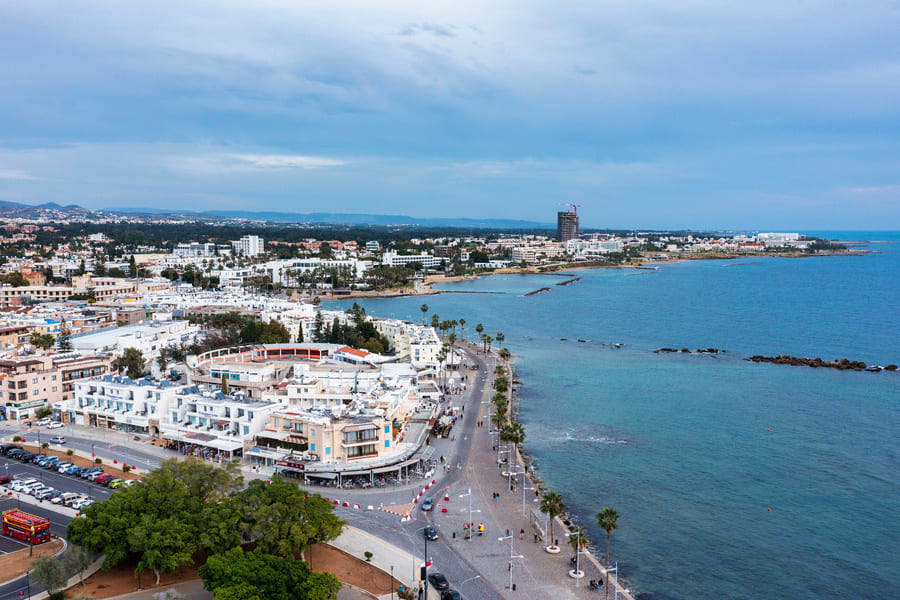
Paphos, a coastal city in southwest Cyprus, is home to the country’s second international airport — just five minutes from the centre. Foreigners make up 20% of the city and 38% of the district’s population, the highest in Cyprus.
Luxury developments like Aphrodite Hills and Elea Estate offer golf courses, Six Senses spas, and concierge-managed homes for a hassle-free lifestyle. Nearby villages like Coral Bay and Peyia feature sea-view villas with private pools, only 10—15 minutes from town.
Paphos Marina provides 250 berths, refueling, winter storage, and waterfront dining — perfect for crowd-free Mediterranean cruising.
Families benefit from top schools like The Heritage and Paphos International, making Paphos the best place in Cyprus to settle in with children.
Non-EU citizens can obtain permanent residence in Cyprus by making a qualifying investment. This status is granted for life and allows unlimited visits and stays in the country. In 8 years, they become eligible for Cypriot citizenship.
Minimum investment sum — €300,000, regardless of the option selected. Applicants can choose from four routes: purchasing residential or commercial real estate, acquiring shares in Cypriot companies, or investing in local investment funds.
Those opting for residential real estate can buy one or two new properties with a total value of €300,000 plus VAT. The standard VAT rate is 19%. But if the property is the only housing and the investor plans to live there and not rent it out, VAT is reduced to 5%.
It is not possible to buy a resale property.
Commercial properties require the same investment amount, where the investor may buy one or two units — new or resale — such as offices, shops, or hotels, with a combined value of at least €300,000 plus VAT.
Investors can also purchase shares in Cypriot companies, provided the companies employ at least five people locally.
Investment in securities is the fourth option, but the funds must be structured as AIF, AIFLNP, or RAIF.
Regardless of the chosen investment option, the applicant must also buy or rent a home in Cyprus to provide a registered address — this housing must meet certain value requirements.
In addition, applicants must prove a stable annual income of at least €50,000.
Investors can include family members in their application: a spouse or registered partner and children. Children aged 18 to 25 must be unmarried, financially dependent, and enrolled in full-time education. Children with mental or physical disabilities can be included regardless of age.
When family members are added, the required annual income increases by €15,000 for a spouse and €10,000 for each dependent child.

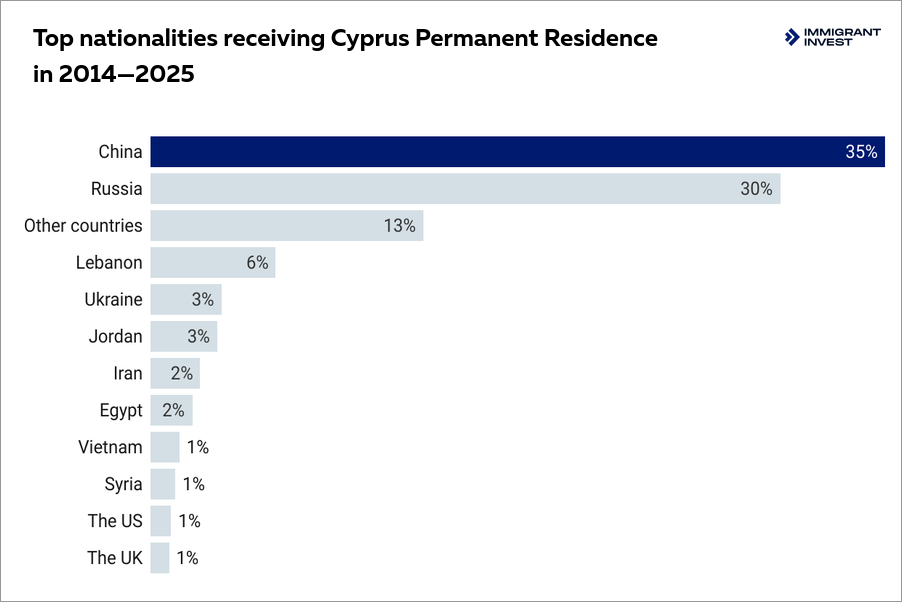
Statistics. Since 2014, Cyprus has issued 28,660 permanent residence permits to investors and their family members. The top 5 applicant nationalities are:
Other applicants include citizens of Iran, Egypt, Vietnam, and Syria. Over the past 11 years, 277 applications from US investors and 251 from UK investors have been approved.
Obtaining Cyprus permanent residence by investment takes at least 9 months.
To get Cyprus permanent residence, applicants must pass a Due Diligence check.
Before starting to work on the document preparation, Immigrant Invest checks information on every investor in international databases and open sources.
Immigrant Invest will offer possible solutions if there are any circumstances that may cause the rejection.
Immigrant Invest lawyers provide applicants with a list of required documents and help prepare, translate, and apostille them.
The exact set of documents depends on the chosen investment option.
The standard pack of documents includes the following:
The applicant must invest at least €300,000 in one of the following options:
To qualify, the investor should also have a registration address in Cyprus, which means that, if investing in shares or fund units, the applicant must rent or buy housing.
Immigrant Invest lawyers submit the investor’s application and documents to the Civil Registry and Migration Department of Cyprus.
The Department reviews the application within approximately 3 months and notifies Immigrant Invest of the outcome.
Once the application is approved, the investor and included family members travel to Cyprus to submit their biometric data. Immigrant Invest’s lawyers arrange the appointment in advance and assist with obtaining the necessary visa for entry into the country.
Permanent residence cards are issued within 40 days after biometric data is submitted. The cards must be collected in person at the Civil Registry and Migration Department.
The most popular destinations among expats are Limassol, Nicosia, Larnaca, and Paphos.
Nicosia is the capital of Cyprus and the country’s business, financial, educational, and cultural centre. It is located far from the sea coast and is not crowded with tourists.
Limassol, Larnaca, and Paphos are seaside cities with wonderful beaches and various outdoor activities. In Larnaca and Paphos, there are two main international airports of Cyprus.
Cyprus is one of the most popular countries among expats. Locals are friendly, and most of them speak English. There is also a big expat community, so it is easier for newcomers to adapt to a new country.
After moving to Cyprus, expats can enjoy beautiful nature close to or not very far from the seaside and benefit from tax optimisation opportunities and other advantages of living on the island.
Cyprus is the 13th safest country in the world. Over 80% of residents feel safe walking alone at night in major cities. The country also maintains a low homicide rate of just 0.8 per 100,000 people.
Along with safety, Cyprus offers other benefits for those who decide to move to the island: high-quality healthcare, an affordable cost of living, a large expat community, and short times of obtaining a residence permit.
Despite many benefits, living in Cyprus has some disadvantages. First, job opportunities in Cyprus are limited, so expats looking for career opportunities can face difficulties.
Although North and South Cyprus managed to settle the national conflict in recent years, a risk of political instability still persists.
Cyprus is also prone to natural hazards like wildfires and earthquakes.
To move to Cyprus for permanent living, you need to obtain a residence permit that corresponds to your goals, for example, work or study.
Another option is to get a permanent residence by investment. Investors should buy real estate, shares of Cypriot companies, or units of investment funds registered and operating in Cyprus for at least €300,000. Permanent residence by investment is obtained in 9+ months and allows moving to Cyprus for living and working.
The cost of living in Cyprus highly depends on your location. But average prices are generally 10% lower than in other EU countries. For example, a meal in a café or a small restaurant would cost €8 to 20, and a mobile monthly plan is around €30.
Expats in Cyprus can also enjoy a mild climate, affordable property prices, high-quality healthcare, and a stable economy.
Cyprus’s labour market is very limited, so foreigners looking for career opportunities can face difficulties. However, if a person is offered a job in Cyprus, they can obtain a work residence permit in 4—6 weeks.
Investing in the Cypriot economy is another path to becoming a Cyprus resident. By investing €300,000 or more in a residential or commercial property, Cyprus shares or units of investment funds, a person can apply for Cyprus permanent residence.
The average monthly net salary in Cyprus is €1,900. This may differ significantly depending on the place you live in.
Below are examples of the average salary in different cities:
Yes, US citizens can live in Cyprus. To stay there for more than 90 days, they must obtain a residence permit. Various residence options available for foreigners, for example:
Cyprus also offers a Golden Visa program, allowing US citizens to gain permanent residency by investing in real estate or a Cypriot business. The minimum investment starts at €300,000 in real estate, and the permit covers family members as well.
As an EU national, you can start working in Cyprus immediately without needing a work permit. If you plan to stay longer than 3 months, you’ll just need to register your residence, obtain the MEU1 certificate, and enroll in the social insurance and tax systems.
In 2023, approximately 50% of all residence permits issued in Cyprus were for employment purposes, totaling around 17,150 permits. In the first half of 2024 alone, about 8,700 work permits were granted, reflecting continued demand for foreign labor.
To work in Cyprus as a non-EU citizen, you must first secure a valid job offer from a Cypriot employer. The employer then submits a work permit application on your behalf, proving that no suitably qualified EU candidate is available for the role. To be eligible, you must hold the necessary qualifications, have a clean criminal record, and meet minimum salary thresholds.
Once the employer files the application with the Department of Labour, processing takes 6 to 8 weeks for the work permit and accompanying residence visa to be issued.
Expatriate workers in Cyprus are entitled to nearly the same labour rights as Cypriot citizens. The Constitution and EU directives guarantee equal treatment and protection from discrimination in hiring, pay, and dismissal.
Workers are entitled to a minimum wage of €1,000, capped working hours — typically 40 per week, overtime pay, and at least 20 days of annual paid leave, plus public holidays, sick leave, and parental leave.
Cyprus boasts a large expat community, with foreigners making up around 20% of all the residents in each major city.
Before arriving, expats can connect through online forums like InterNations. Professional connections are easily made via Meetup.com’s co‑working groups and platforms like Internations or EmbarkExpat.
On the ground, expat integration is seamless through hubs like Limassol TechPark and Yacht Club, Nicosia’s LaunchPad incubator, and Larnaca’s ChillHub. Paphos offers social circles around its golf resorts and festivals.
Across cities, expats join events hosted by the British & Commonwealth Association, International Women’s Club, and Rotary or Lions clubs.
Pets entering Cyprus must be microchipped with an ISO-compliant chip before or at the time of their first rabies vaccination. The rabies shot must be given at least 21 days before travel and remain valid.
EU travelers need an EU Pet Passport showing microchip, vaccination, and tapeworm treatment for dogs. Non‑EU travelers must present a veterinary health certificate, Form C, issued within 10 days of travel and endorsed by national authorities. Dogs must be treated for tapeworm 1—5 days before arrival.
Non-EU pets may also need a rabies titer test and an import permit. Entry is allowed only via approved ports like Larnaca or Paphos, and pets must travel in IATA-approved crates. Upon arrival, pets must be declared and documents shown to Veterinary Services. Minimum entry age is 15 weeks.