Foreigners have more than 15 ways to become residents of Cyprus. For example, an applicant with a foreign income can obtain a temporary residence permit, while permanent residence is available to those who invest at least €300,000 in the Cypriot economy.
Both statuses help with relocation, create a “safe haven,” and open up prospects for citizenship. This article compares the three pathways, outlines the eligibility criteria and application process, and examines the benefits and risks of each status.




The legal basis for all immigration and residence statuses in Cyprus is the Aliens and Immigration Law, Cap. 105, 1952, as amended[1].
Cyprus offers several temporary residence routes for third-country nationals, depending on the purpose of stay. High-net-worth individuals usually choose the route for financially independent persons. A residence permit under this category is available to applicants who demonstrate an annual income of about €10,000 from sources outside Cyprus and secure housing in the country.
The permit for financially independent persons is temporary, usually valid for one year. To renew it, holders must continue to meet the financial requirements and comply with the stay rules[2].
Third-country nationals may apply for long-term resident status after 5 years of legal and continuous residence in Cyprus.
Investors, however, may obtain permanent residence faster. They purchase residential or commercial real estate, shares in a Cyprus company, or units in a Cyprus Investment Fund worth at least €300,000. The status is granted for life, provided the investor maintains the investment and visits Cyprus at least once every two years. Spouses and dependent children under 25 may be included in the application.
Cyprus residence by investment is governed by Regulation 6(2) of Cap. 105[3].
Cyprus previously offered a citizenship by investment programme for foreign investors, but it was terminated on November 1st, 2020. Since then, foreign nationals have usually obtained Cyprus citizenship by naturalisation.
Under the current rules, citizenship by naturalisation is available to foreigners who have resided legally in Cyprus for 8 out of the previous 11 years, with the last 12 months continuous before the application.
Applicants must also demonstrate B1-level Greek language proficiency and knowledge of Cypriot culture and society. Cyprus citizenship grants full European Union rights, including the right to live, work, and study in other EU countries.
Cyprus citizenship requirements are governed by the Civil Registry Law, as amended by Law 149(I)/2023, which introduced revised residence duration requirements and Greek language proficiency criteria[4].
| Criterion | Residence Permit for financially independent persons | Permanent Residence Golden Visa | Citizenship by Naturalisation |
|---|---|---|---|
| Main requirement | Annual income of at least €10,000 from foreign sources | Investment of €300,000+ | 8 years of legal residence in Cyprus |
| Family inclusion | Spouse and children under 18 | Spouse, children under 25 | Children under 18 |
| Stay obligation | Visit once every 2 years, not to exceed 2 consecutive years of absence | Visit once every 2 years | 8 years of residence in past 11 years and 12 months continuous before application |
| Validity | One year, renewable up to four times | Lifetime ID card renewed every 5years | Lifetime |
| Freedom of movement | Simplified Schengen visa application | Simplified Schengen visa application | Visa-free access to 170 destinations EU freedom of movement |
| Time to obtain | 3+ months | 9+ months | 8 years from first residence permit |
| Processing by | Ministry of Interior | Ministry of Interior, Civil Registry and Migration Department | Ministry of Interior, Civil Registry and Migration Department |
Temporary residence is suitable for foreigners with a stable income from abroad and housing in Cyprus. Permanent residence is intended for investors who are ready to make an investment and meet the income and Due Diligence requirements.
Citizenship by naturalisation is available to foreigners who have already lived in Cyprus legally for the required period and meet the language and residence criteria.
Temporary residence is available to financially independent persons who demonstrate annual income of at least €10,000 from sources outside Cyprus and secure housing in the country. An additional €5,000 a year is required for a spouse and for each dependent child.
The permit is usually issued for 1 year and may be renewed up to 4 times. This route is more suitable for applicants who want to live in Cyprus without making a large investment.
Applications are accepted from individuals aged 18 or older who have legal income, a clean criminal record, and no entry bans to EU member states or sanctions listings.
Annual income requirement. The required annual income varies by investment type:
Annual income may be proven through tax returns, bank statements, or other official documentation from the applicant's country of tax residence.
Source of funds. Investment funds may originate from the applicant's personal bank account or the account of a company in which the applicant or their spouse is the sole shareholder. All funds are subject to anti-money laundering due diligence and sanctions screening.
Family inclusion. The following family members may be included in the application:
Each family member over the age of 18 must provide a certificate of no criminal record and undergo Due Diligence checks.
Four investment options are available to applicants:
The investment must be maintained for as long as the investor wishes to retain permanent residence status. If investing in options other than residential real estate, the applicant must also rent or purchase housing in Cyprus to establish a registered address.
Property may be rented out, but not sold, while the investor holds permanent residence status. Once Cypriot citizenship is obtained, the property may be sold.
Citizenship by naturalisation is available to foreigners who have resided legally in Cyprus for 8 years during the previous 11 years, with the last 12 months spent in Cyprus continuously before the application.
During those final 12 months, absences must not exceed 90 days. Applicants must also demonstrate Greek language proficiency at the B1 level, show knowledge of Cypriot culture and society, and have a clean criminal record. This route is suitable for applicants who have already built a long-term life in Cyprus rather than those seeking immediate status.
The document package depends on the status an applicant pursues. Temporary residence requires proof of income, accommodation, and good standing. Investors confirm the investment and source of funds, while citizenship by naturalisation requires evidence of legal residence, financial stability, and integration into Cypriot society.
Documents for financially independent people
Temporary residence permit for financially independent persons requires a smaller document package than permanent residence by investment, but applicants still need to prove income, accommodation, and good standing.
In practice, the file includes:
The Category F Cyprus residence permit is issued for one year and may be renewed up to four times, provided the holder continues to meet the eligibility criteria.
Applicants for Cyprus permanent residence must collect, translate, and apostille the following documents:
All documents issued outside Cyprus must be apostilled in accordance with the Hague Convention and translated into Greek or English by a certified translator.
Applications are submitted through a licensed immigration consultant or a lawyer authorised to represent applicants before the Civil Registry and Migration Department.
Citizenship by naturalisation is based on residence, integration, and public record evidence, so the checklist is the most formalised.
The official supporting documents list includes:
Applicants also submit copies of announcements from two consecutive publications in a daily newspaper notifying the submission of the naturalisation application.
The language and integration part of the file includes:
Proof of residence and financial resources. The file must also include proof of residence, such as a title deed, purchase agreement and payment receipts, rental agreement and rent payment receipts, and utility bill receipts.
Proof of financial resources includes payroll evidence, an employment contract, social insurance records, income tax records, bank statements, or other evidence of income.
The procedure differs mainly in timing, entry point, and complexity. Temporary residence and permanent residence begin with document collection and a formal application to the migration authorities. Citizenship by naturalisation follows a longer route, as the applicant must first complete the required period of legal residence in Cyprus before applying.
Temporary residence usually takes about 3 months after preparation of the file. The process starts with entry to Cyprus, if a visa is required, and securing a registered address through a purchase or long-term rental.
The applicant then collects and certifies the documents, passes a medical examination, pays the application fee, and submits the application together with biometric data. After registration, the applicant receives an Alien Registration Certificate and then the residence permit card upon approval.
Permanent residence by investment takes about 9 months for approval, plus around 40 days for the residence card after biometrics. Unlike temporary residence, this route starts with a preliminary Due Diligence check and requires the applicant to complete the investment before filing the application.
After that, the applicant collects and legalises the documents, submits the application through a licensed representative, waits for the authorities to review the file and verify the investment, and then travels to Cyprus for biometric registration and card issuance.
Citizenship by naturalisation takes several years. Before filing for citizenship, the applicant must first reside in Cyprus legally for 8 years within the previous 11 years and complete 12 continuous months in the country before the application, with no absence exceeding 90 days during that final period.
The applicant must also pass a B1-level Greek language examination and demonstrate knowledge of Cypriot culture and society.
Successful participation in the Cyprus Golden Visa Program depends on providing accurate and reliable documents. Per the experience of Immigrant Invest lawyers, the application process typically takes at least 9 months.
Before starting work on the residence application, an Anti-Money Laundering Officer assesses the investor’s chances of successful participation in the Cyprus PR program.
Immigrant Invest lawyers assist in translating and apostilling documents, securing medical insurance, and concluding a real estate agreement if needed.
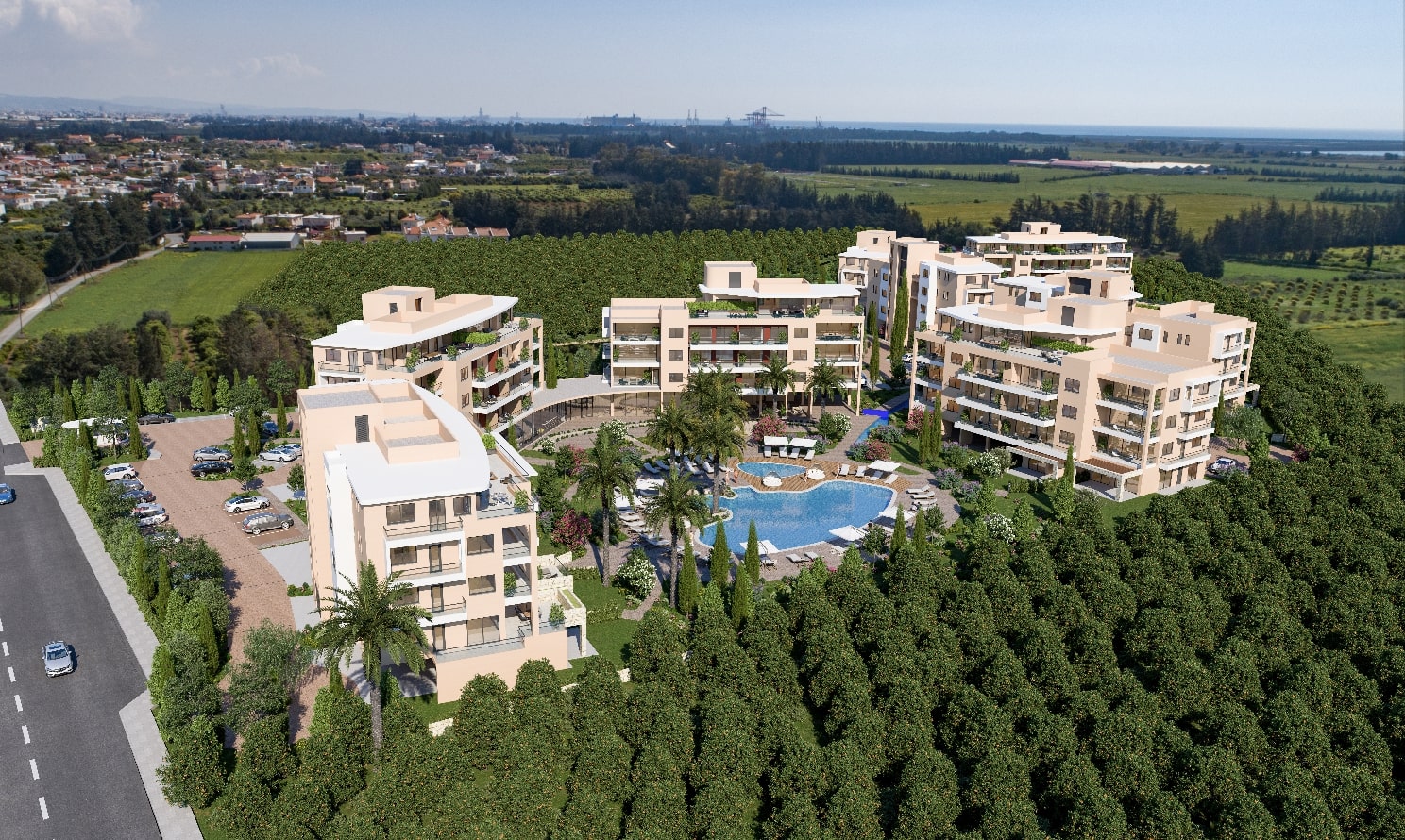
Our real estate professionals have created a database of properties, including those under construction. They help investors decide on the type of investment or select a property, draw up a contract of sale and oversee the transaction.
When purchasing property, Immigrant Invest lawyers submit the necessary documents to the Department of Lands and Surveys of Cyprus, including an application to reduce the VAT rate to 5%. The investor then transfers €300,000 and the VAT to the developer.
The applicant does not need to travel to Cyprus, as our local agent can submit all the documents. However, to sign the documents, a visit to a Cyprus Consulate may be required.
The relevant government department issues a letter of approval for the application.
The investor must visit Cyprus to submit their biometrics. To maintain Cyprus permanent residence, they must visit the island at least once every two years.
Cyprus permanent residence by investment combines legal stability with practical benefits for investors and their families.
Cyprus permanent residence by investment is granted for life. The status does not require annual renewal, which makes it more stable than temporary residence. To keep it, the holder must maintain an investment, renew the ID card every 5 years, and visit Cyprus at least once every 2 years.
Permanent residence may be combined with property investment. Real estate purchased under the programme may be rented out.
Average monthly rent ranges from €850 to 1,030 for a one-bedroom apartment and from €1,600 to 1,950 for a three-bedroom apartment. Annual rental yields usually range from 5.5 to 7.5%, depending on the location.
Real estate acquired for the purpose of obtaining permanent residence may be sold once the investor obtains Cypriot citizenship.


Cyprus PR holders have access to the General Healthcare System, GeSY, which was launched on June 1st, 2019. GeSY provides universal healthcare coverage to all legal residents of Cyprus, including permanent residence holders, through a network of public and private healthcare providers.
By registering with GeSY, permanent residents can access medical consultations, specialist referrals, hospitalisation, and prescribed medications. Residents may also apply for a European Health Insurance Card, EHIC, which facilitates access to healthcare services across the European Union.
Cyprus permanent residence allows investors and their family members to live in the country and use local educational infrastructure. Cyprus hosts a number of international schools and universities offering instruction in English. The largest higher education institution in Cyprus, the University of Nicosia, is ranked #321 in Europe in the QS Europe University Rankings 2025.
International schools in Cyprus include branches of British and American curricula, making the country an attractive destination for expatriate families seeking high-quality education for their children.
Permanent residence may support tax planning, but only for applicants who also become Cyprus tax residents. Cyprus operates one of the most favourable corporate tax regimes in Europe. The corporate income tax rate in Cyprus is 15%.
Tax residency is determined by physical presence: an individual becomes a tax resident of Cyprus if they spend 183 days or more in the country within a calendar year.
Individuals who are tax residents of Cyprus but not domiciled in Cyprus benefit from exemptions under the Special Defence Contribution regime. Non-domiciled tax residents are exempt from SDC on dividends and interest for 17 years from the date they establish non-domicile status. Rental income remains subject to SDC and income tax.
This regime is particularly attractive to high-net-worth individuals seeking to optimise tax exposure on passive income streams.
Cyprus offers several lifestyle advantages for investors and their families. These include:
An investor may become eligible to apply for Cyprus citizenship by naturalisation after 8 years. To qualify, the applicant must also demonstrate knowledge of the Greek language and Cypriot culture through the required examination and interview.
Cyprus allows second citizenship, so the applicant will not have to renounce their original passport.
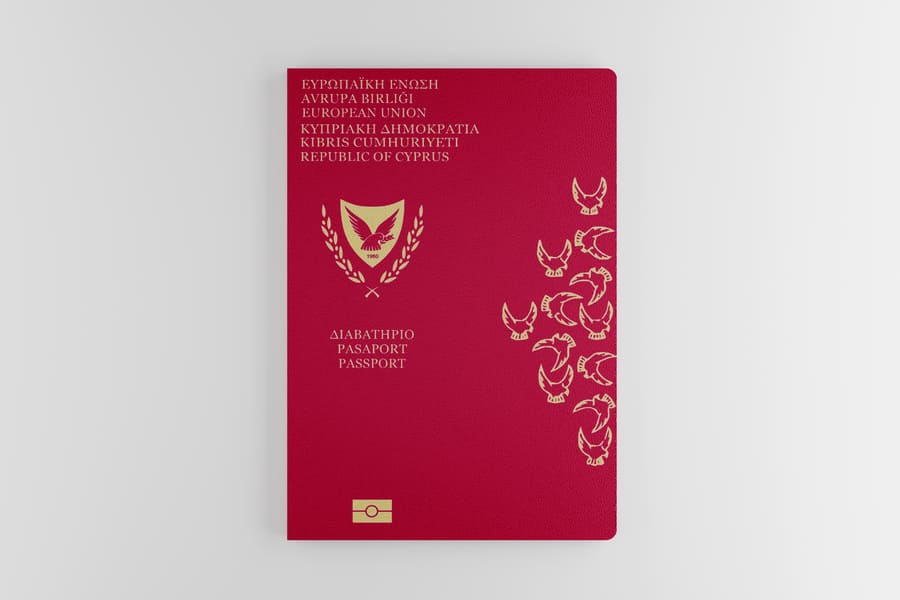
A Cypriot passport allows holders to travel visa-free to more to 170 countries, including the Schengen Area, the UK, and Canada, and to live, work, and study freely in any EU country.
With temporary residence, the main risk is loss of status through non-renewal or failure to continue meeting the requirements. Applicants must maintain sufficient foreign income, valid medical insurance, and a registered address in Cyprus. The permit is issued for one year and may be renewed up to four times, so this route may be less suitable for those seeking long-term stability from the outset.
Another practical risk is absence from Cyprus for too long, as holders must continue to comply with the stay rules to preserve the permit.
With permanent residence, the main risks are linked to the investment itself and to ongoing compliance. Applicants may choose a property that does not qualify, underestimate the time needed for approvals, or expect to file before the investment is fully paid and registered.
The status also requires continuing obligations:
In addition, permanent residence does not provide visa-free travel to the Schengen Area, which may create unrealistic expectations for applicants whose main goal is mobility across Europe.
With citizenship by naturalisation, the main risk is a mismatch between expectations and the actual timeline. Citizenship is not an immediate route for new applicants. Applicants who view permanent residence as a quick path to citizenship may underestimate how long and demanding the process is in practice.
Across all three statuses, applicants should also consider broader planning risks. Immigration rules may change, tax residency does not arise automatically from holding a residence status, and family inclusion rules may be narrower than expected.
Since 2006, Immigrant Invest has helped clients obtain more than 10,000 passports and residence permits. The company reports a 99% success rate and works with a team of more than 70 certified experts across nine countries.
The company is a government-licensed agent for citizenship and residence programmes in multiple jurisdictions, including the European Union and the Caribbean. As a licensed agent, Immigrant Invest is accountable to the relevant authorities for the accuracy and quality of every application.
For Cyprus applications, Immigrant Invest helps clients structure their files in line with current legal and procedural requirements. Consultants also screen property and investment options in advance to reduce the risk of choosing an asset that does not meet programme criteria.
The minimum investment for Cyprus permanent residence is €300,000, excluding VAT. Qualifying investments include residential property purchased from a developer, commercial real estate, shares in a Cyprus company, or units in a licensed investment fund.
No, you cannot include your parents in a Cyprus Golden Visa application. Only the main applicant’s spouse and dependent children are eligible.
No. Cyprus permanent residence does not require the holder to reside in Cyprus. However, the investor must visit the island at least once every two years to maintain the status. Failure to do so may result in the cancellation of the status.
The standard processing time is 9 months from application submission to approval. After biometric data submission, the permanent residence card is issued within approximately 40 days.
Yes. Foreigners who have resided legally in Cyprus for 8 years during the past 11 years, with the last 12 months continuous, may apply for citizenship by naturalisation. Applicants must demonstrate B1-level Greek language proficiency and knowledge of Cypriot culture.
The general naturalisation route requires B1-level Greek proficiency according to the Common European Framework of Reference for Languages. The language examination is administered by the Ministry of Education and assesses reading, writing, listening, and speaking skills.
Yes. Cyprus permits dual citizenship. Naturalised citizens are not required to renounce their original nationality, subject to the laws of their home country.
A Cyprus passport provides visa-free or visa-on-arrival access to 170 countries and territories, including the Schengen Area, the United Kingdom, and Canada.
The corporate income tax rate in Cyprus is 15% for tax years beginning on or after January 1st, 2026. Until December 31st, 2025, the rate was 12.5%.
Yes. Permanent residence holders may rent out property acquired under the Golden Visa programme. However, the property may not be sold while the investor holds permanent residence status. Once Cypriot citizenship is obtained, the property may be freely sold.
For residence permit renewals, Category F, you must provide:
A certificate of no criminal record is not required for renewals.
Yes. Cyprus permanent residence holders and residence permit holders may apply for a Schengen visa at embassies or consulates in Cyprus. While Cyprus is not part of the Schengen Area, residents may benefit from simplified visa application procedures when applying from Cyprus.