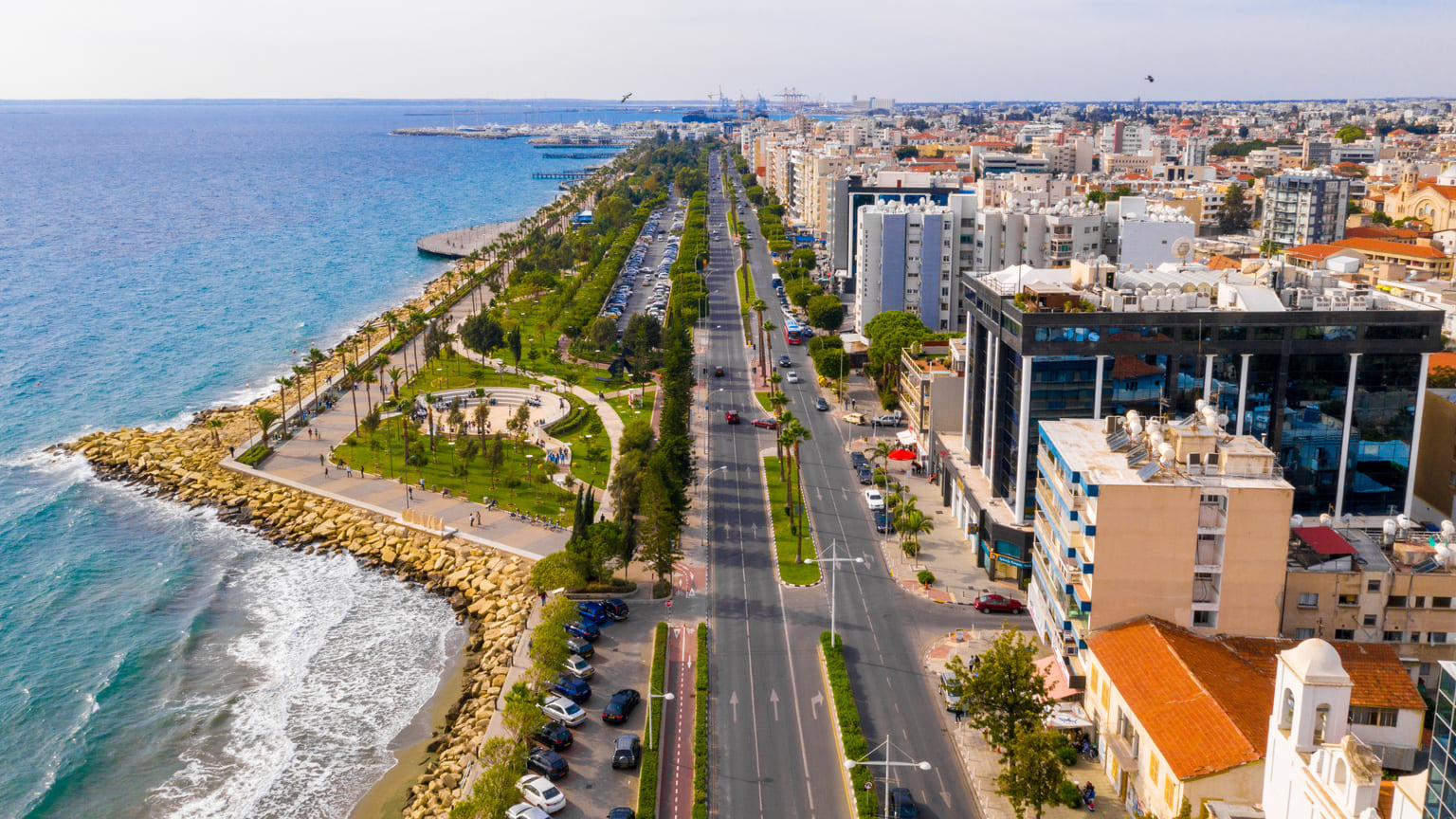
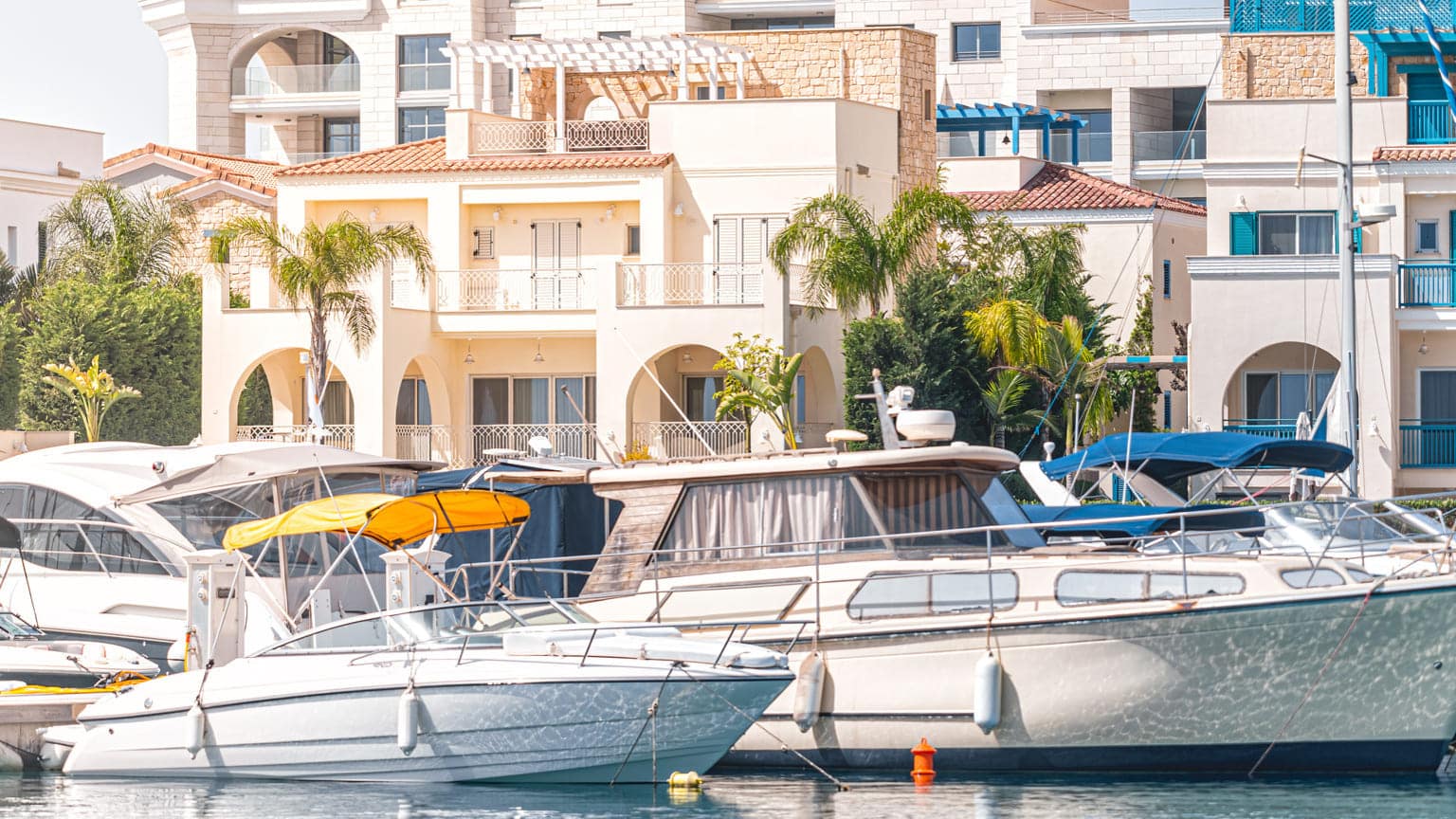
Around 30,000 British nationals have already made Cyprus their home — and it’s easy to see why. Sunlit coastlines, lower cost of living, a familiar language, and a tax‑friendly regime make for a compelling escape.
UK citizens can buy property in Cyprus and gain lifelong permanent residence — no need for temporary permits. From hilltop villages to Limassol seafronts, settling down is simple.
Discover how to make the move.




Around 20% of foreigners move to Cyprus to retire, and 19% seek a better quality of life, according to the Expat Insider Survey 2025[1]. With its Mediterranean climate, strong tourism, and growing business sector, Cyprus attracts a wide range of people — from investors and entrepreneurs to young professionals, retirees, and families.
Cyprus Permanent Residence is an attractive opportunity for investors looking to settle long-term[2]. By investing at least €300,000, it’s possible to gain lifetime residency — with the only formality being the renewal of the residence card every 10 years.
One of the most popular investment routes is purchasing real estate, which not only secures residency but also provides the chance to own property on a warm Mediterranean island and benefit from potential rental income or capital growth.
The overall cost of living in Cyprus is about 30% lower than in the UK[3].
The biggest difference is rent: a family in Cyprus spends around €1,600 per month, while a comparable apartment in the UK costs about €2,500. Transport is also significantly cheaper — by nearly 70% — thanks to lower fuel prices and modest public transport costs.
Food expenses, however, are roughly the same in both countries.
Cyprus draws British entrepreneurs and professionals with its attractive corporate tax rate of just 12.5%, one of the lowest in the EU. There’s also 0% withholding tax on most outbound dividends, interest, and royalties, and no capital gains tax on the disposal of shares.
For IP-rich companies[4], the 80% exemption on qualifying intellectual property income means an effective tax rate of around 2.5%[5].
These fiscal benefits have helped Cyprus become a centre of gravity for several fast‑growing industries:
The UK and Cyprus have signed a double-tax treaty, which helps prevent double taxation and clarifies taxing rights on income and capital gains — handy for cross-border earners and retirees[10].
UK nationals can also benefit from Cyprus’s non-domiciled tax regime[11]. If they become tax residents but are considered non-domiciled, they are exempt from paying the Special Defence Contribution, SDC, on dividends and most passive interest. Even rental income is free from SDC for non-doms. This exemption lasts for 17 years.
Real estate in Cyprus remains competitively priced, with the national average at approximately €2,600 per 1 m², around 40 to 50% lower than in the UK[12].
Real estate affordability continues to attract foreign buyers, who completed 6,228 transactions in 2024. The majority of purchases were concentrated in Paphos, 32%, and Limassol, 29%, with 69% of foreign buyers coming from outside the EU[13].
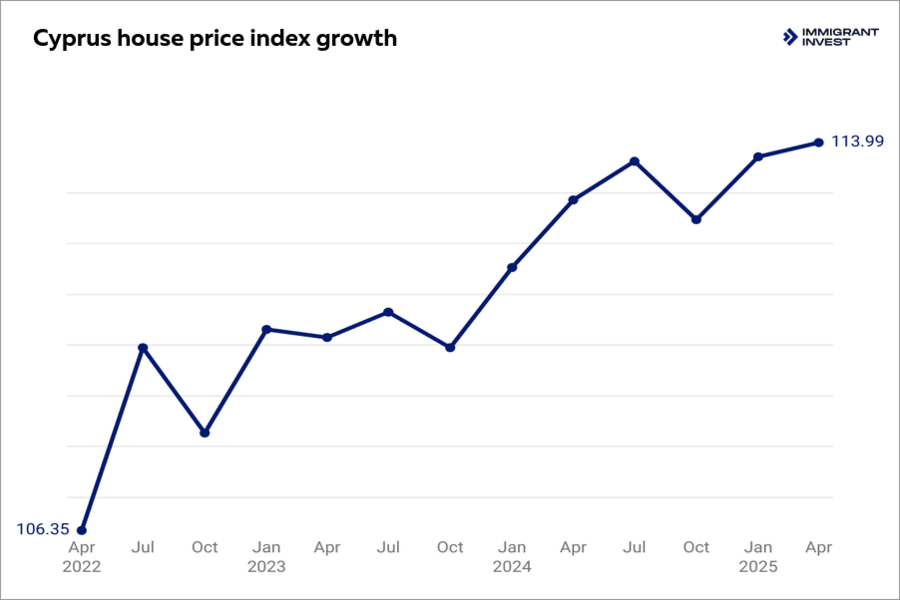
Permanent residence holders in Cyprus may lease their properties long-term, earning an average gross yield of 5.09% as of the third quarter of 2025[14]. Alongside rental income, properties continue to appreciate in value, with residential prices up 7% year‑on‑year by late 2024[15].
Cyprus is considered a safe place to live, supported by Eurostat's 2023 data showing one of the lowest homicide rates in the EU, at just 0.8 per 100,000 people[16].
Healthcare is another key strength. Cyprus ranks 4th globally for healthcare services in the Expat Insider Survey 2025. Expats rated the system highly for its affordability, availability, quality, and equal access.
The island also poses minimal risk from wildlife. While a few potentially dangerous species exist, threats are rare, localised, and well managed.
UK nationals can access international schools in Cyprus offering the British curriculum. Leading institutions include PASCAL English School Lemesos and Silverline Private School in Limassol, with annual tuition ranging between €8,300 — 13,200 and €3,520 — 7,800, respectively.
In Paphos and Nicosia, British schools follow the English national curriculum from early years to sixth form, preparing students for IGCSEs and A-levels.
Almost 260,000 foreign-born residents live in Cyprus, which is around 27% of the total population[17]. Among these, about 30,000 are British nationals. Other notable non‑EU communities include Filipinos, Sri Lankans, and Vietnamese.
Cyprus ranks among the top 10 countries worldwide for ease of settling in, according to the Expat Insider Survey 2025. Expat communities like InterNations help make integration smoother thanks to regular events and interest groups for newcomers. Other options include Meetup groups and local forums such as Paphos Life and Expat.com.
For British nationals settling in Cyprus, a range of familiar comforts makes the transition remarkably smooth. Driving follows the left-hand rule, and Type G plugs are standard. English is widely used across public services.
British media is also readily available: BBC, ITV, and Sky channels can be accessed through local IPTV providers, while newspapers such as The Times and The Guardian are easy to find both online and at kiosks in popular expat areas.
For UK nationals, Cyprus offers more than sunshine — it offers rhythm. Life here moves with the coast, where cities like Larnaca, Paphos, and Limassol stretch out along the sea, framed by citrus groves and salt air.
The average temperature hovers around +24°C, with winters so mild and skies so steady that outdoor living never really stops. One morning might mean coffee by the beach, the next a hike through pine-covered Troodos mountains or a swim in Limni lake.


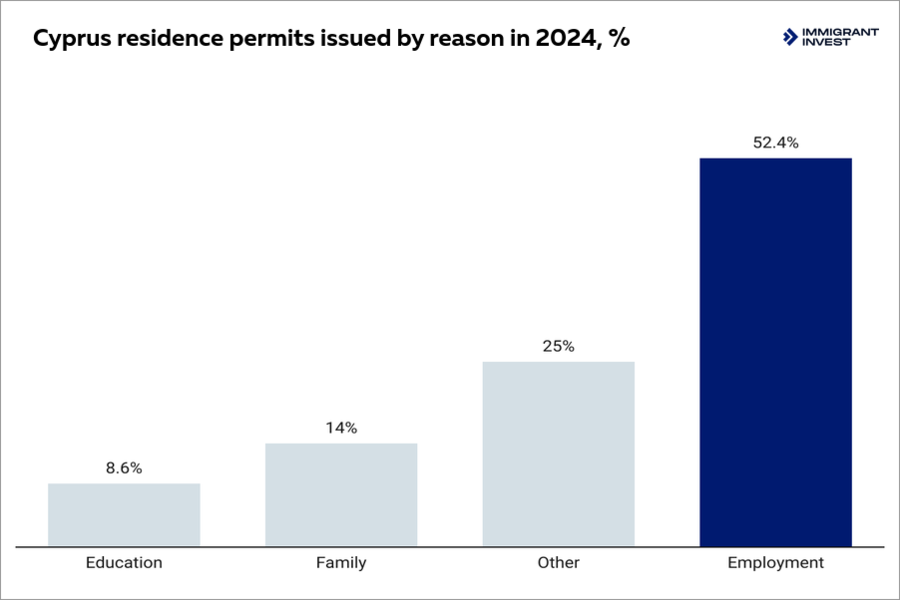
Investors, digital nomads, skilled professionals — including highly qualified workers — students, and family members of Cypriot residents are all eligible to apply for residency in Cyprus.
Each group has access to specific residence permits tailored to their purpose of stay, with distinct conditions, durations, and rights.
Requirements. By contributing at least €300,000 to the Cyprus economy, wealthy UK nationals can obtain permanent residency. Investors can opt for one of the following routes:
UK applicants are also required to prove a minimum annual income of €50,000, earned legally. If a spouse is included, this rises by €15,000, and by €10,000 for each dependent child added to the application.
Validity. The status granted is permanent from the start, with residence cards valid for 10 years. To keep the status active, the applicant must visit Cyprus at least once every 2 years.
Family eligibility. The main applicant can include:
Requirements. Employment of non‑EU nationals is allowed only if no suitably qualified local or EU worker can fill the vacancy. The employer must apply to the District Labour Office of the Ministry of Labour and Social Insurance. Once approval is granted, the employment contract is signed and stamped[18].
Validity. The residence permit is valid for up to 4 years, except in farming, domestic work, specialty cooks, the priesthood, and tourist representation.
Holders may later apply for long‑term residence after 5 years of legal stay.
Rights. The Cyprus work permit is tied to a specific employer, but workers may change up to three employers if:
The only change of sector that is allowed is from domestic work to farming and agriculture.
After three employer changes, renewals are not issued; re‑entry for work is possible only after 2 years abroad.
Requirements. This category covers executive and management staff. The minimum salary is €3,872 for directors and €1,936 for key staff, adjusted with the salary index[19].
Validity. Permits are granted for up to 2 years, renewable without limitation on total residence duration. After 5 years of continuous stay, holders may apply for long‑term residence.
Requirements. The visa targets remote professionals working for companies or clients abroad. The national cap remains 500 permits[20].
Applicants must earn a net monthly income of at least €3,500 after deductions.
Validity. A 1-year residence permit is granted, renewable for 2 additional years. Applications must be submitted within 3 months of arrival at the Migration Department in Nicosia.
Family members — spouses or partners in a civil union and minor children — may accompany the main applicant. They cannot work in Cyprus.
Requirements. To enter and reside in Cyprus as a student, enrolment in a recognised institution of higher education or a public or private educational institute is required[21].
For pupils, residence is granted to:
Validity. Permits are issued for 1 year and renewed annually. Students first obtain a visa or entry permit abroad, then apply for a residence permit within 10 days of arrival.
Only half of the study period counts toward the 5‑year requirement for long‑term residence, and only after holding an eligible residence title.
Rights. Students may work up to 20 hours per week in approved sectors such as hospitality, agriculture, or retail. Each contract must be certified by the Department of Labour.
Conditions. Family members may join a sponsor who has legally lived in Cyprus for 2 years[22].
Eligible dependants include:
Validity. The residence permit is valid for 1 year, renewable but not beyond the sponsor’s permit. After 5 years of residence, family members become eligible for long‑term status.
Employment restriction. Access to employment is restricted during the first 12 months, pending a labour‑market test; thereafter, they may work under standard conditions.
British nationals who have legally resided in Cyprus can apply for citizenship by naturalisation[24]. Cyprus permits dual citizenship and does not require UK nationals to renounce their British nationality.
Residence requirement. To be eligible for citizenship, UK citizens must have lived in Cyprus for at least 8 years, including 12 continuous months immediately before applying.
Accelerated track is for high-skilled professionals[25]:
Integration requirement. Applicants must demonstrate:
Oath or declaration. Applicants are required to sign in person before a Registrar or authorised official. While no public oath text is published, a formal declaration is part of the final step before receiving the certificate of naturalisation.
Paphos, Limassol, Larnaca, and Nicosia are Cyprus’s four major cities and host the largest expat communities. The foreign-born share is about 40% in Paphos, 22% in Limassol, 19% in Larnaca, and 17% in Nicosia[26].
All four lie within 40—110 minutes’ drive of each other. With no rail network, travel is by car or intercity bus, making day trips between cities quick and convenient.
Paphos is the island’s slow heartbeat — ideal for retirees and families who want sea air, space, and predictability. Homes skew to villas and low-rise blocks, prices are gentler than in the big cities, and day-to-day life revolves around the harbour, cafés, and open‑air markets.
The airport links directly to UK cities, which keeps travel simple for frequent visitors.
Free time is easy: coastal paths, boat trips, and simple hikes in Akamas; weekends often mean wineries in the hills and sunset swims. Healthcare and basic services are close at hand, and traffic is light enough that most errands are a 10-minute drive.
Limassol is the business engine — best for investors and entrepreneurs who want density: shipping companies, finance, tech firms, and a deep pool of service providers. Deal flow, networking, and coworking spaces are plentiful, which shortens the distance between ideas and execution. Expect higher rents and a faster pace, traded for access to capital and talent.
Lifestyle stays Mediterranean despite the bustle: a long seafront for running or cycling, marinas for sailing, and the Troodos mountains close enough for Saturday hikes and winter skiing. Buses cover the core, but most people drive; plan around rush hours.

Larnaca suits families, retirees, and remote professionals who want a calmer coast with strong connectivity. The airport is on the doorstep, costs are steadier than in Limassol, and the new marina and waterfront upgrades are lifting the city without crowding it. Workdays are practical rather than hectic, and commutes stay short.
Off hours skew outdoors: morning swims off Mackenzie Beach, evening walks on the promenade, and flamingo season at the salt lake for a small dash of wonder. Intercity buses are frequent, and most daily needs sit within a short drive.
Nicosia is for students and professionals who trade beaches for culture and careers. Government, legal, consulting, and NGO roles cluster here, alongside universities and research centres — good soil for internships, first jobs, and policy‑adjacent work. Office and housing costs are generally lower than in Limassol for comparable space.
When it’s time to unplug, museums, galleries, and music venues keep evenings full, and the mountains or coast are under an hour away by car. Buses cover the city, cycling infrastructure is improving, but driving remains the default.

The process of obtaining Cyprus permanent residence consists of five steps, beginning with preliminary Due Diligence and ending with the collection of residency cards. Below is an outline of the procedure for the most common route — real estate investment. The entire process takes about 9 months.
Before submitting the application, Immigrant Invest conducts a confidential one‑day background check. A certified Anti-Money Laundering officer screens the applicant’s documents against global databases to reduce the risk of rejection to just 1%. If any issues arise, tailored solutions are offered in advance.
Lawyers prepare the full set of required documents, including completed forms, passports, proof of income, proof of address, and other supporting paperwork needed for the application.
The applicant transfers €300,000 plus 19% VAT to the developer. If the property qualifies for the reduced 5% VAT, the investor files an application with the Cyprus Department of Lands and Surveys. Once approved, the VAT rate is reduced, and the excess amount is deducted from future instalments.
Immigrant Invest’s in-house database features pre-approved properties. Their legal team assists with property selection, sale agreement preparation, and the full purchase process, ensuring compliance with the programme’s requirements.
The completed application and supporting documents are submitted to the Civil Registry and Migration Department. Processing takes between 3 and 6 months.
After approval, the applicant and family members travel to Cyprus to provide biometric data, with lawyers coordinating visa arrangements and appointment scheduling.
Permanent residence cards are issued within 40 days of the biometrics appointment and must be collected in person at the Civil Registry and Migration Department.
Thanks to the widespread use of English in Cyprus, these essential services are easily accessible. Still, certain aspects come with specific requirements, outlined below.
The main retail and commercial banks in Cyprus include Bank of Cyprus, Hellenic Bank, Eurobank Cyprus, Alpha Bank Cyprus, AstroBank, Ancoria Bank, and the National Bank of Greece.
To open an account, most banks require an in-person visit to an International Business Unit or application through a local intermediary[27]. However, Alpha Bank Cyprus offers an online option through its Alpha Easy2Open platform, allowing for remote application for a current account and debit card[28].
Standard documentation includes:
The entire process can be completed in English, as all major banks in Cyprus provide English-language websites, e‑banking platforms, and customer support.
Access to public healthcare in Cyprus is available through the General Health System. Access is granted to those who pay social insurance contributions — employees and self‑employed residents. Students, digital nomads, and PR holders without contributions must rely on private insurance.
Private healthcare remains accessible to all, with top facilities including the American Medical Center and Apollonion Hospital in Nicosia. Many services are English-speaking, and private insurance costs range from €400 to 1,200 per year, with comprehensive coverage reaching €3,000.
UK nationals benefit from the S1 form. It allows certain individuals to access public healthcare on the same terms as Cypriot nationals[29]. UK citizens can use the S1 form if they:
Cyprus offers a range of English-medium international schools, mostly following the UK or US curriculum. Each major city has licensed private schools where lessons are taught entirely in English.
Nicosia:
Limassol: Foley’s School — UK curriculum; accepts students from preschool to A-level.
Larnaca:
Paphos:
Most schools ask for an online application form, recent school reports, and ID documents. Entrance or placement exams are standard — usually in English and Maths.
Cyprus treats a UK driving licence as exchangeable, so UK nationals may swap their licence without re-testing. The exchange must be completed within 6 months of becoming a resident[30].
To import a car to Cyprus, zero import duty applies with proof of origin, such as the exporter's statement or the importer’s knowledge[31]. Otherwise, standard duties apply:
VAT at 19% is then charged on the duty‑inclusive amount. After customs clearance, the vehicle must be registered with the Department of Road Transport, which sets registration rules for non-EU imports.
Cyprus offers two routes to become a tax resident. The first is the standard 183-day rule: a person is considered a tax resident if they spend at least 183 days in Cyprus in a calendar year[32].
The second is the 60-day rule, which applies if all the following are met:
Income tax is progressive, reaching up to 35%. The first €19,500 is tax-free. Deductions apply for social insurance and health contributions[33].
The non-domicile regime exempts Cyprus tax residents without Cypriot domicile from the Special Defence Contribution on dividends and interest. For rental income, only 75% is taxed at 3%, resulting in an effective rate of 2.25%.
Capital gains tax applies only to real estate in Cyprus and shares in companies holding such property — at 20%. There is no tax on gains from global assets or securities.
New residents may qualify for first-employment relief: 50% income tax exemption on Cyprus-based income over €55,000, valid up to 17 years[34].
Corporate tax is 12.5% on the worldwide income of tax-resident companies.
Qualifying intellectual property income is taxed at an effective rate of 2.5%, under nexus-based rules.
Withholding tax is 0% on dividends, interest, and royalties paid to non‑residents, unless linked to Cypriot real estate.
The standard VAT rate is 19%. Reduced rates of 5% and 9% apply to certain essentials and tourism services.
Reduced VAT for property applies under specific conditions. For homes priced up to €350,000 and within the size limits, the rates work as follows:
Buyers with disabilities may still claim 5% VAT for houses up to 190 m².
If the purchase price is between €350,001 and 475,000, 5% VAT still applies — but only on the first €350,000, and only if the total area is no more than 190 m².
If the price is above €475,000 or the area is above 190 m², VAT is 19% on the entire purchase.
Stamp duty is a one-time tax paid upon signing the sale contract:
Transfer tax applies to resale properties and is calculated progressively:
There is no estate, inheritance, or gift tax in Cyprus. The country also does not impose a net wealth tax.
Cyprus suits those chasing sunshine, tax breaks, and a slower pace — think entrepreneurs, remote workers, or retirees looking for good value and fewer complications. With lower rental costs, generous tax exemptions, and cheaper private schooling, it’s a leaner, sunnier alternative.
The UK makes more sense for career‑driven professionals and families wanting world‑class infrastructure, education, and global connections — if they're willing to trade higher living costs for bigger opportunities.
| Category | Cyprus | UK |
| Monthly cost of living for a single | €1,700 | €2,400 |
| Monthly rental costs | €900—1,600 | €1,500—2,500 |
| Income tax rate | Up to 35%, the first €19,500 is tax-free | Up to 48%, the first €14,700 is tax-free |
| Corporate tax | 12.5% | 19% and 25%, depending on the profit |
| Comprehensive private insurance, per year | €1,500—3,000 | €1,500—3,000 |
| Annual schooling fees | Free for citizens International: €3,500—13,200 | Free for citizens International: €7,000 — 50,000 |
| Average annual temperature | +24°C | +9°C |
| Homicide rate | 0.8 per 100,000 people | 0.95 per 100,000 people |
Yes, there are various opportunities to settle in Cyprus for UK nationals: through employment, studying, family reunification, Digital Nomad Visa, or permanent residence for investors.
Cyprus permanent residence is available to non-EU investors who buy real estate worth at least €300,000 plus VAT. The status is lifelong and covers the investor’s spouse, minor children, and financially dependent adult children under 25. Parents of the main applicant and spouse can also be included.
Yes, moving to Cyprus from the UK can be worth it for several reasons. The Mediterranean climate offers over 300 sunny days a year and year-round outdoor living by the sea and mountains. Cyprus is politically stable, safe, and part of the EU, with visa-free access to Schengen for residents. Business setup is efficient, with English‑speaking professionals and a strong legal system based on common law.
Property ownership is straightforward and protected by law, and permanent residence can be gained through real estate purchase.
The UK-Cyprus double tax treaty helps avoid being taxed twice on the same income. If you live in Cyprus and meet its tax residency rules, you become a Cyprus tax resident. In that case, Cyprus taxes your worldwide income, while the UK only taxes income sourced from the UK. You usually don’t pay UK tax on foreign income if you’re not a UK tax resident, though UK rental income or UK salaries may still be taxed in the UK.
Yes, Cyprus is a solid choice for British expats. English is widely spoken, UK driving licences are exchangeable without a test, and there’s access to both public and private healthcare.
Tax residency is possible under the 60‑day rule, with benefits like low corporate tax, no inheritance or wealth taxes, and exemptions under the non‑domicile regime. The cost of living is lower than in the UK, especially in real estate and transport. For lifestyle and opportunities, Limassol, Paphos, Larnaca, and Nicosia stand out as the top cities for UK nationals.
Life in Cyprus is about 30% more affordable than in the UK, with the biggest savings in real estate and rental costs. Transport is significantly cheaper — by around 70%. Food prices, however, remain largely on par.
Around 27% of Cyprus’s population is foreign‑born. The country is known for being easy to settle in, with a welcoming atmosphere and well‑established expat communities — British nationals included.